A review of the public court record involving Bradley Croft, Brad Croft, and Universal K9 in San Antonio
Anyone searching Bradley Croft San Antonio, Brad Croft San Antonio, or Universal K9 may encounter references to a federal criminal case involving Croft and the former Universal K9 training program.
The existence of a federal conviction can understandably create assumptions about what happened. But there is an important difference between what the government actually prosecuted and what someone unfamiliar with the case might assume from seeing the words “wire fraud,” “identity theft,” or “federal conviction.”
That distinction matters especially to police departments, shelters, sponsors, donors, and other organizations considering a working relationship with Universal K9 today.
This page does not ask anyone to disregard the conviction. It provides the other part of the public record: what the case actually concerned and what working police K9 officers testified under oath about the dogs and training they personally received from Universal K9.
What the federal case was actually about
The K9-related portion of the federal case centered on paperwork submitted in connection with Universal K9 obtaining government approval for veterans to use GI Bill benefits for dog-handler training.
The government alleged that documents submitted to the Texas Veterans Commission identified certain individuals as instructors and included information concerning their qualifications and training. The government contended that those representations were improper and that Universal K9 later received GI Bill tuition payments after obtaining approval.
Bradley Croft was ultimately convicted of wire fraud and aggravated identity theft arising from that theory. The case also included separate money-laundering and federal income-tax charges. But there is an important distinction.
The government did not charge Bradley Croft with operating a fake police-dog training program
The superseding indictment did not contain a separate criminal count alleging that:
- Police officers were never actually trained.
- Universal K9’s police K9 training was fictitious or nonexistent.
- Universal K9 supplied police departments with dogs incapable of performing police work.
- Dogs were falsely represented as trained police dogs and then sent into service unable to perform.
- Police officers were sent back to their departments without genuine K9 training.
- Universal K9 abused or mistreated the dogs in its program.
Those would be different allegations. This distinction about the charges does not resolve every factual dispute about the training program. Because someone encountering a federal fraud conviction may naturally assume that the underlying K9 program itself was fictitious, the sworn testimony of officers who attended the program and worked the dogs is particularly important.
What the officers actually told the court
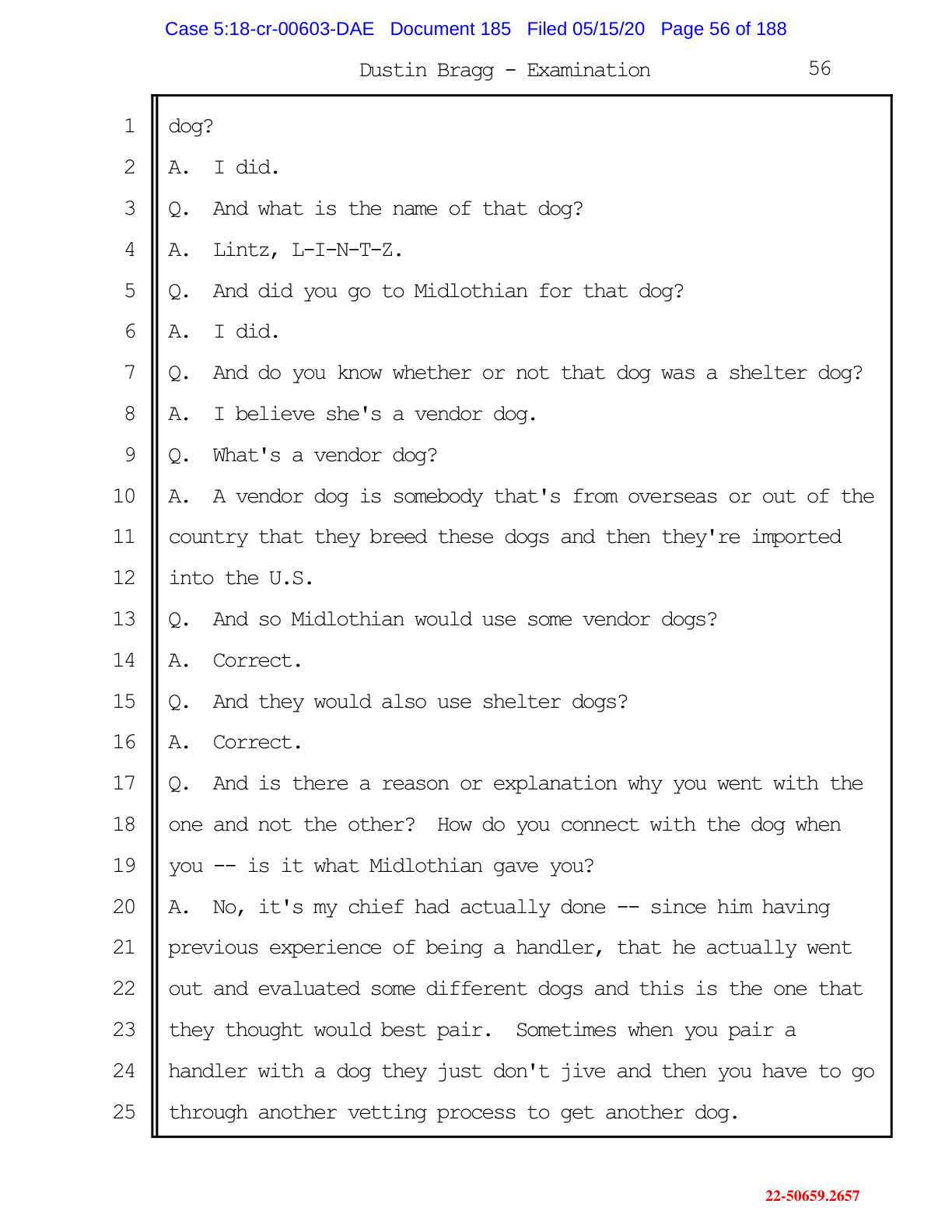
Dustin Bragg
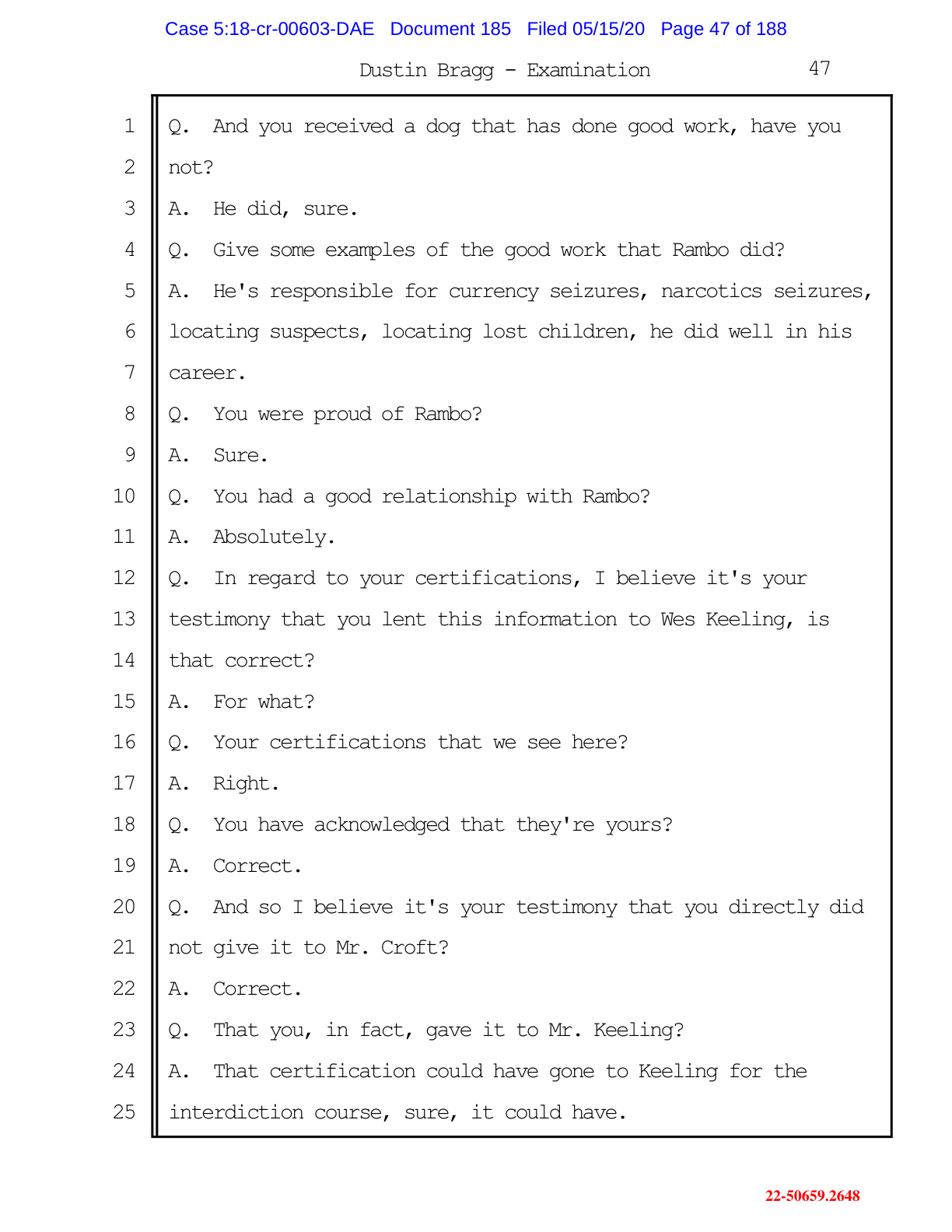
Government witness · Red Oak Police Department K9 handler. Click his name to view the original trial transcript page containing his testimony about Rambo.
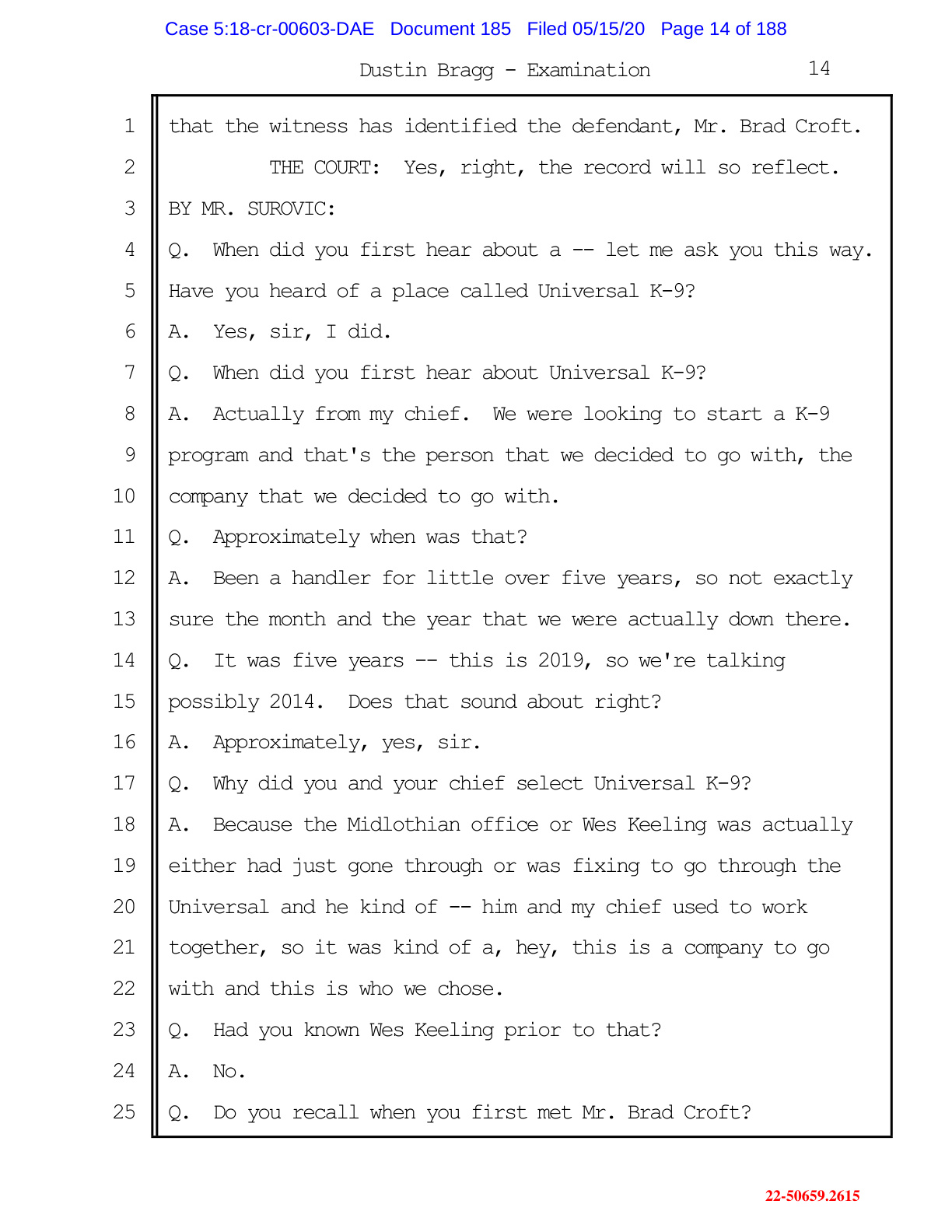
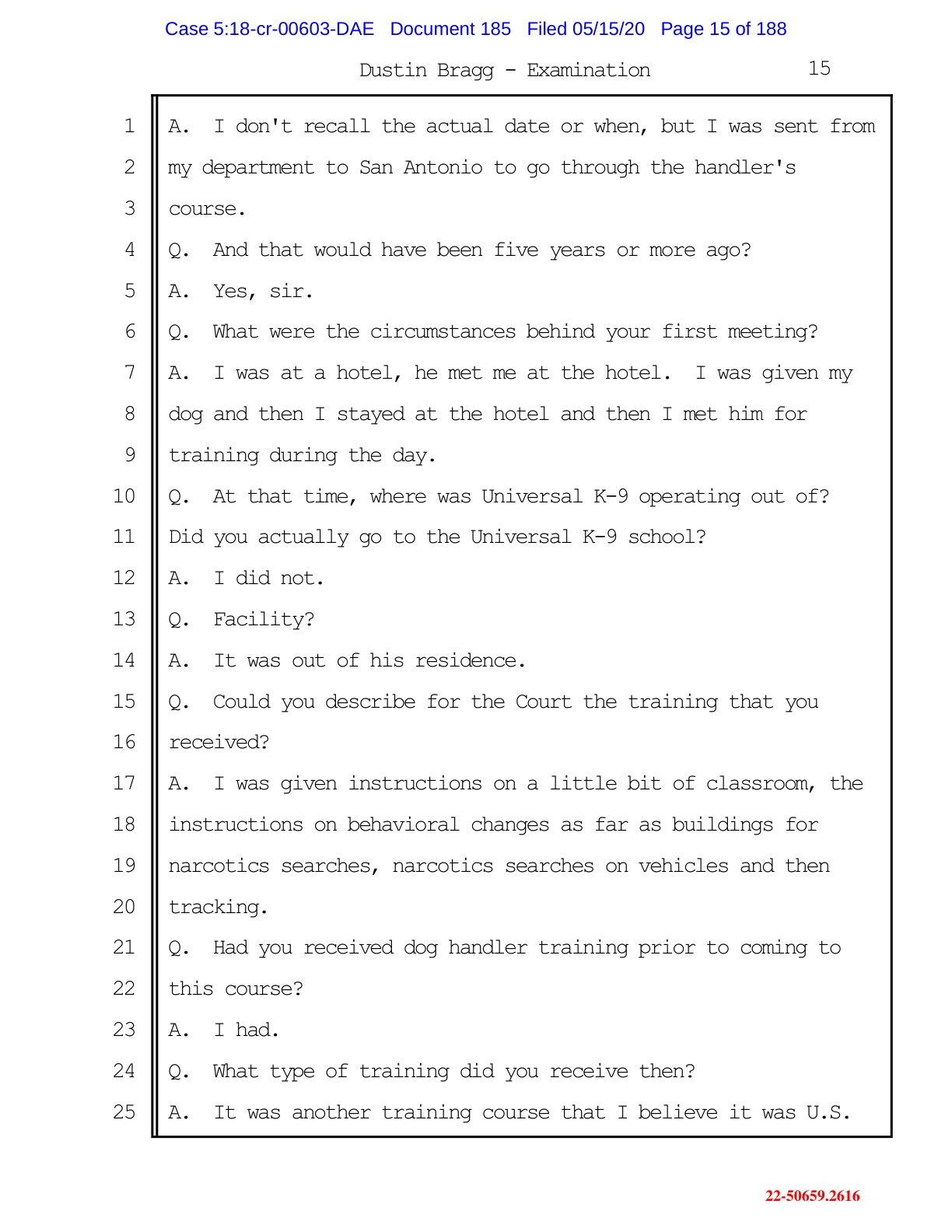
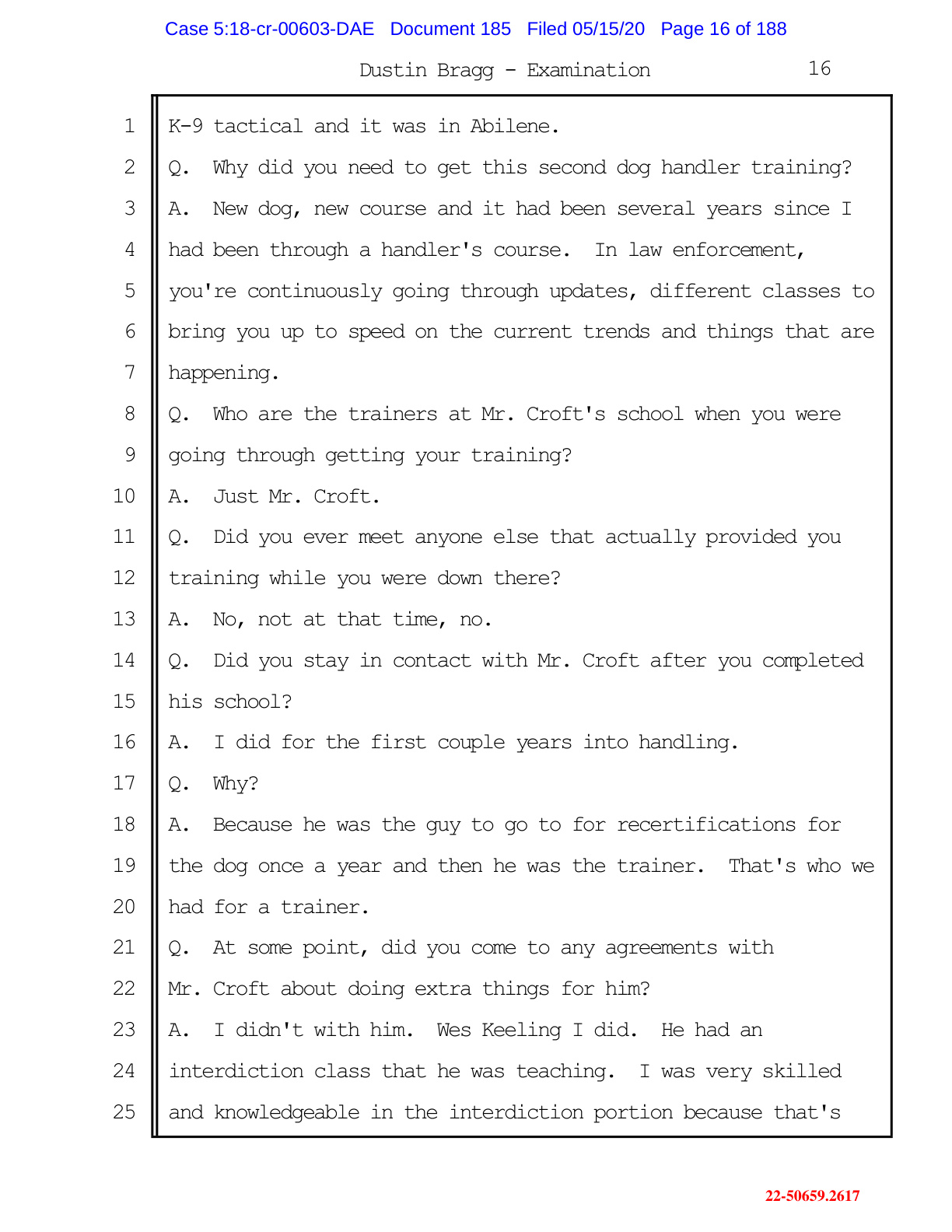
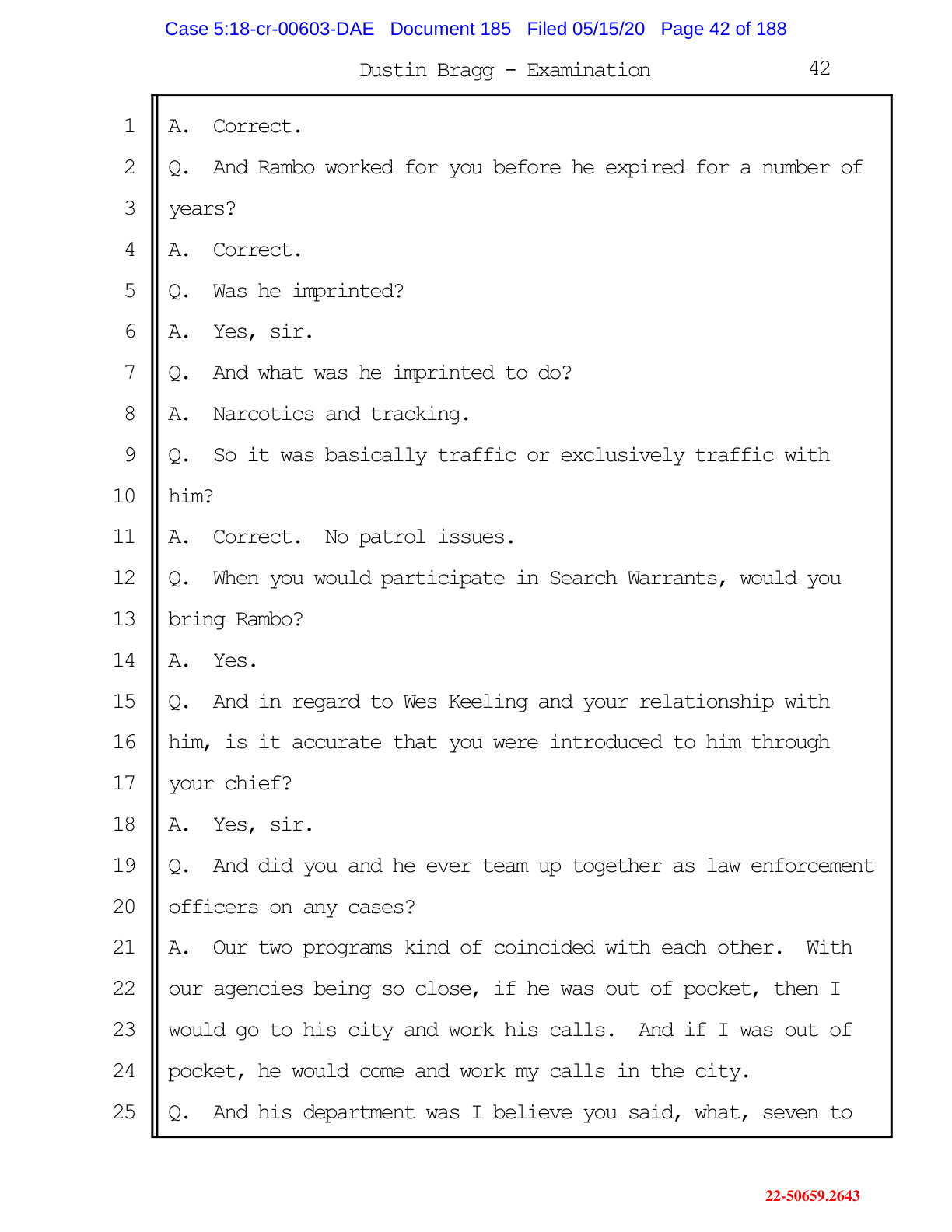
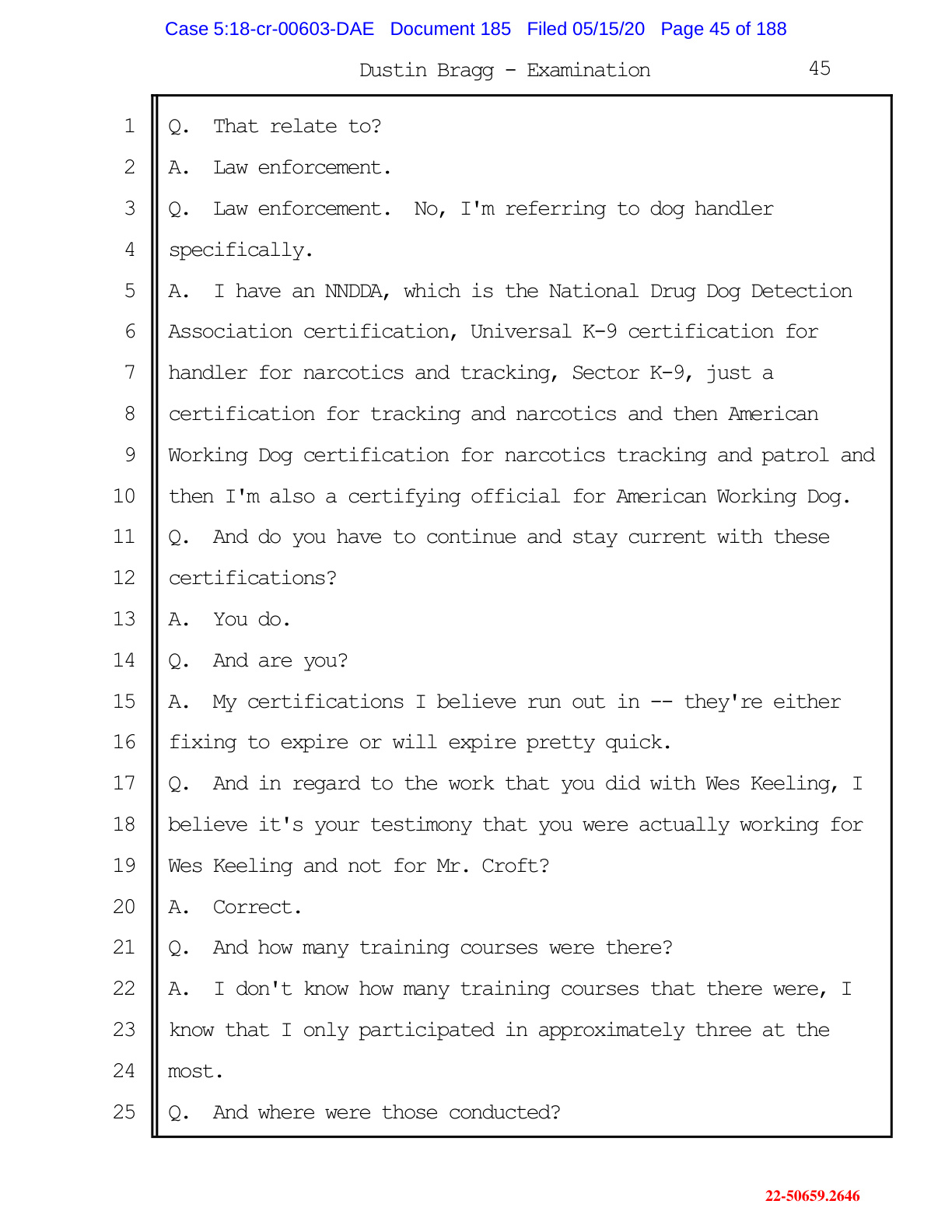
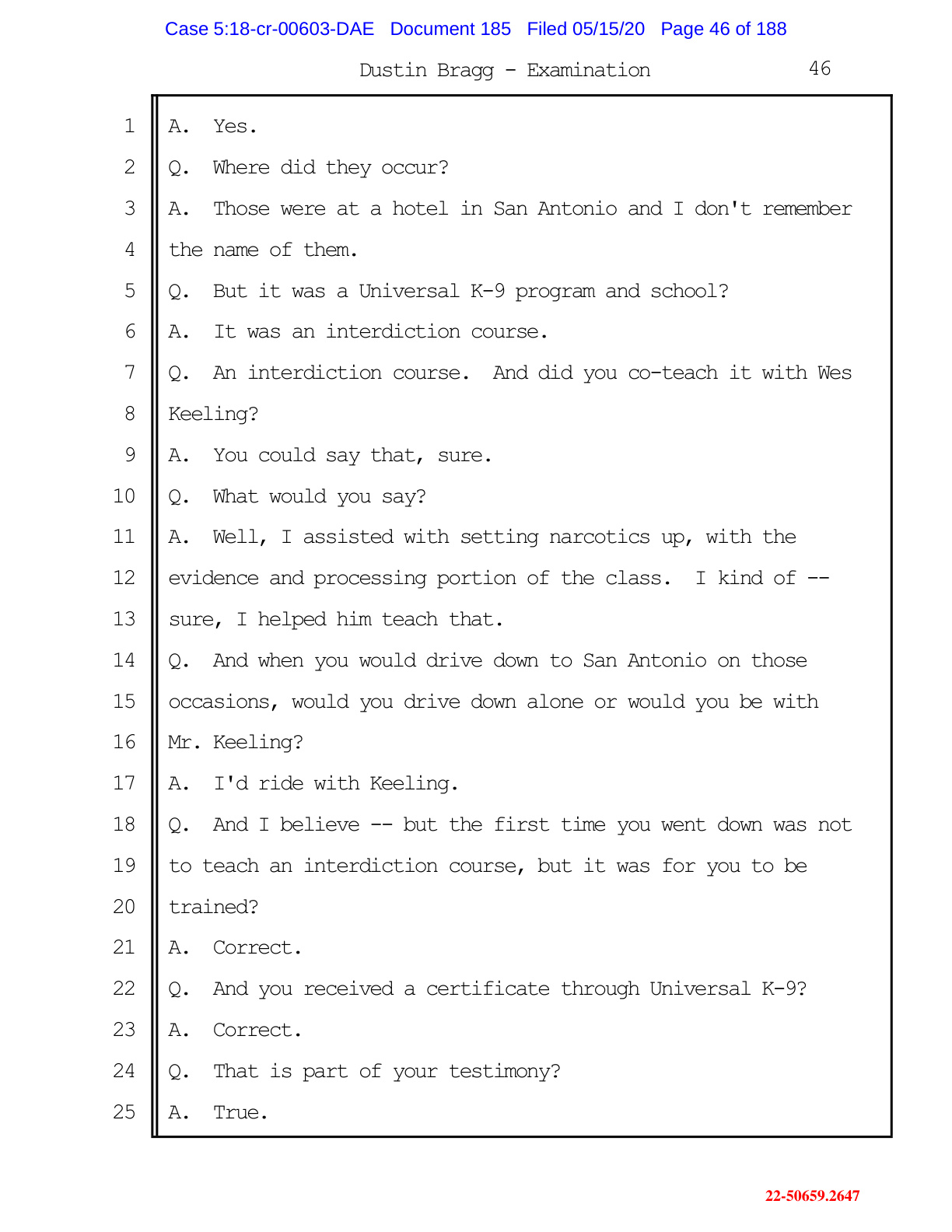
Dustin Bragg was called as a witness by the federal government. Bragg testified that his police department sent him to San Antonio for a Universal K9 handler course. He described receiving instruction involving narcotics searches, vehicle searches, behavioral changes, and tracking. Bragg testified that Croft trained him during that course.
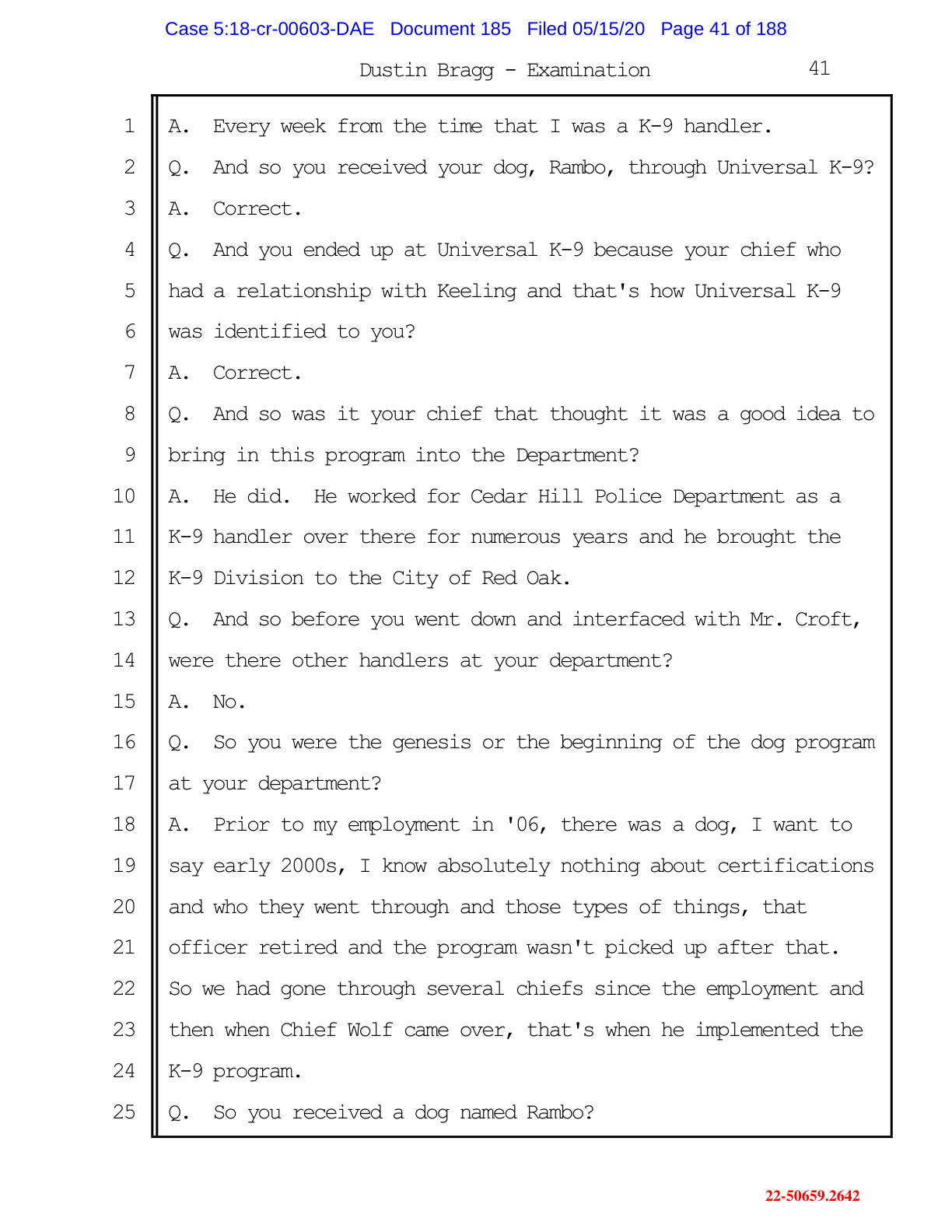
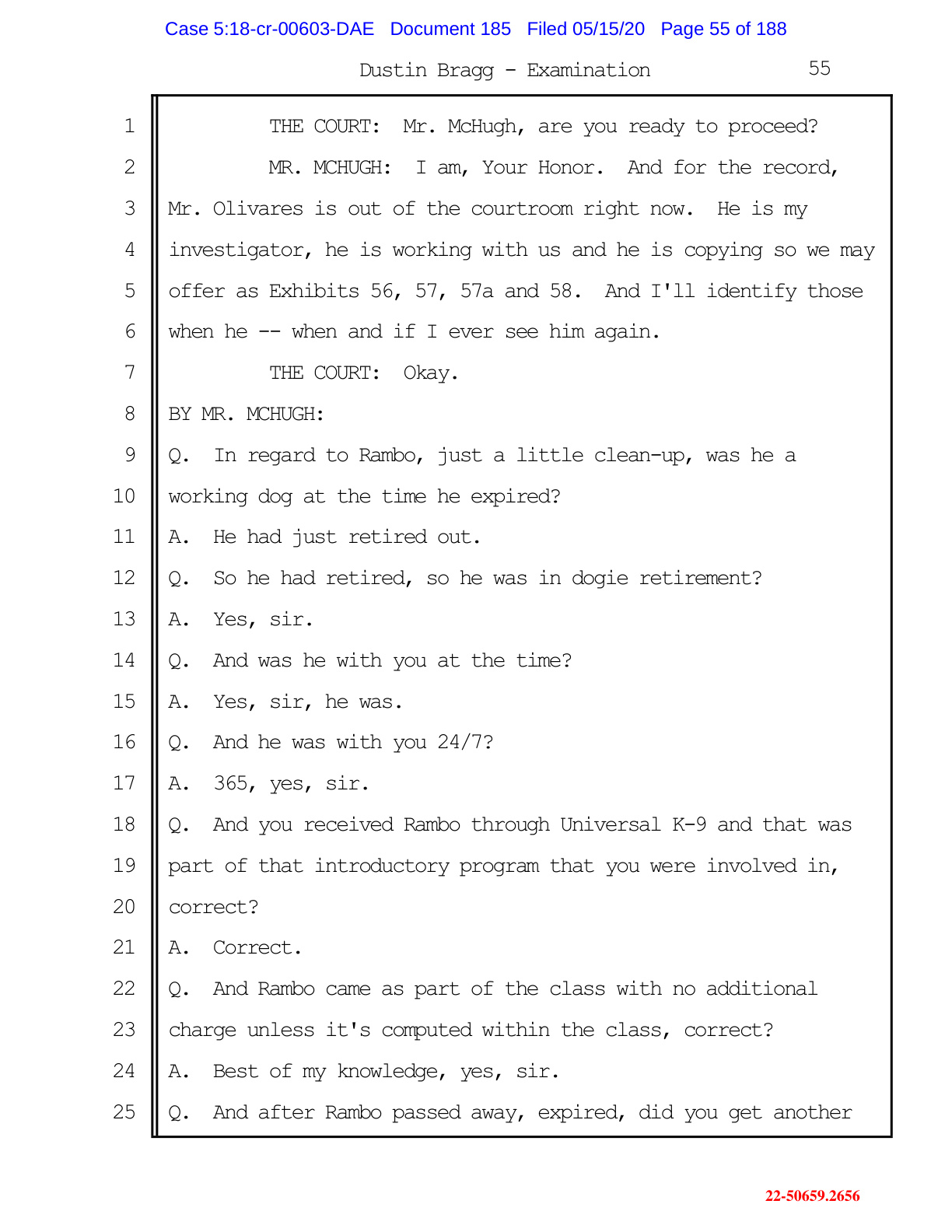
Bragg received a dog through Universal K9 named Rambo. Asked about Rambo’s work, Bragg testified: “He’s responsible for currency seizures, narcotics seizures, locating suspects, locating lost children, he did well in his career.” Bragg said he was proud of Rambo and described his relationship with the dog as “absolutely” good.
Bragg was a government witness. Although he disputed other matters concerning Universal K9, his testimony about the dog he received described actual police work, including narcotics and currency seizures and locating suspects and missing children. Read the cited transcript page.
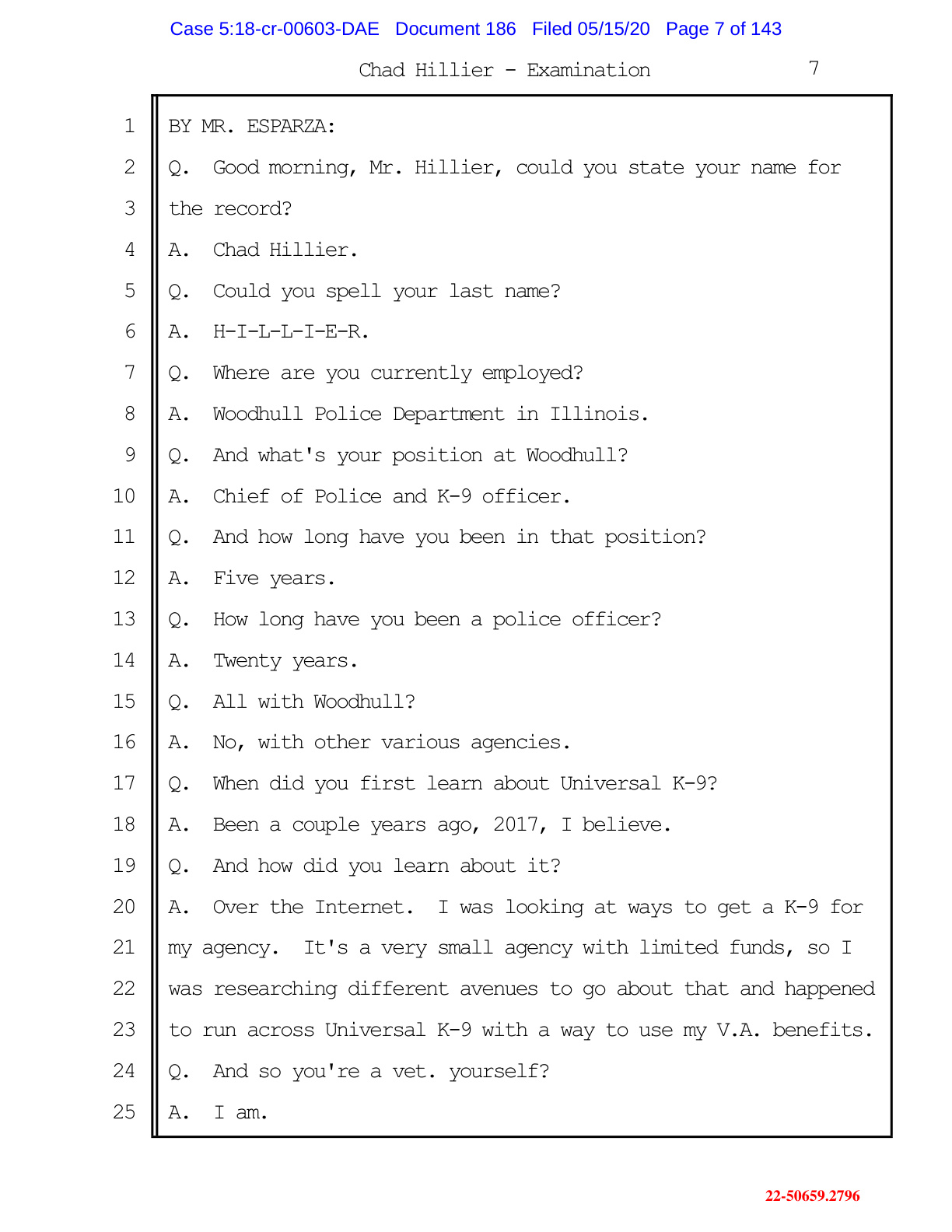
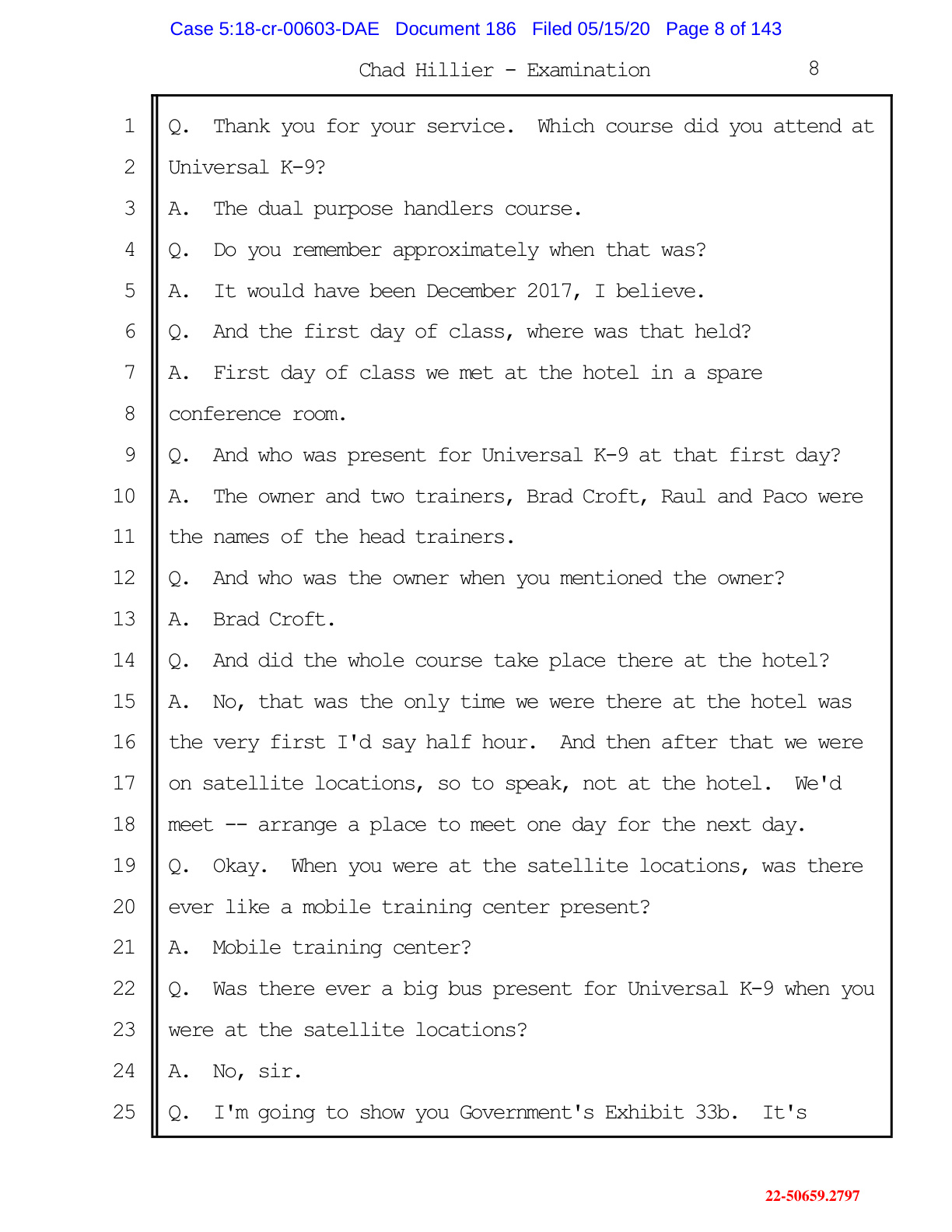
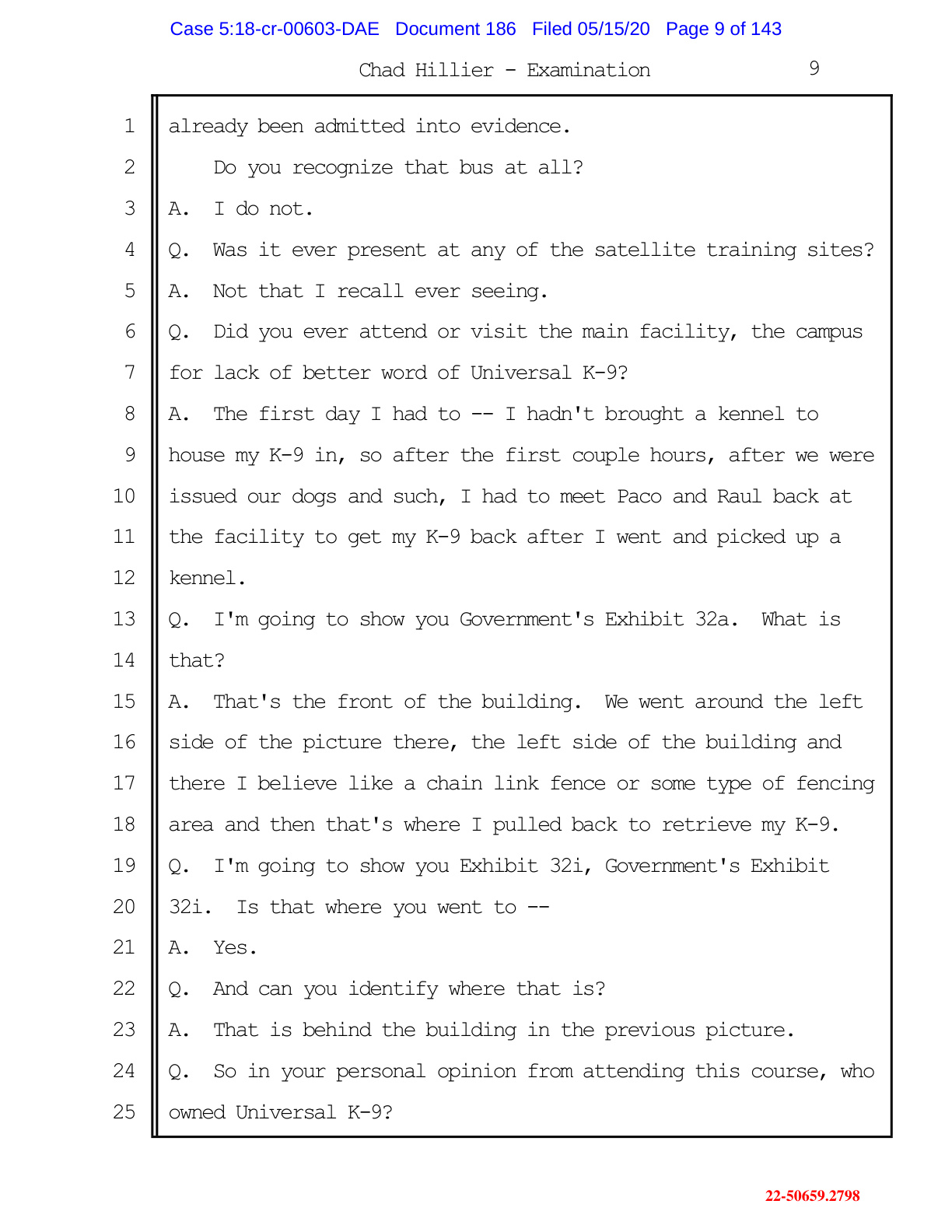
Chad Hillier
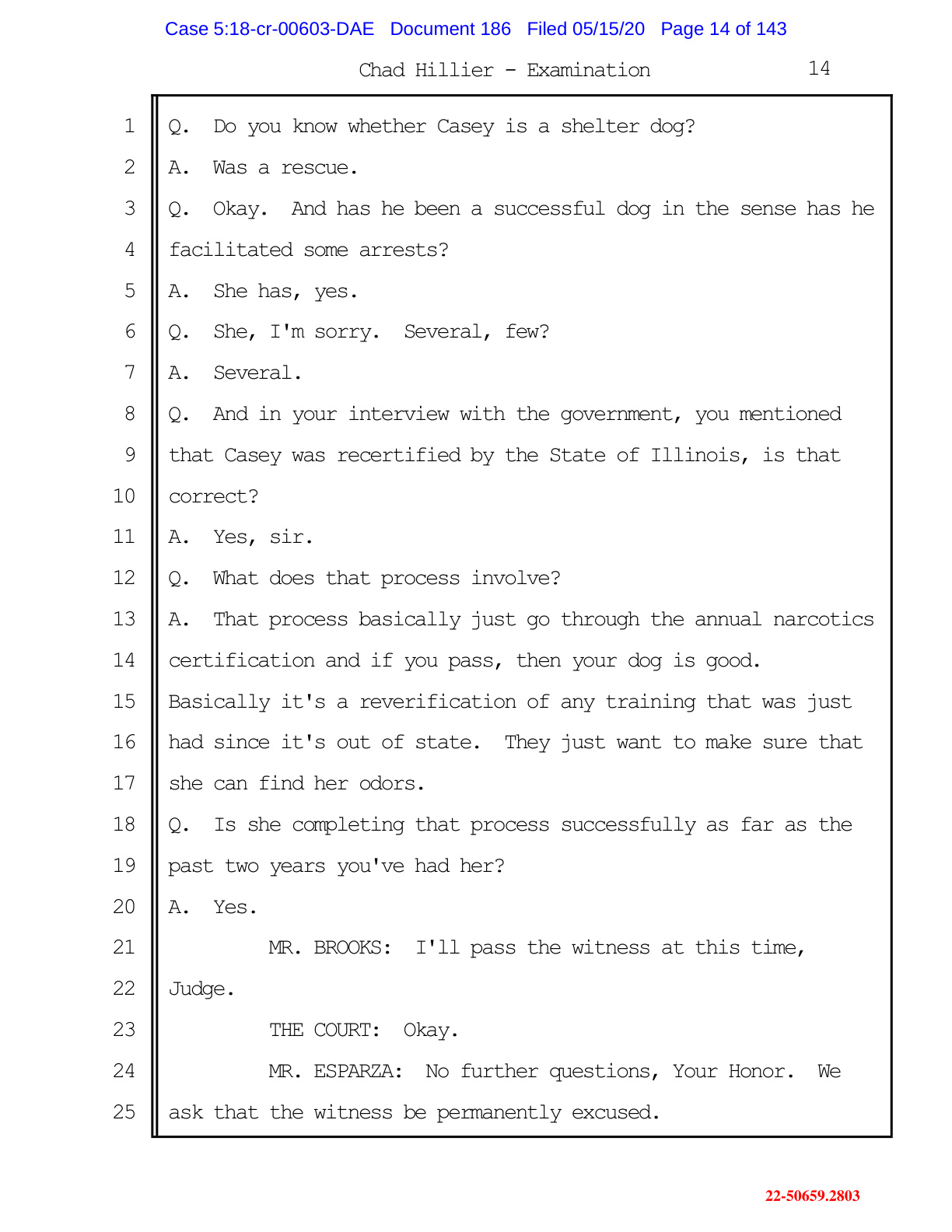
Government witness · Woodhull, Illinois chief of police and K9 officer. Click his name to view the original trial transcript page about Casey’s arrests and certification.
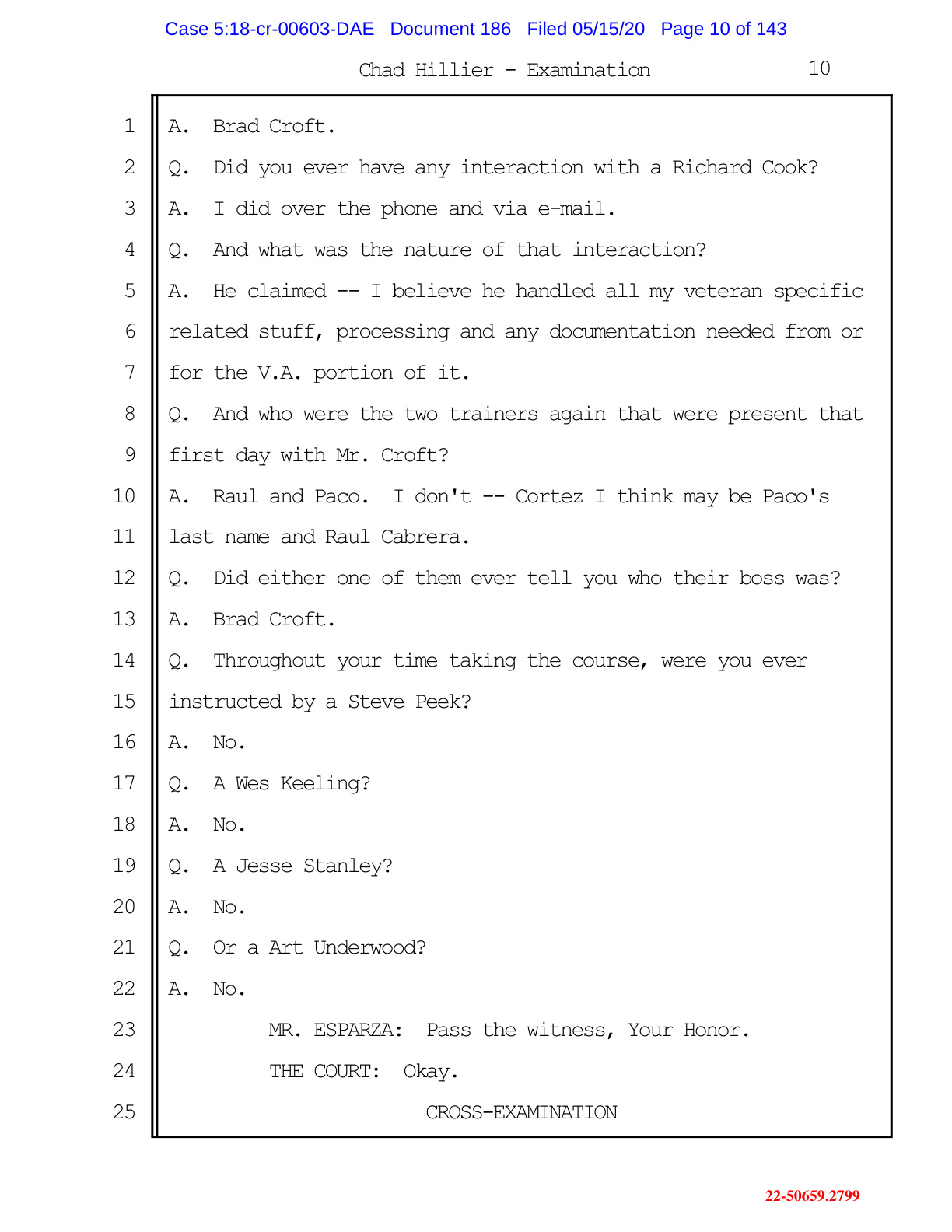
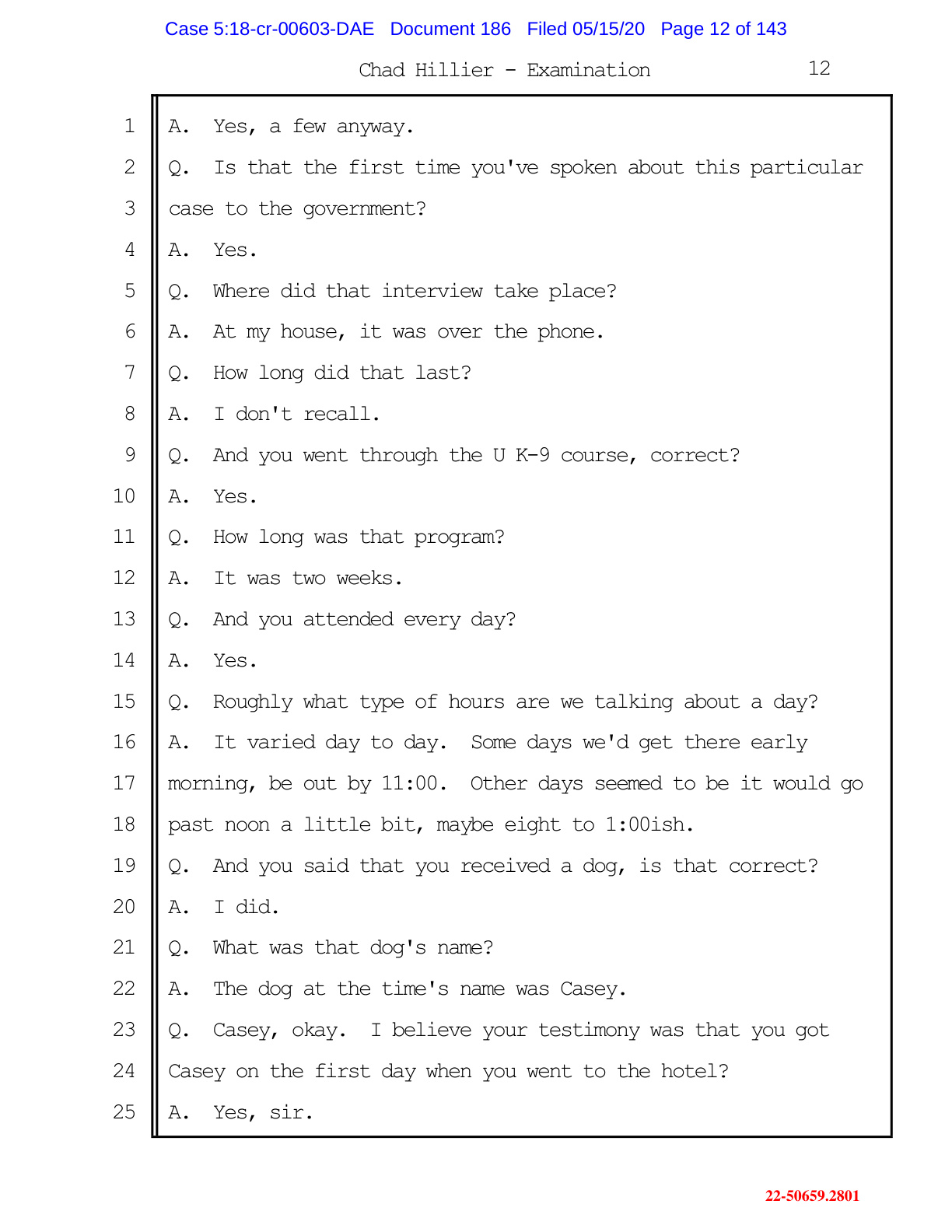
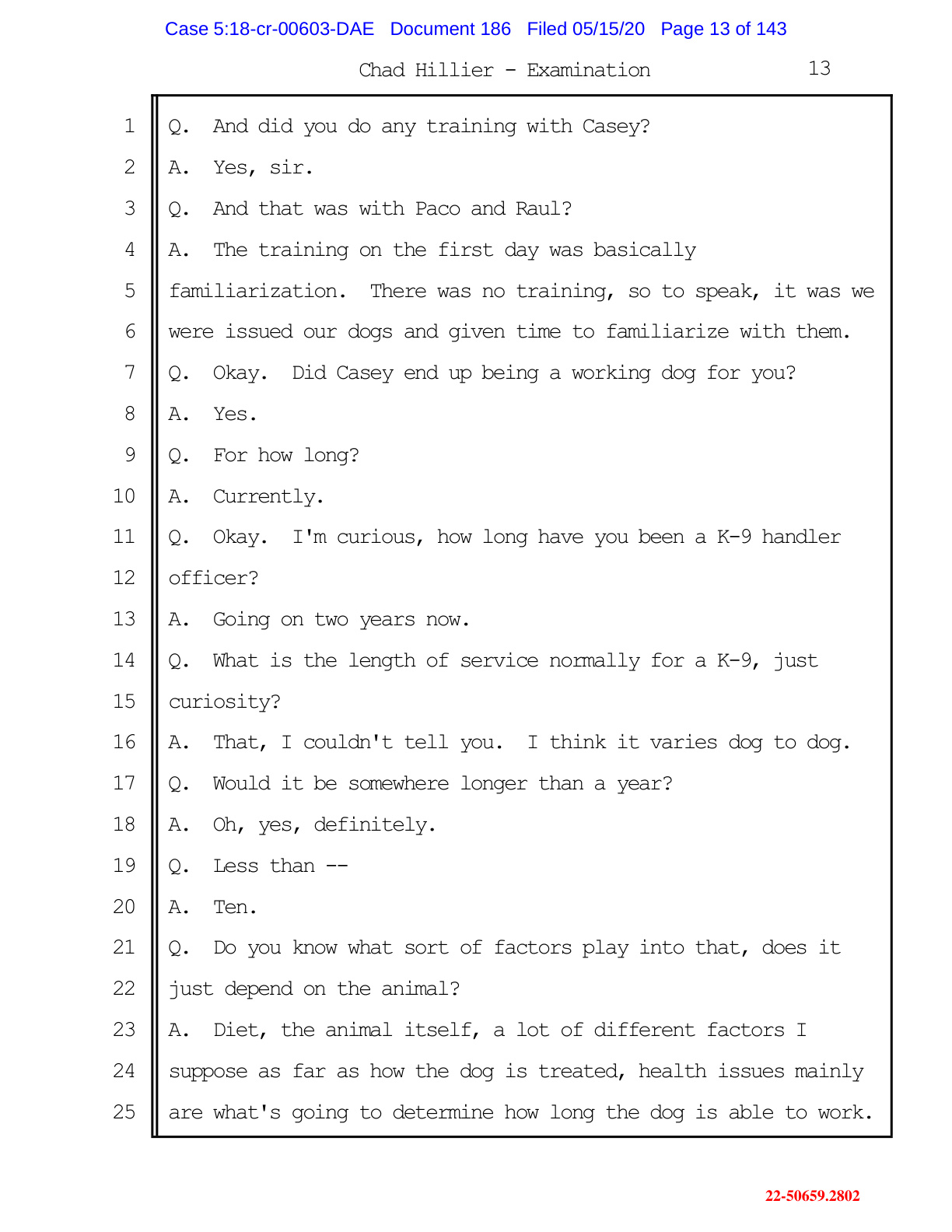
Chad Hillier was called by the federal government. He testified that he was Chief of Police and a K9 officer for the Woodhull Police Department in Illinois. He attended Universal K9’s dual-purpose handler course and received a rescue dog named Casey. At trial, Casey was still working as his police K9.
Asked whether Casey had facilitated arrests, Hillier answered yes and said Casey had been involved in several arrests. He explained that after returning to Illinois, Casey went through the state’s annual narcotics certification process to verify that she could find her odors. Asked whether Casey had completed that process successfully in the two years after the course, he answered “Yes.”
Whatever dispute existed about paperwork submitted during the approval process, this government witness described a rescue dog that entered police service, assisted in arrests, and passed later narcotics certification. Read the cited transcript page.
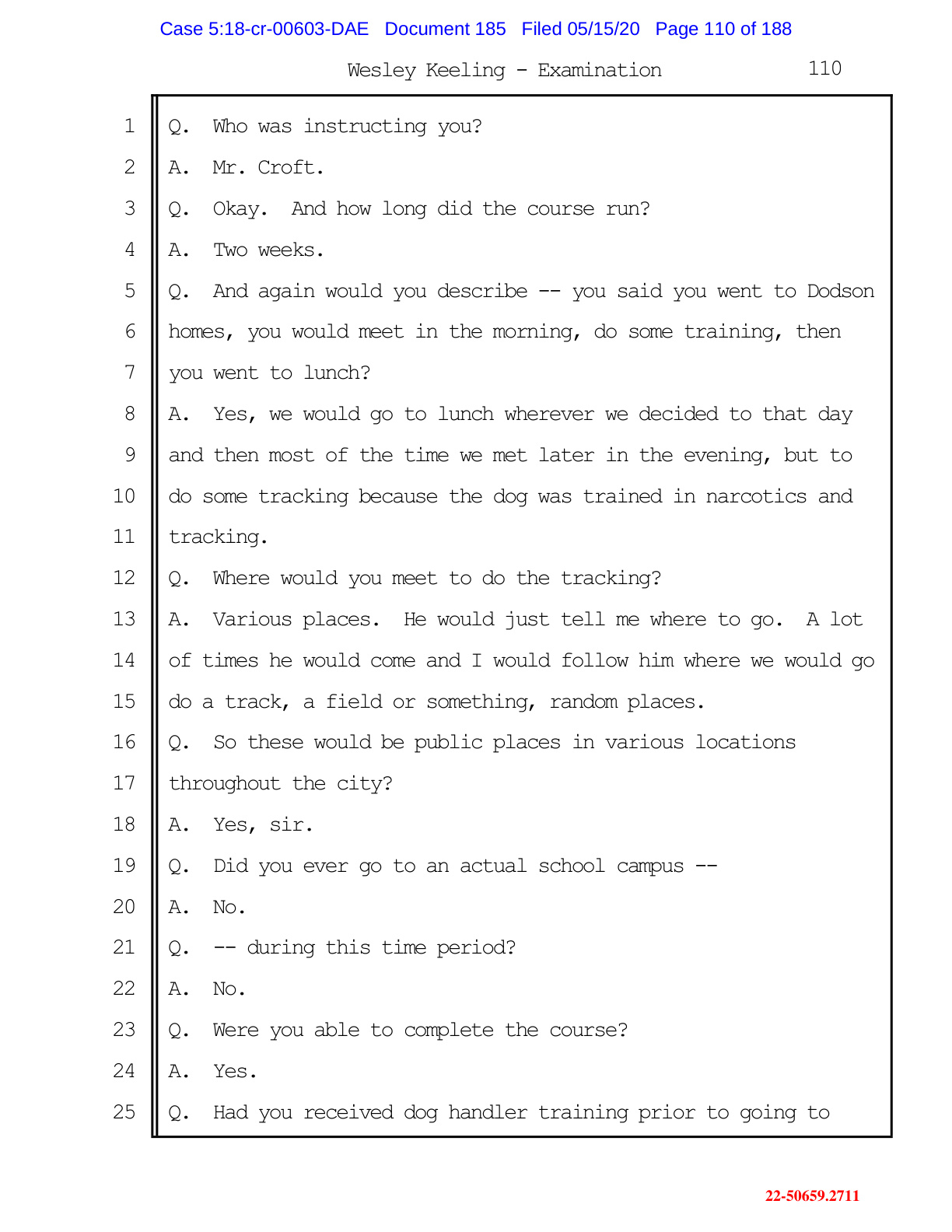
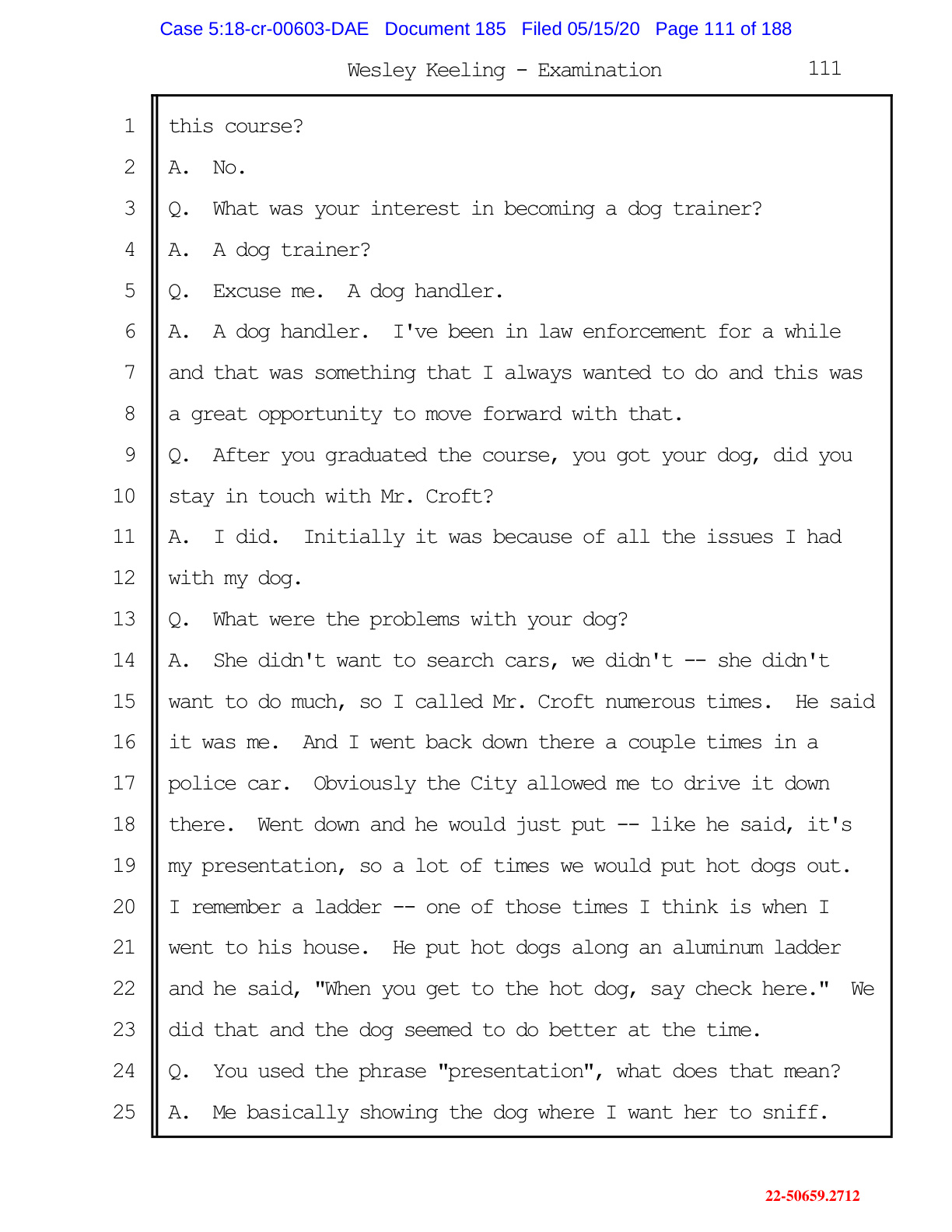
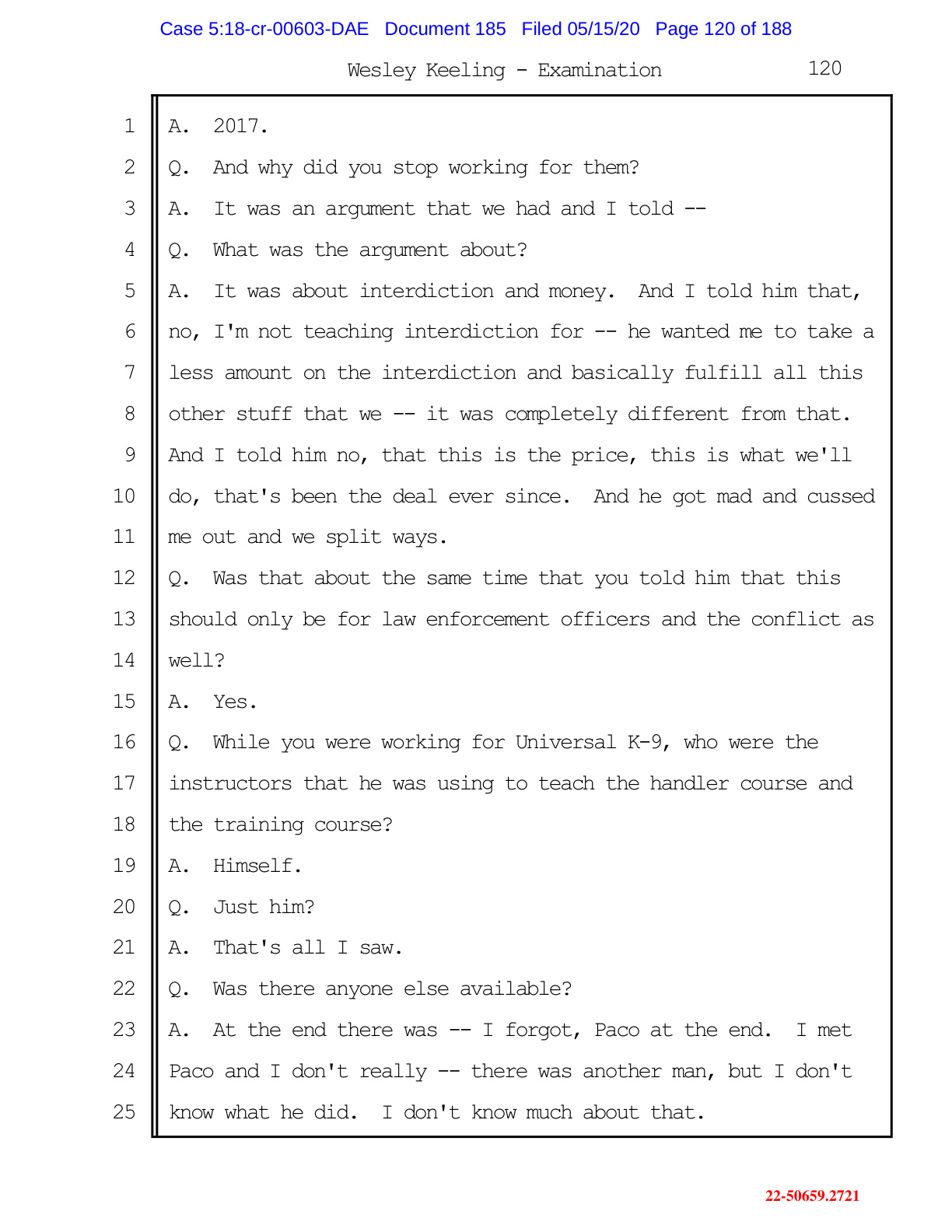
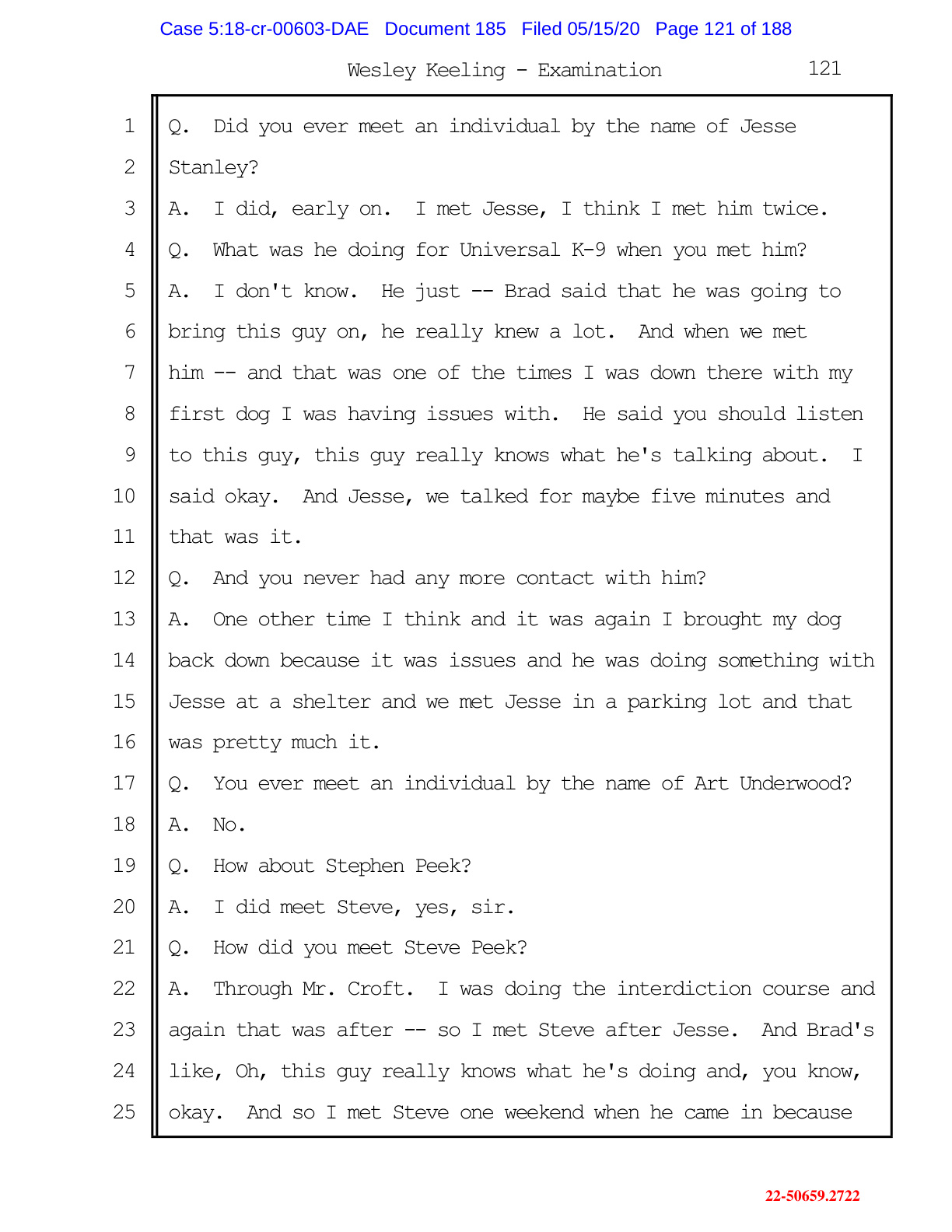
Wesley Keeling
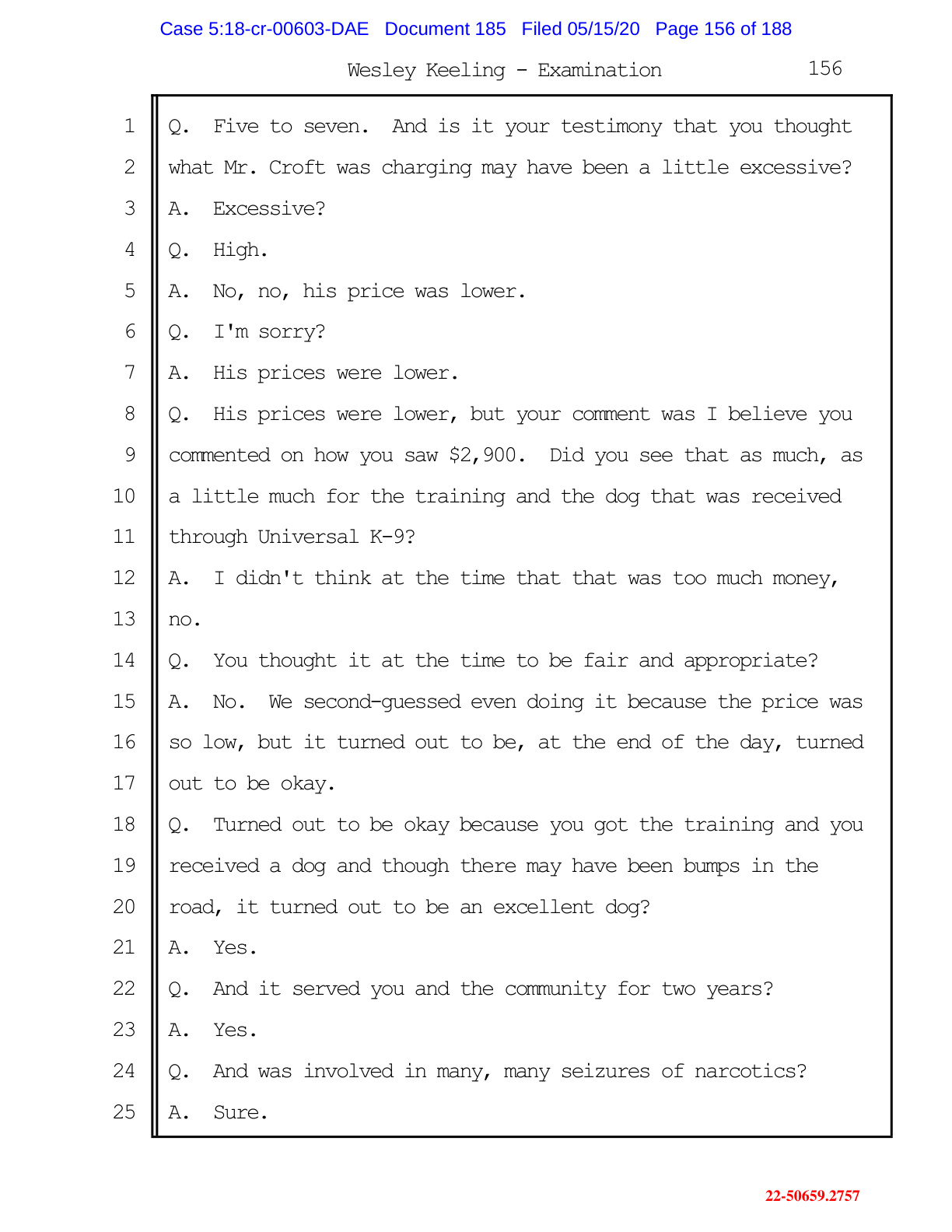
Government witness · Former Midlothian police officer and K9 handler. Click his name to view the original trial transcript page about his Universal K9 dog, Remmie.
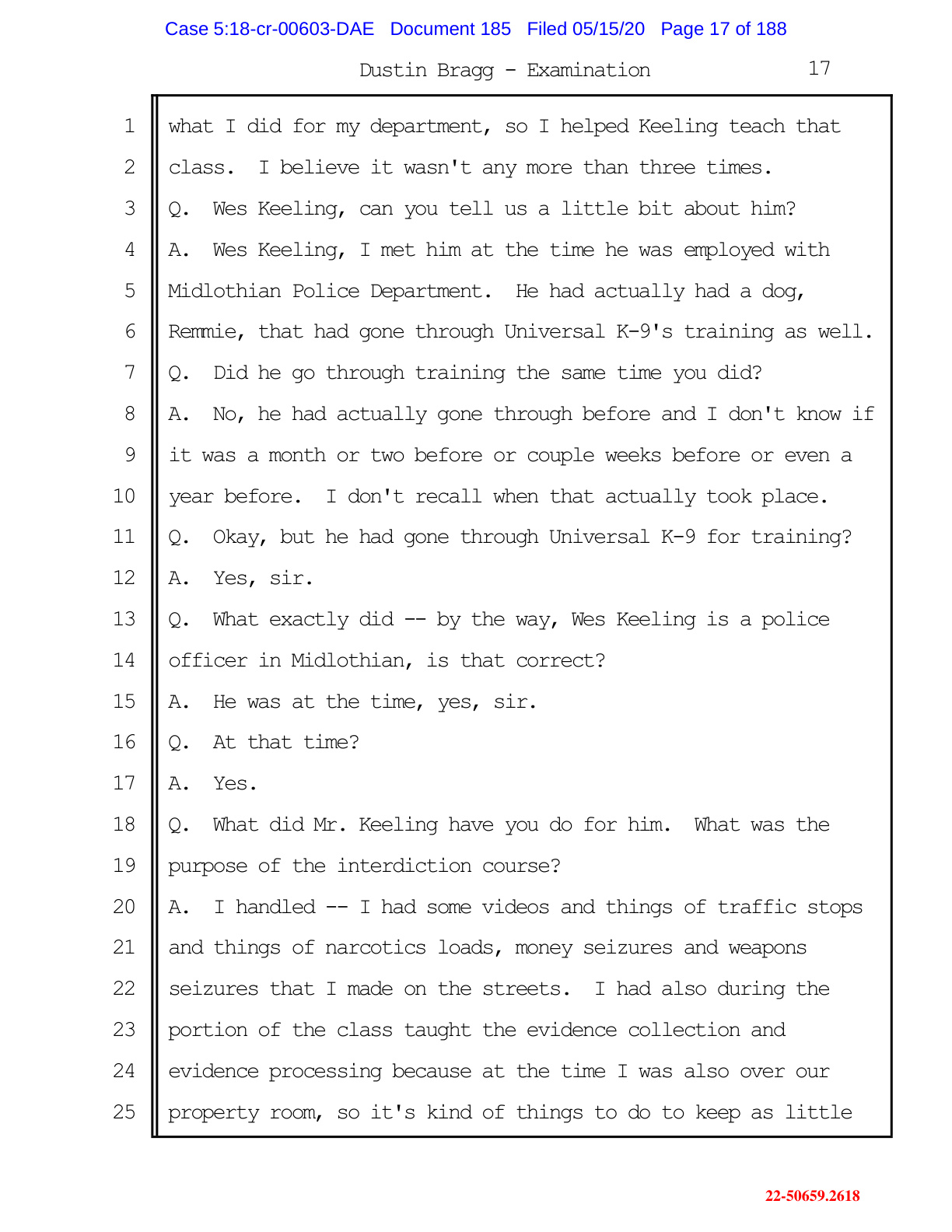
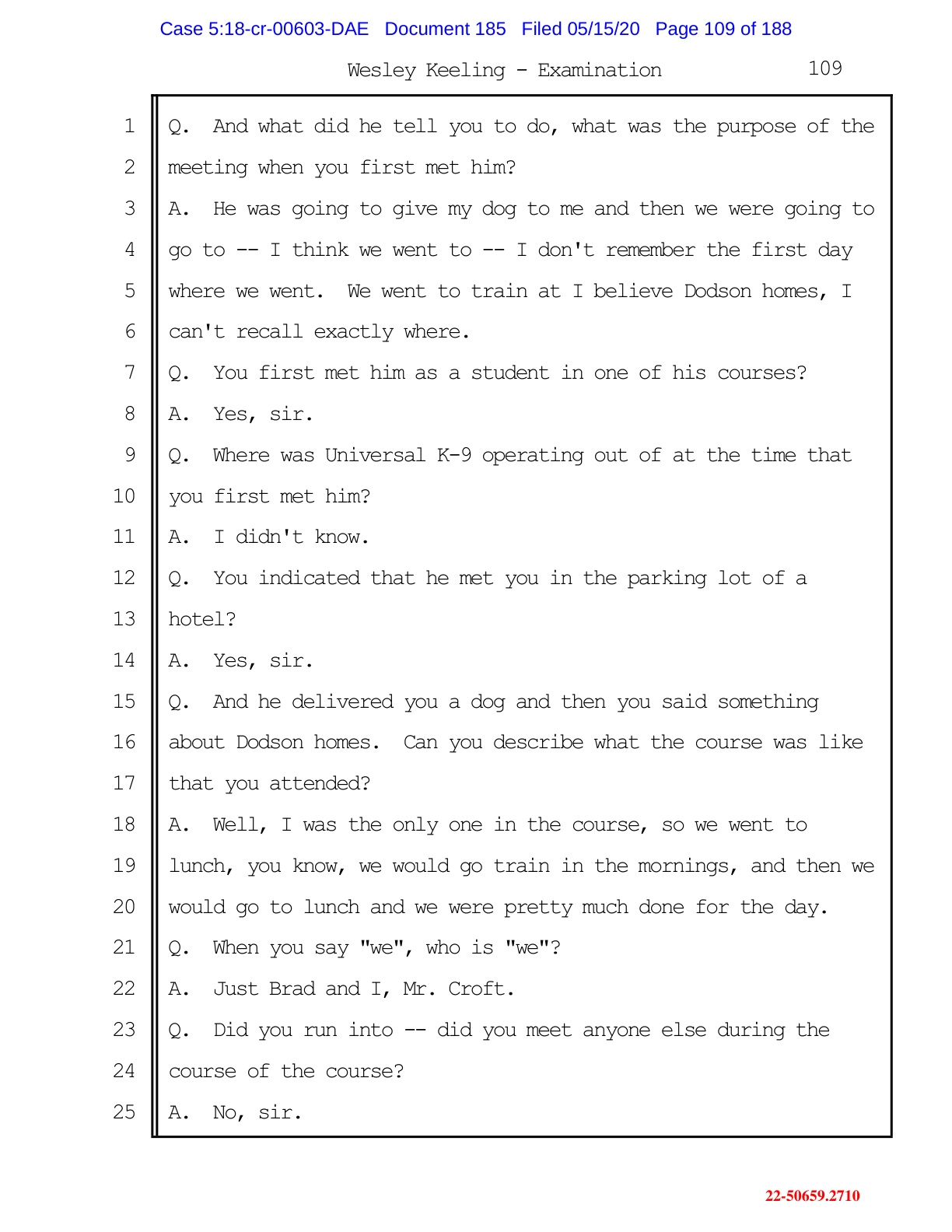
Wesley Keeling was a government witness important to the allegations concerning instructor information submitted during the approval process. His testimony about the Universal K9 dog he received tells a separate part of the story.
Keeling testified that Universal K9’s price was lower than prices he later charged through his own K9 business. Despite what a question described as “bumps in the road,” he agreed that Remmie became an “excellent dog.” He testified that she served him and his community for approximately two years and participated in numerous narcotics seizures. Read page 156.
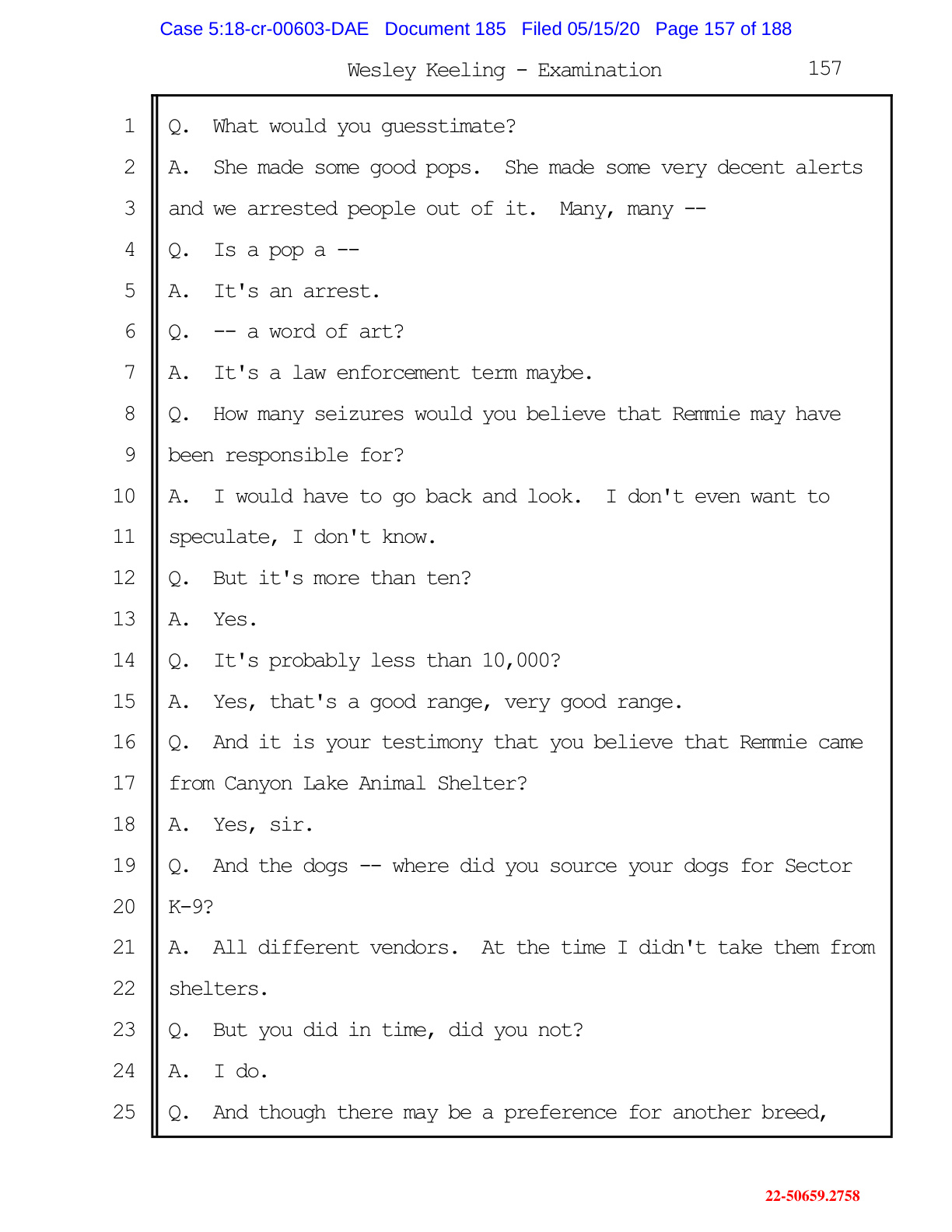
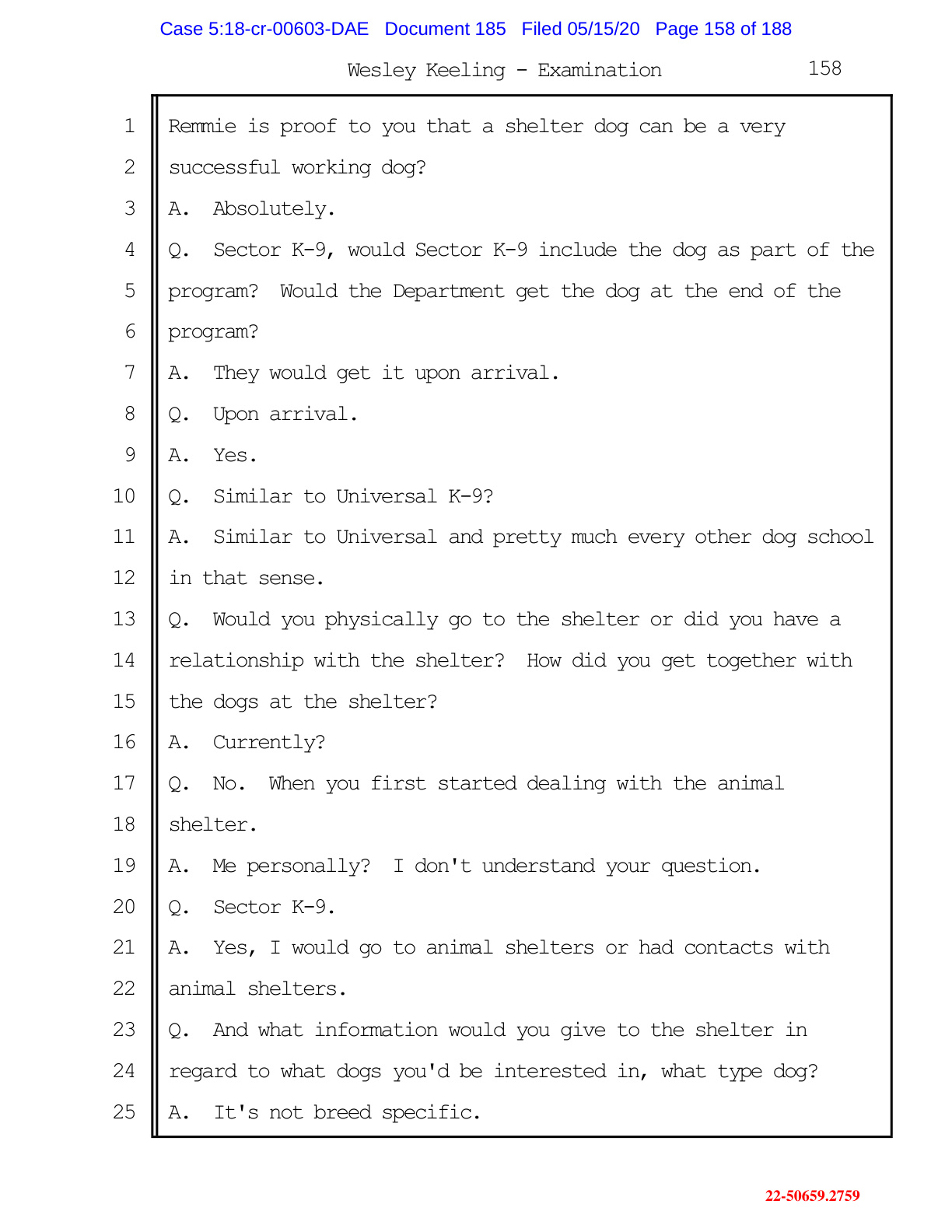
Keeling described successful alerts leading to arrests. Asked whether Remmie had been responsible for more than ten seizures, he answered “Yes.” He said Remmie came from an animal shelter. Read page 157. Asked whether Remmie proved a shelter dog could become a successful working police dog, Keeling answered “Absolutely.” Read page 158.
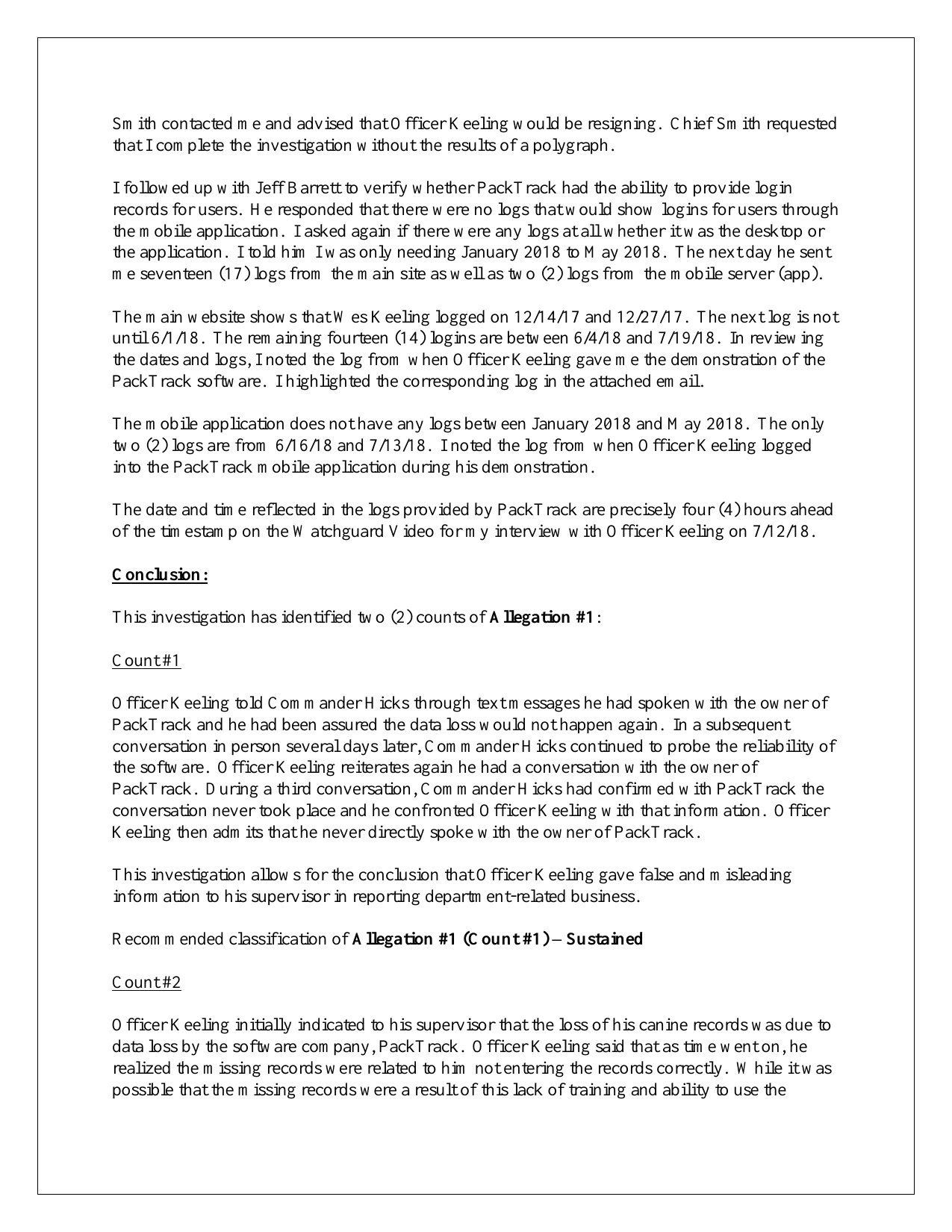
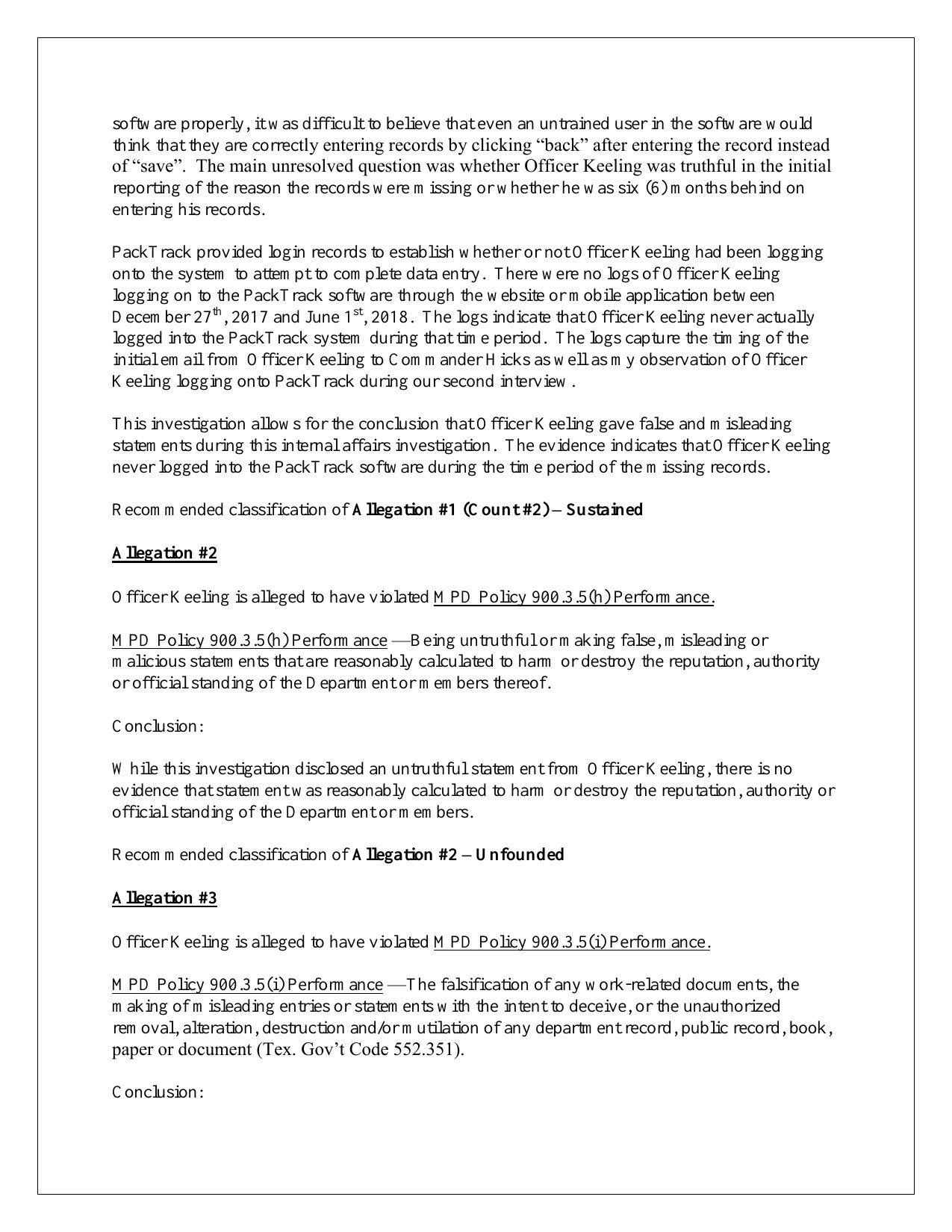
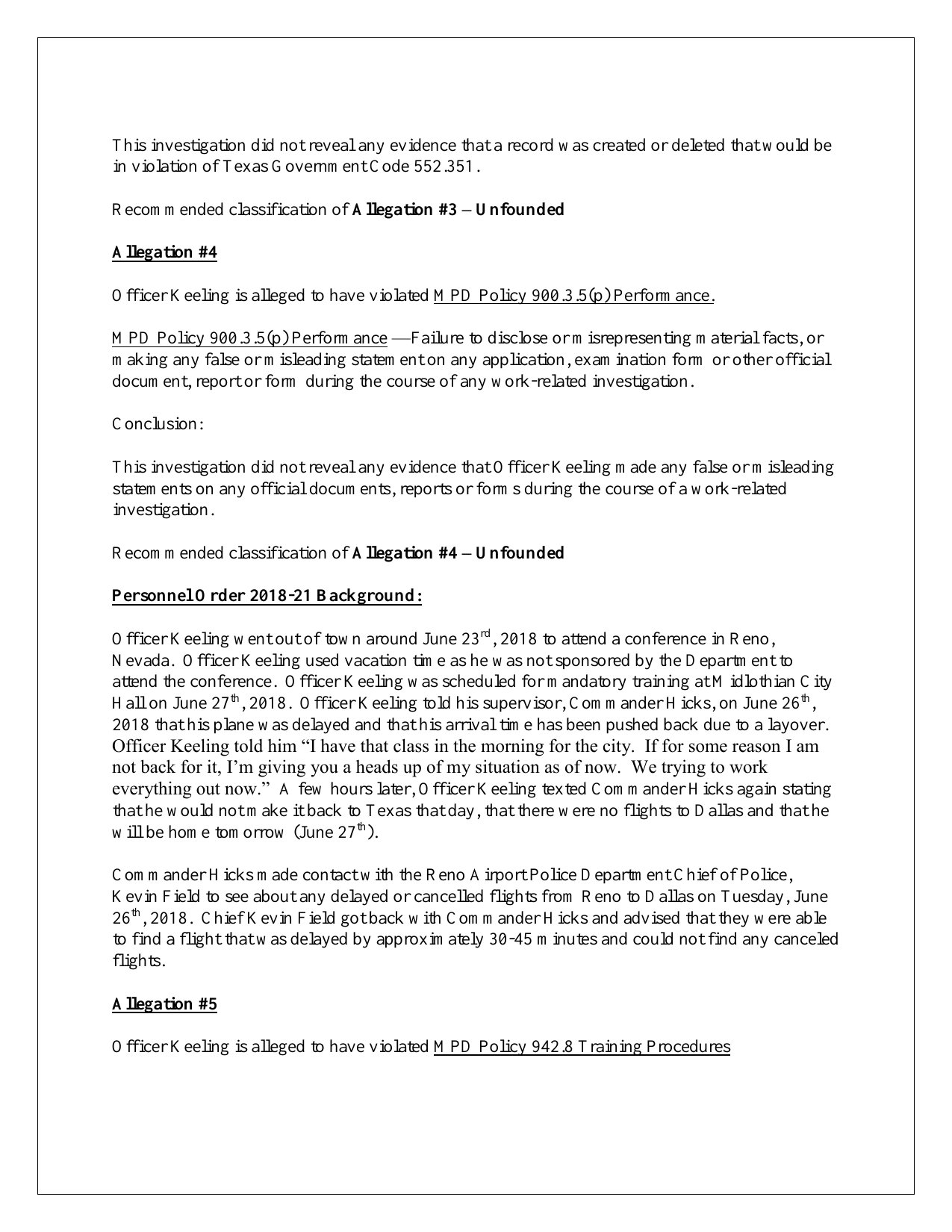
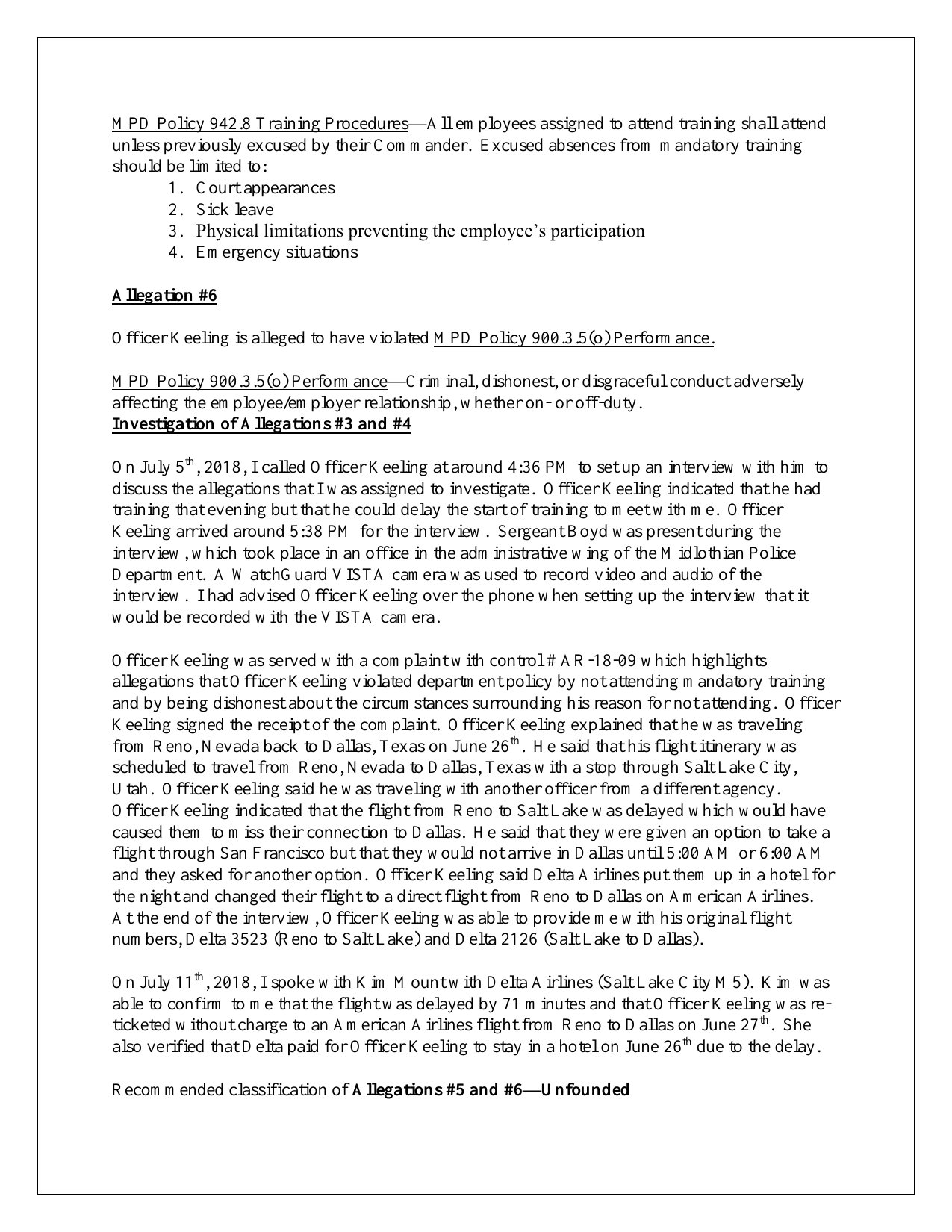
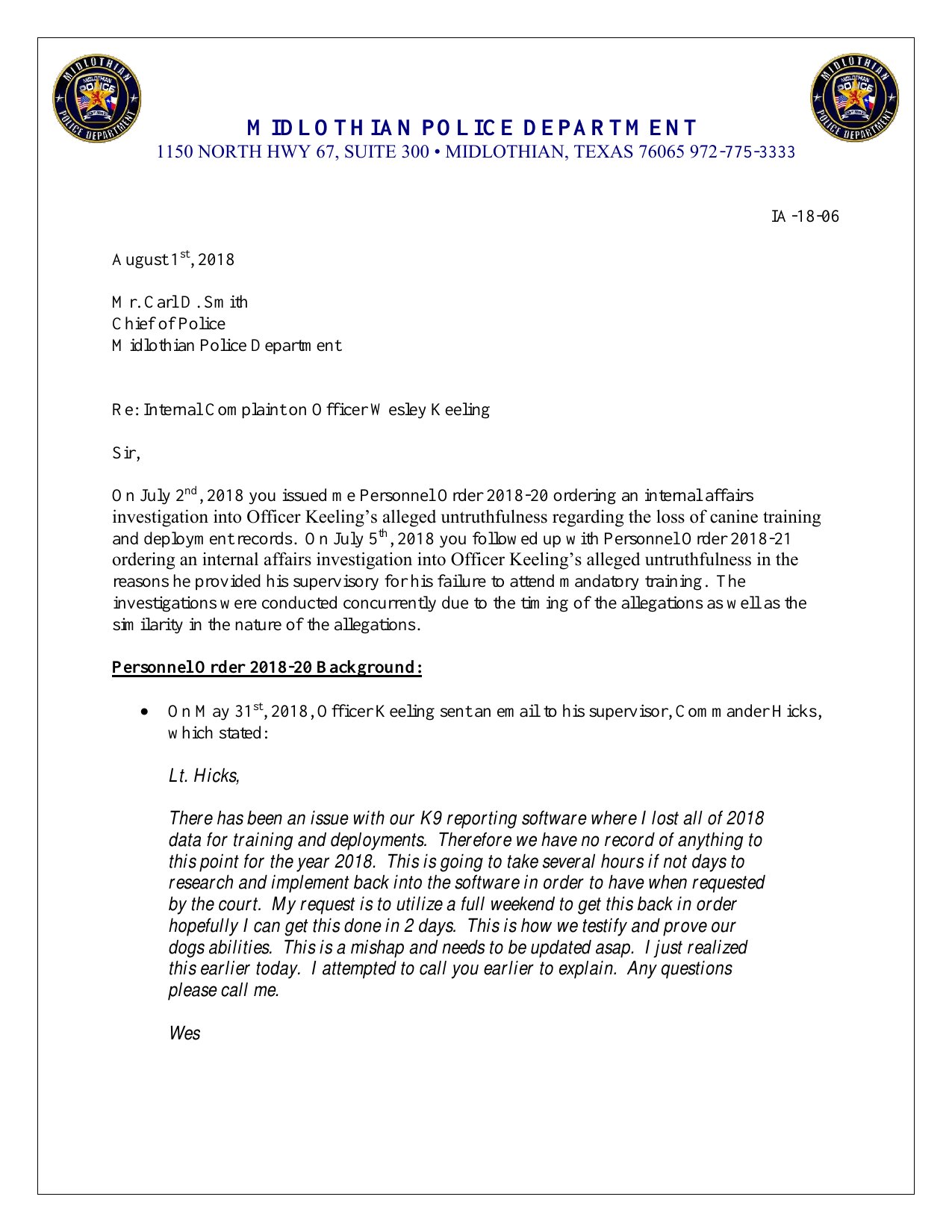
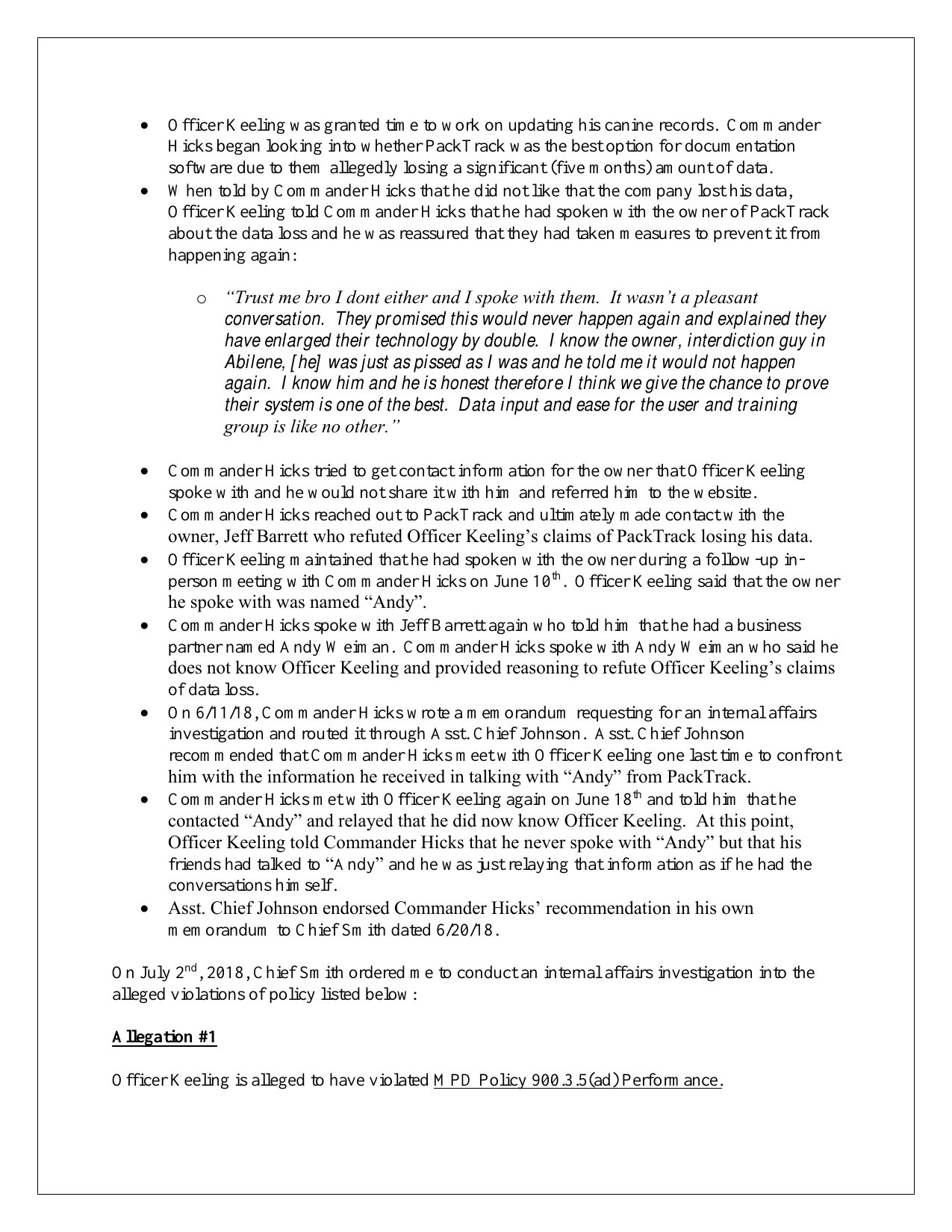
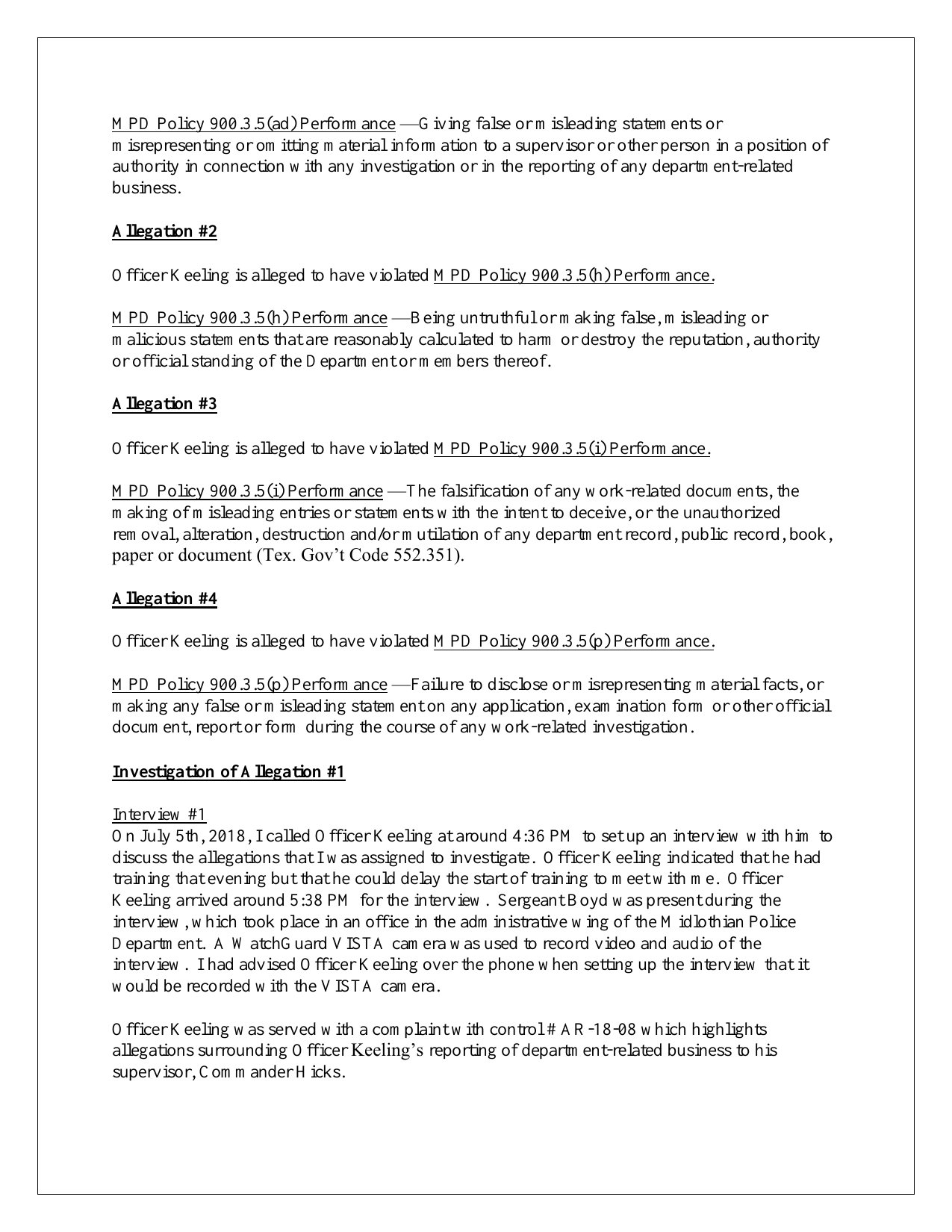
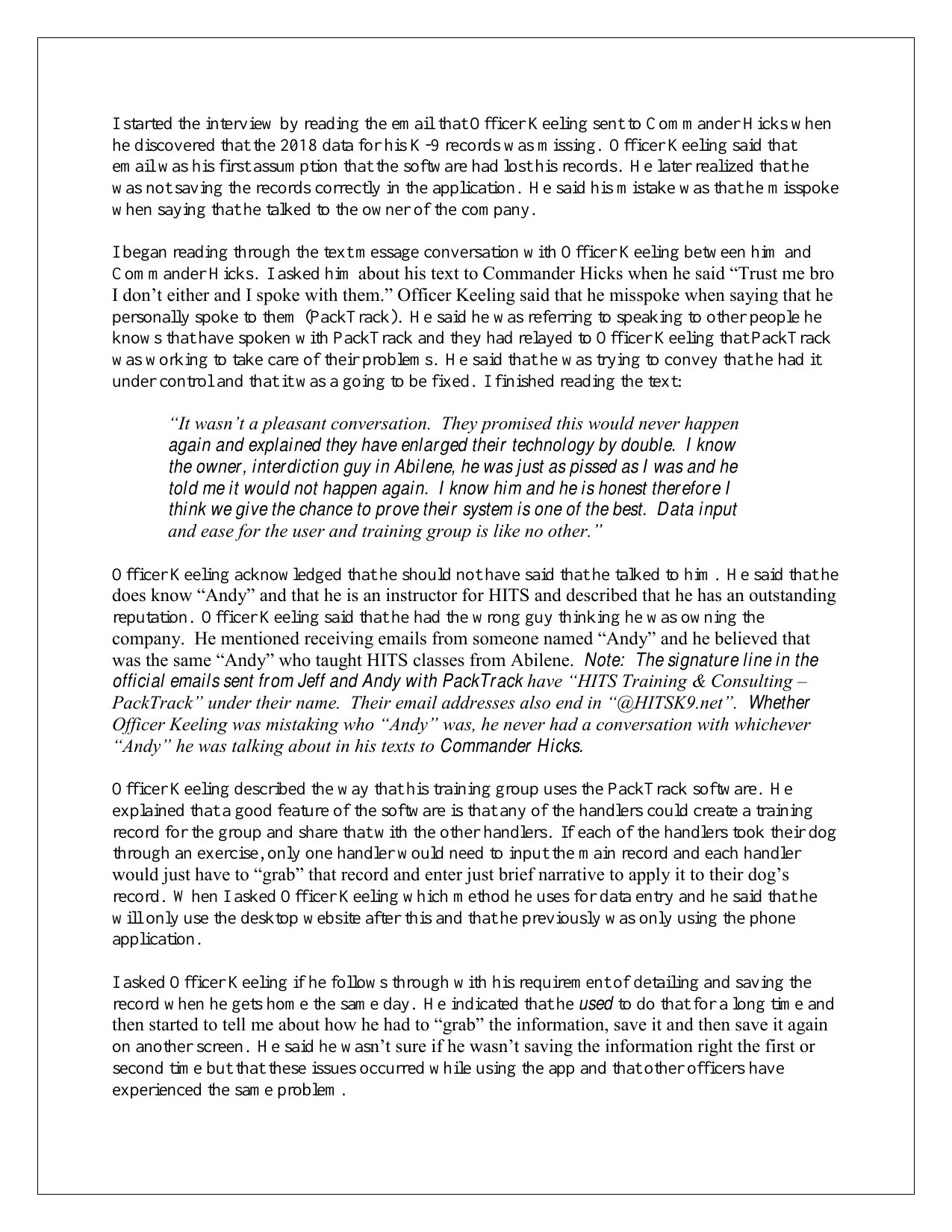
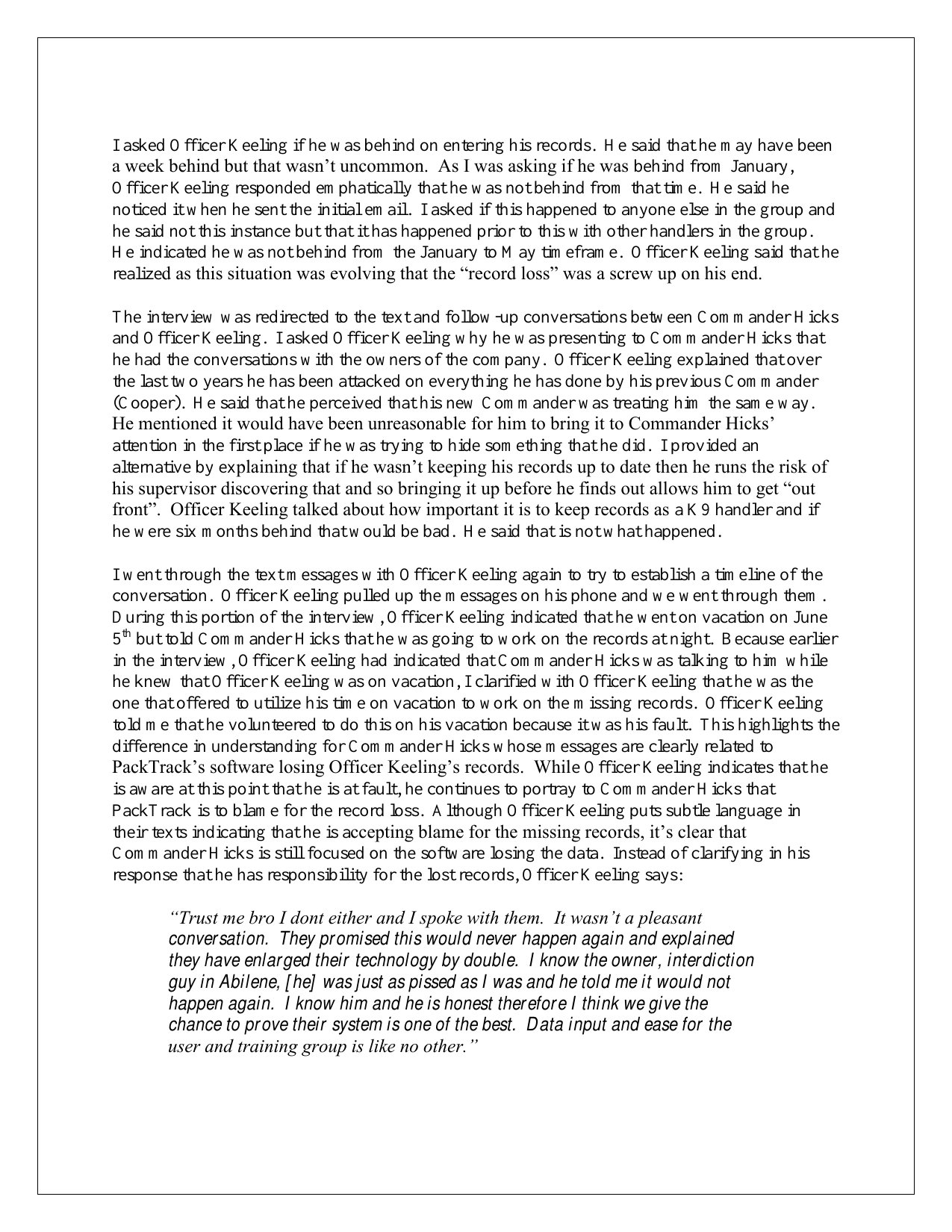
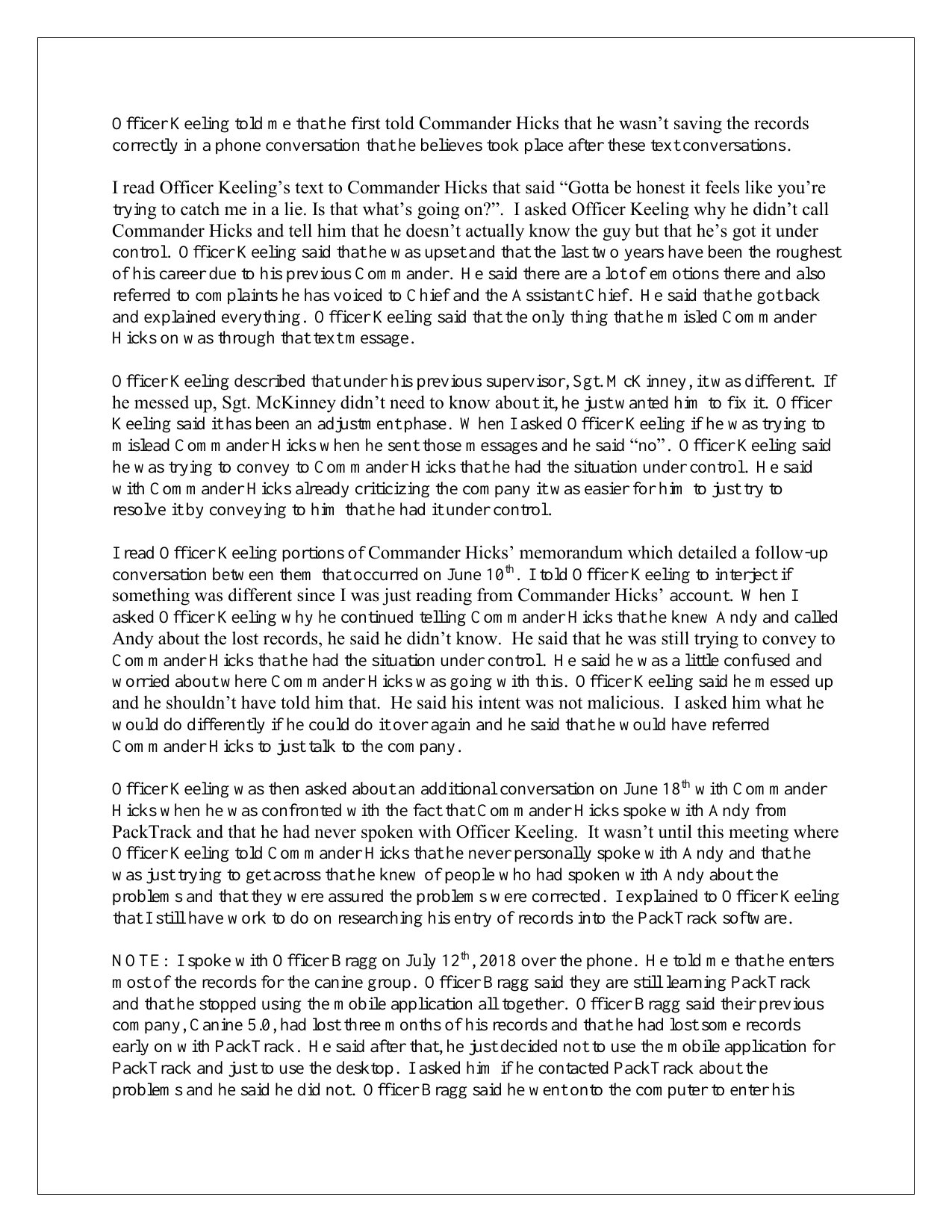
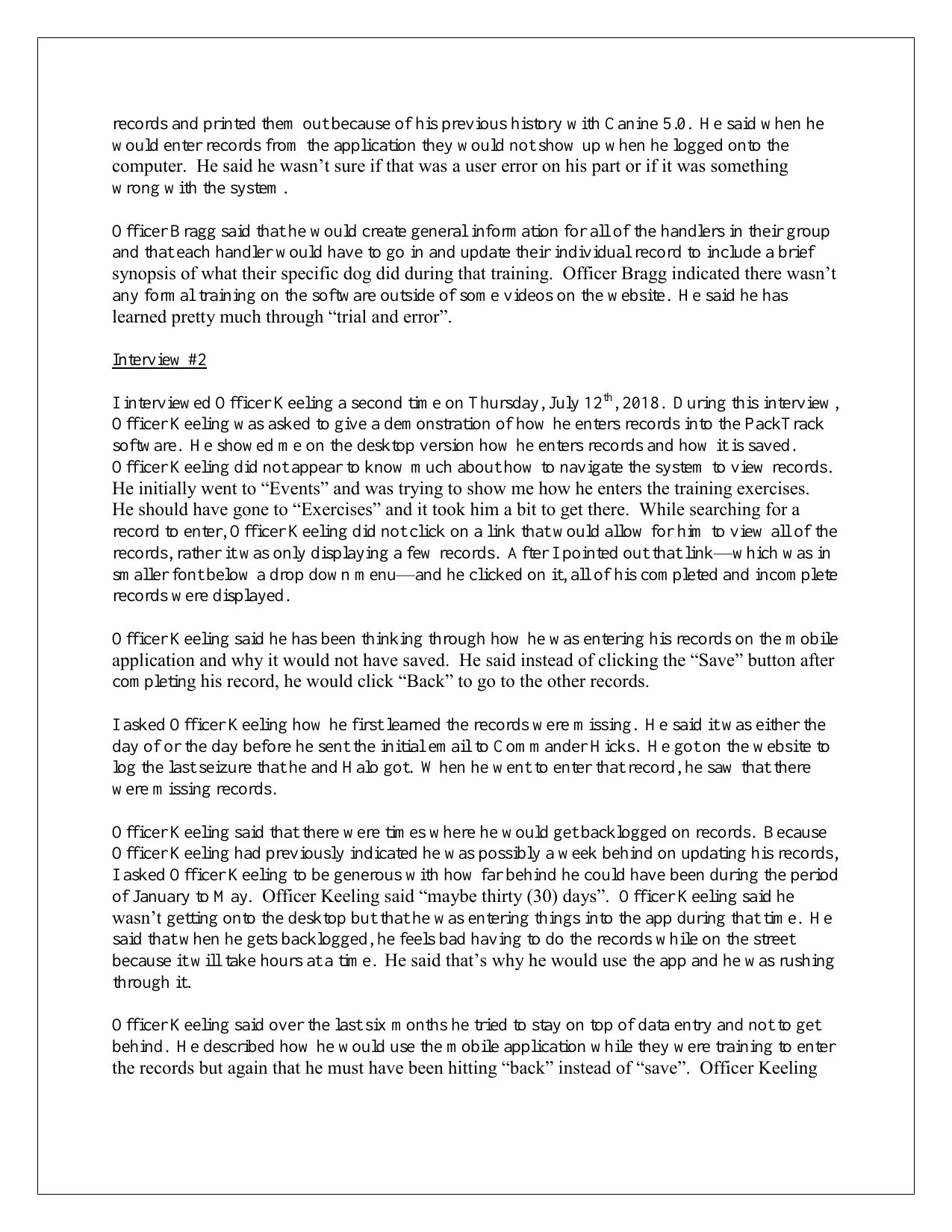
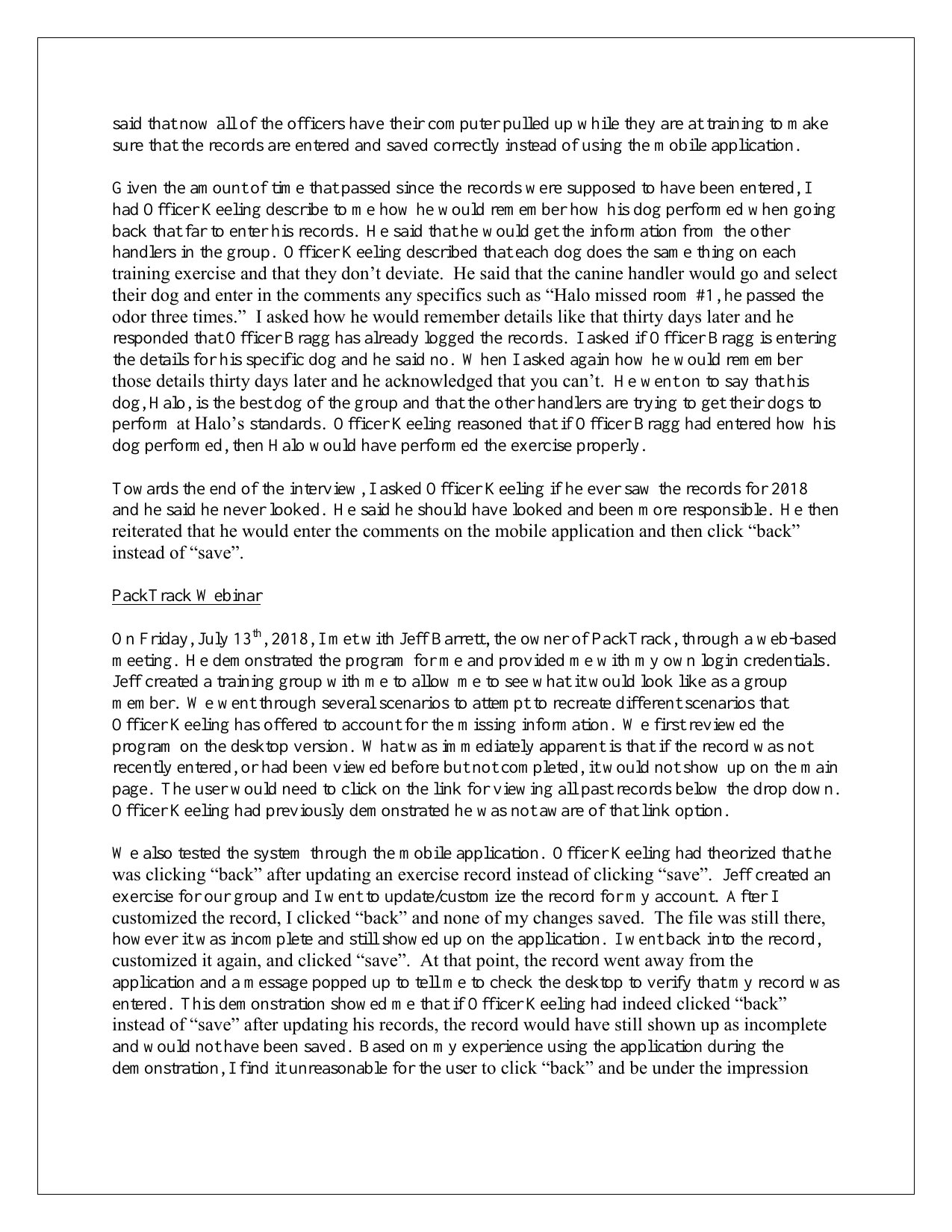
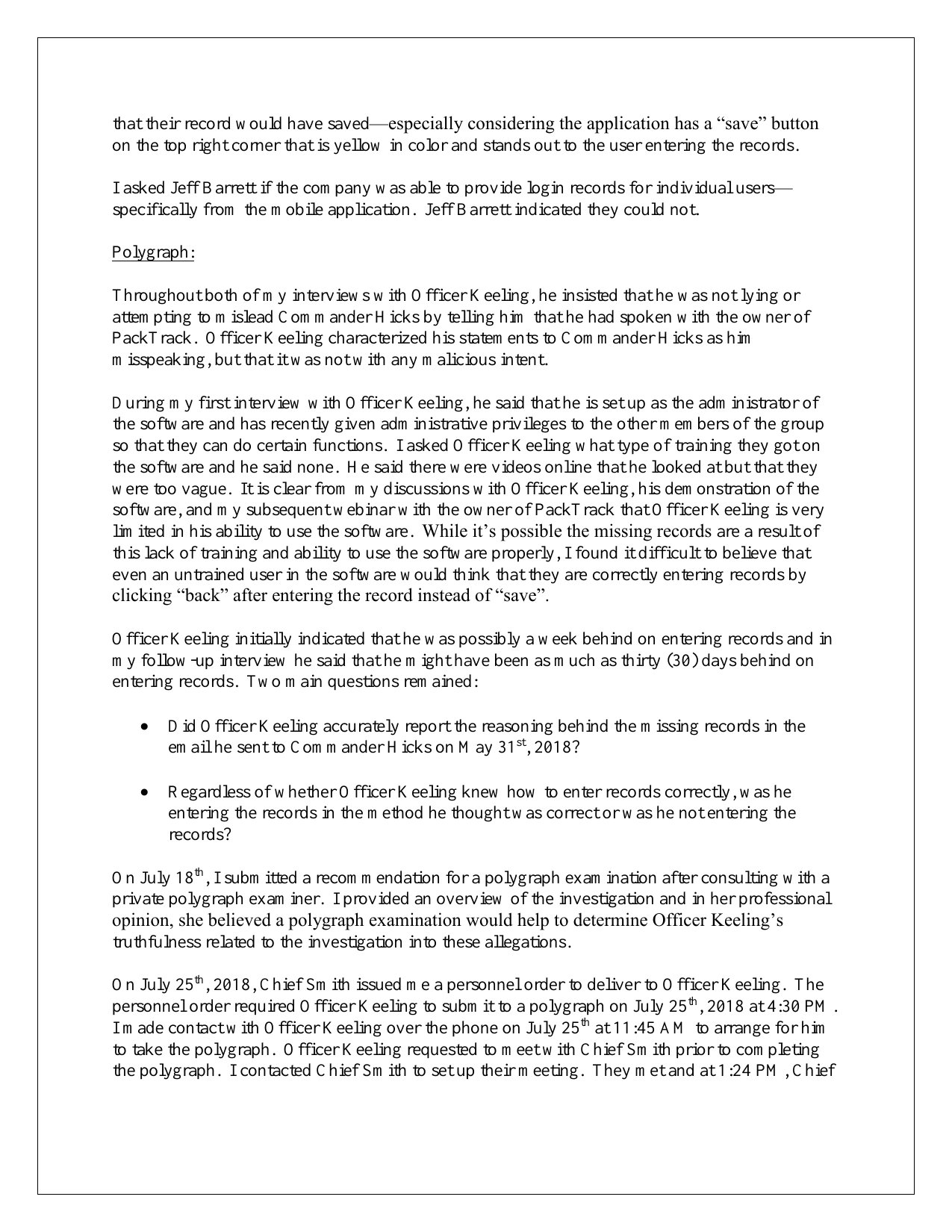
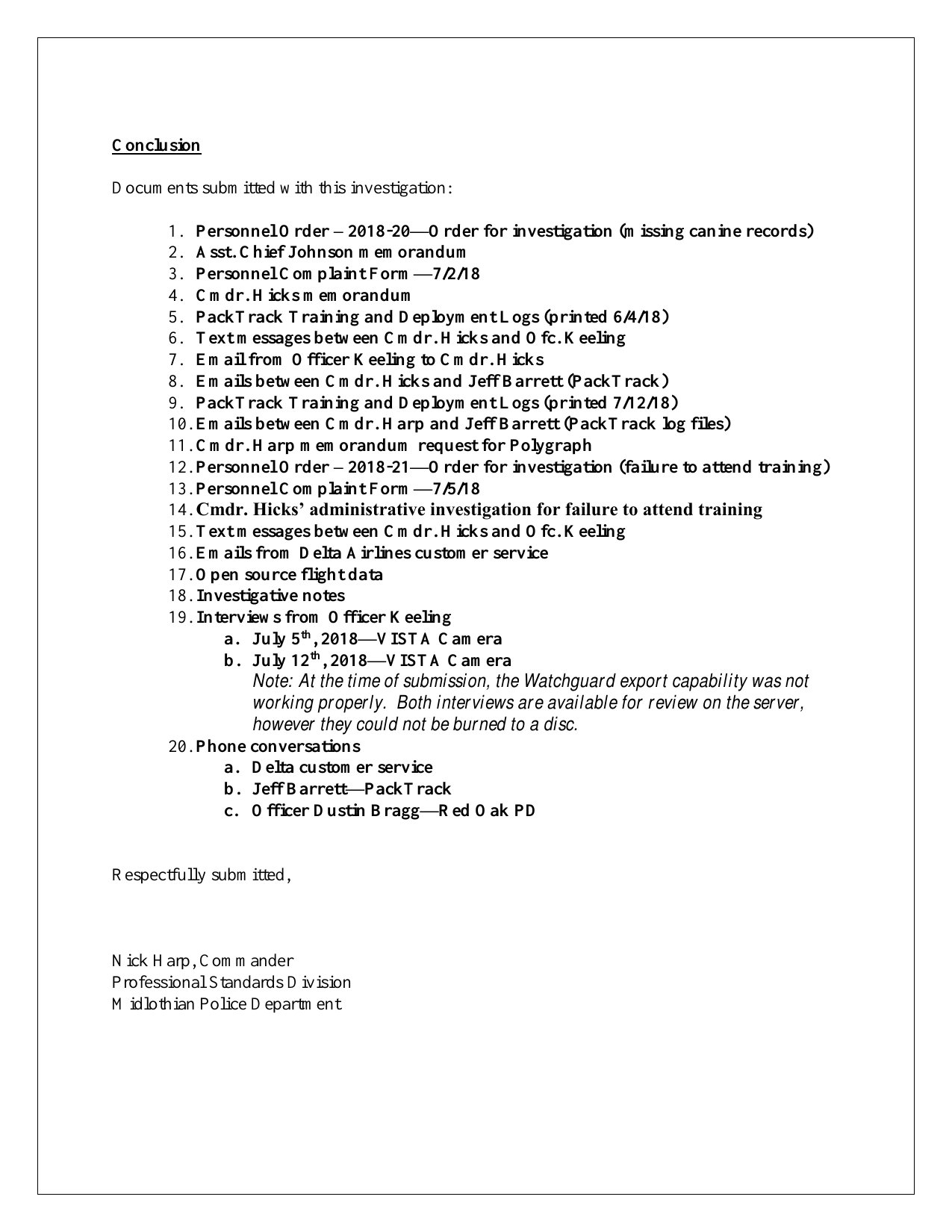
There is also credibility information concerning Keeling in Midlothian Police Department and Ellis County records that predated Croft’s 2019 trial and was raised in the federal litigation later. In an August 1, 2018 internal investigation report, the investigator classified two counts concerning false or misleading statements as sustained (finding on the first count; finding on the second count). Several other allegations in that same report were classified unfounded (page 11; page 12; page 13).
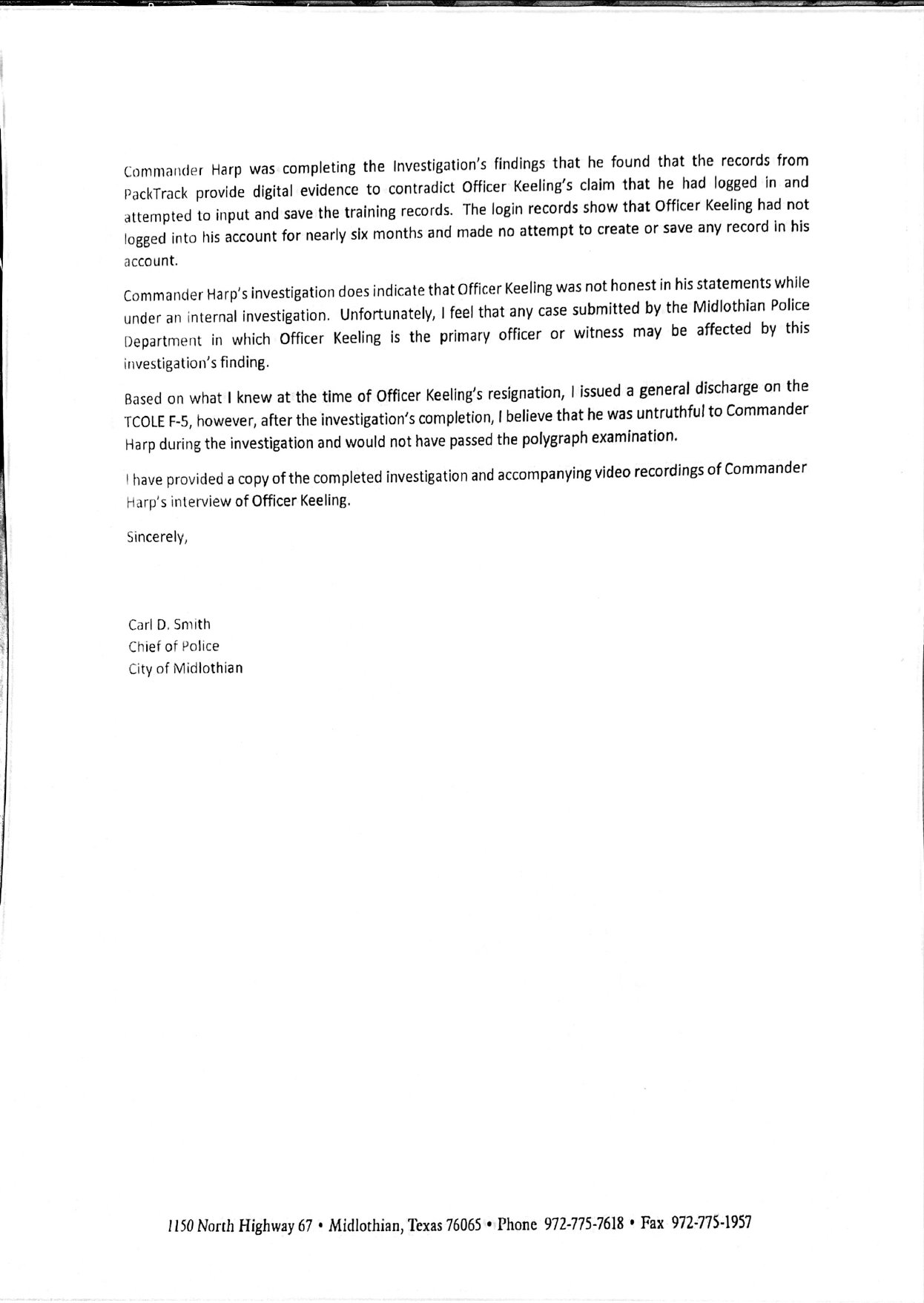
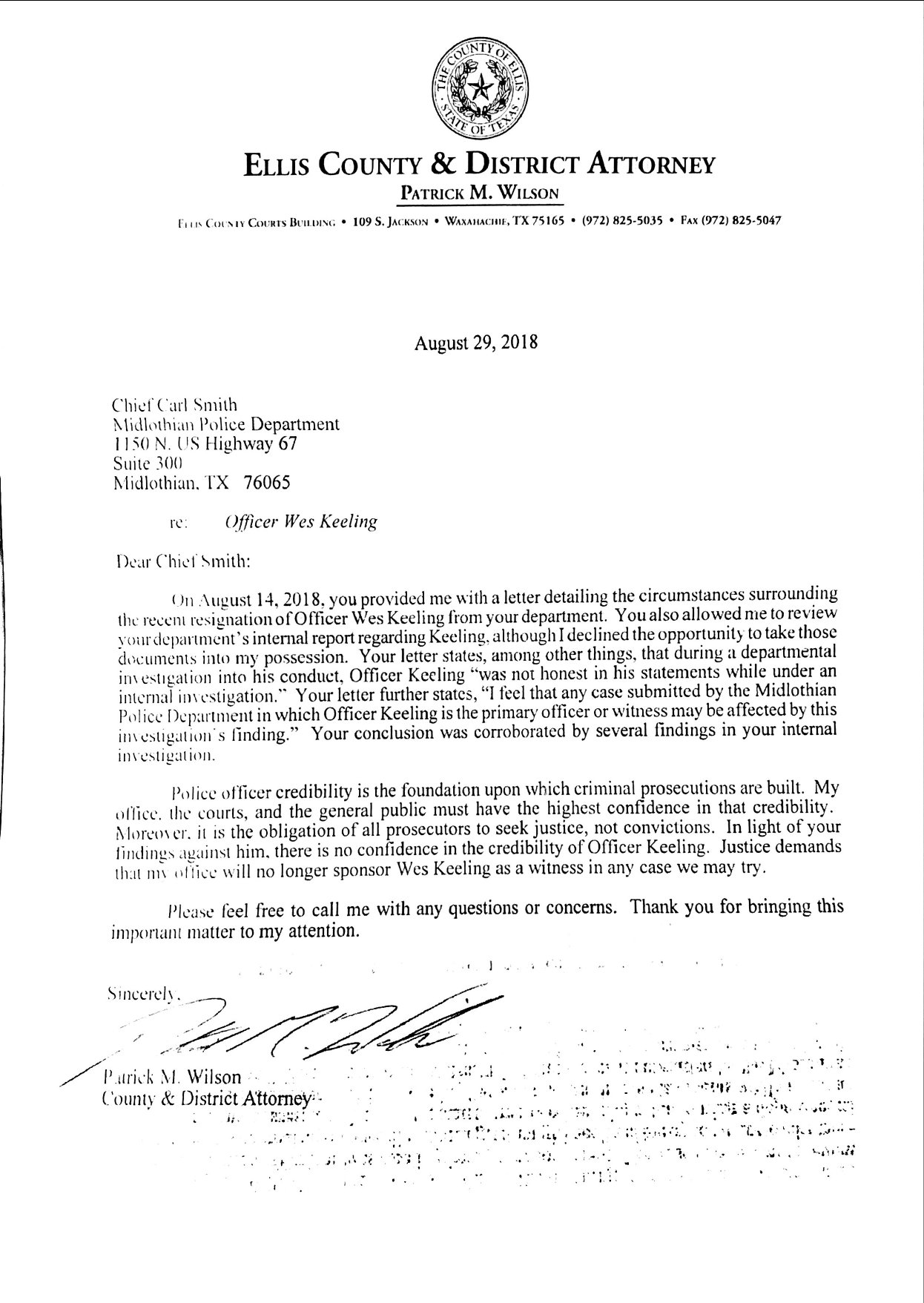
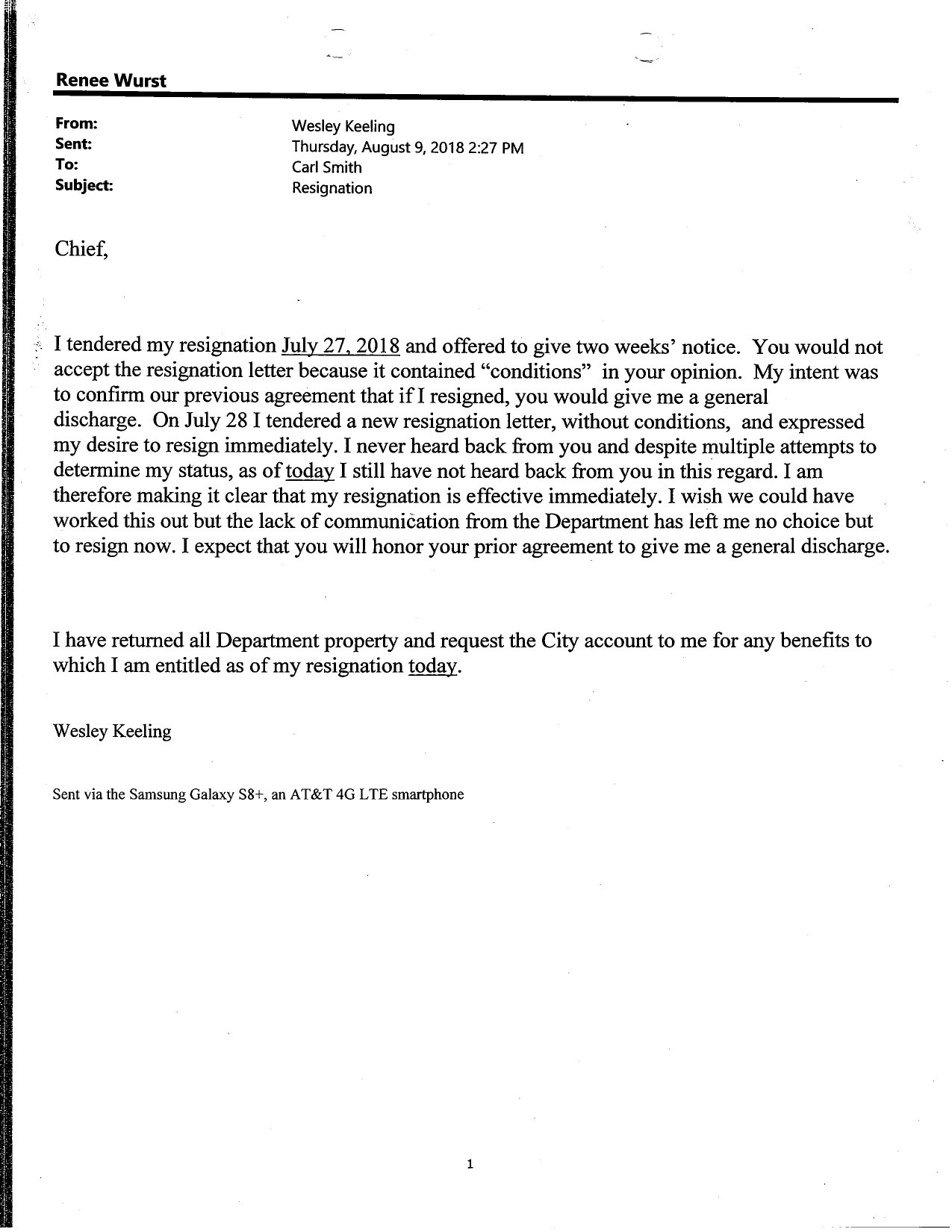
Keeling’s July 27, 2018 resignation memorandum discussed reporting Brady-related truthfulness issues, and the resignation email exchange includes Chief Carl Smith’s response. In his August 14 letter to the Ellis County DA (page 1) and (page 2), Smith reported that Keeling was not honest during the internal investigation and warned that cases in which Keeling was a primary officer or witness might be affected. After reviewing the findings, District Attorney Patrick Wilson wrote on August 29, 2018 that there was “no confidence in the credibility of Officer Keeling” and that his office would no longer sponsor Keeling as a witness (read Wilson’s letter).
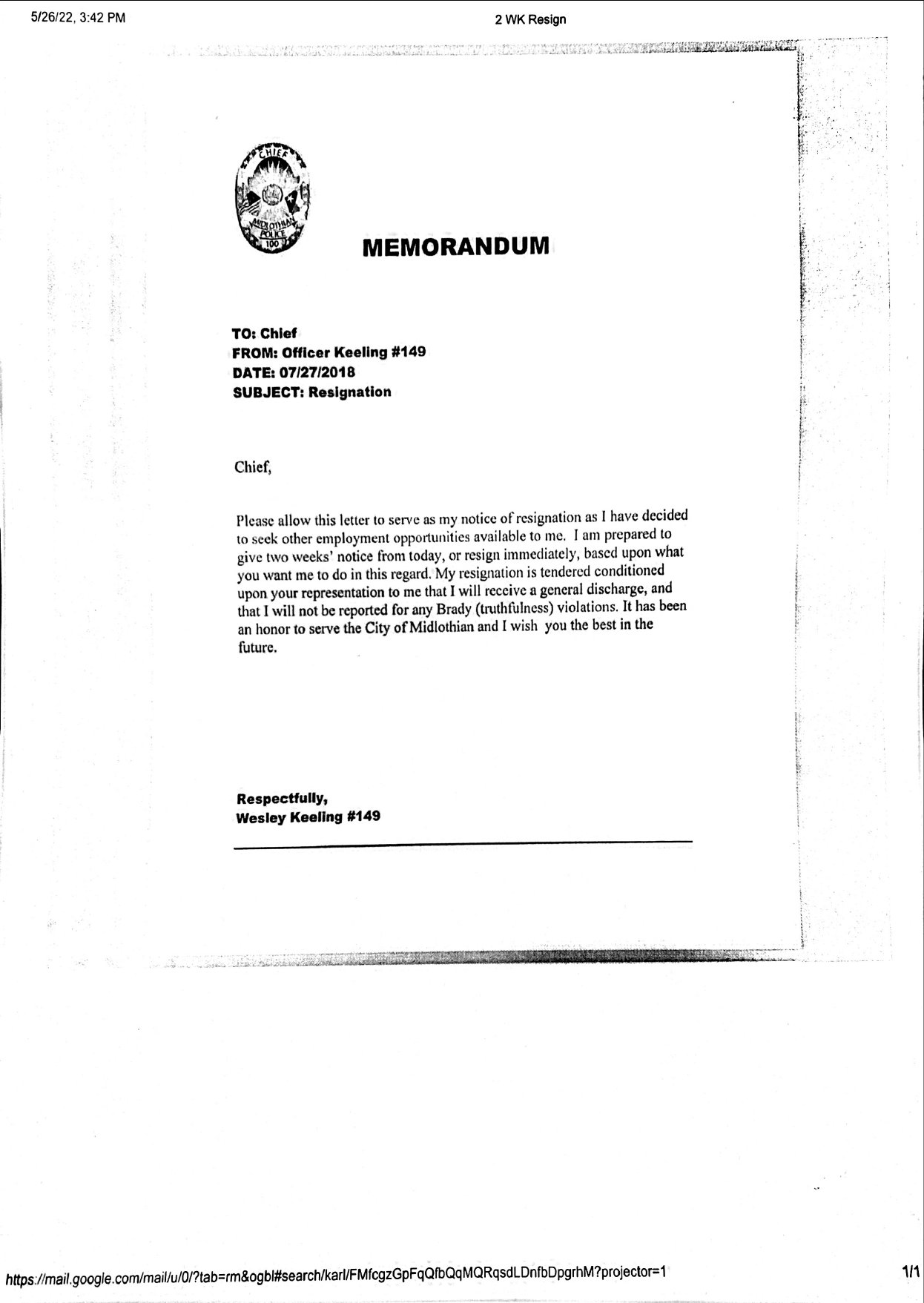
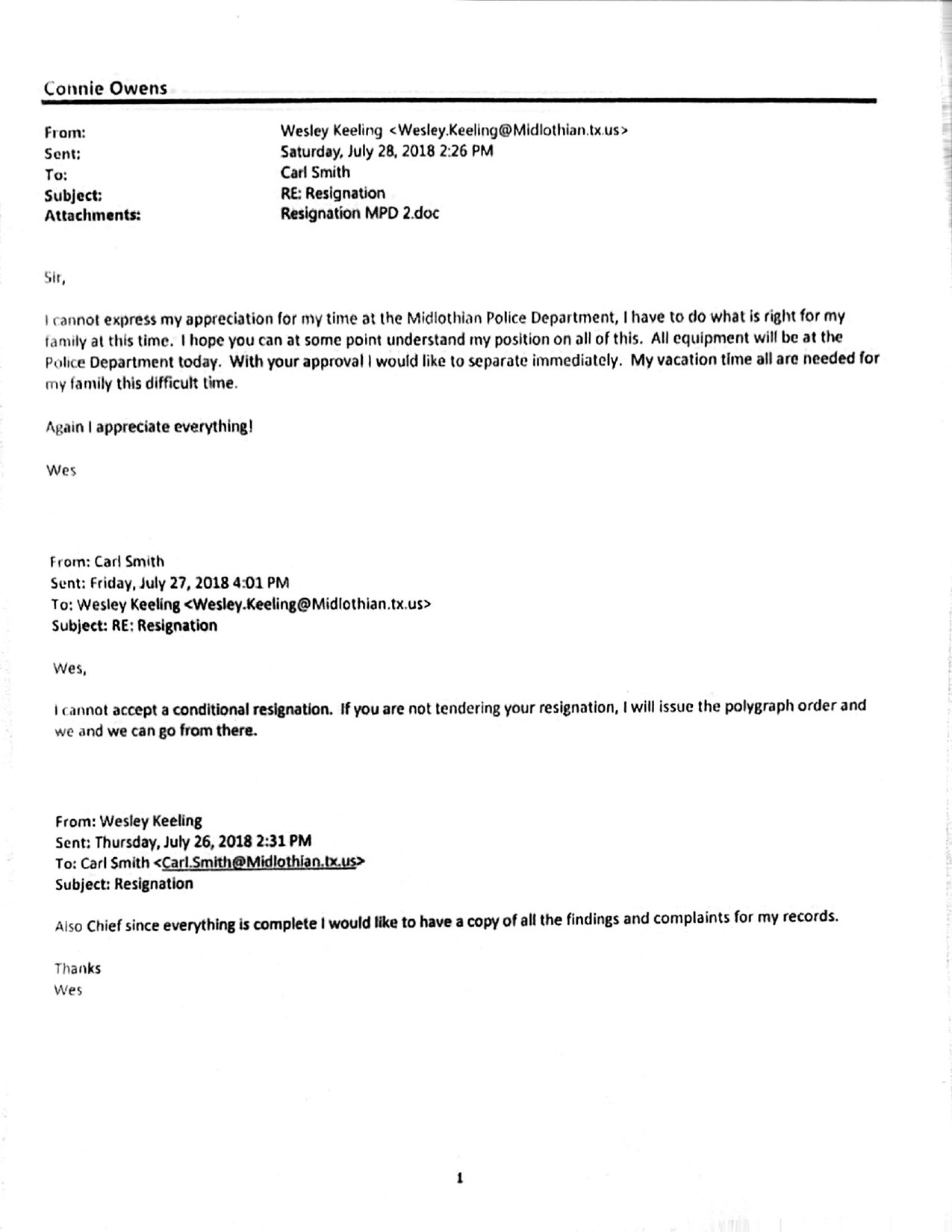
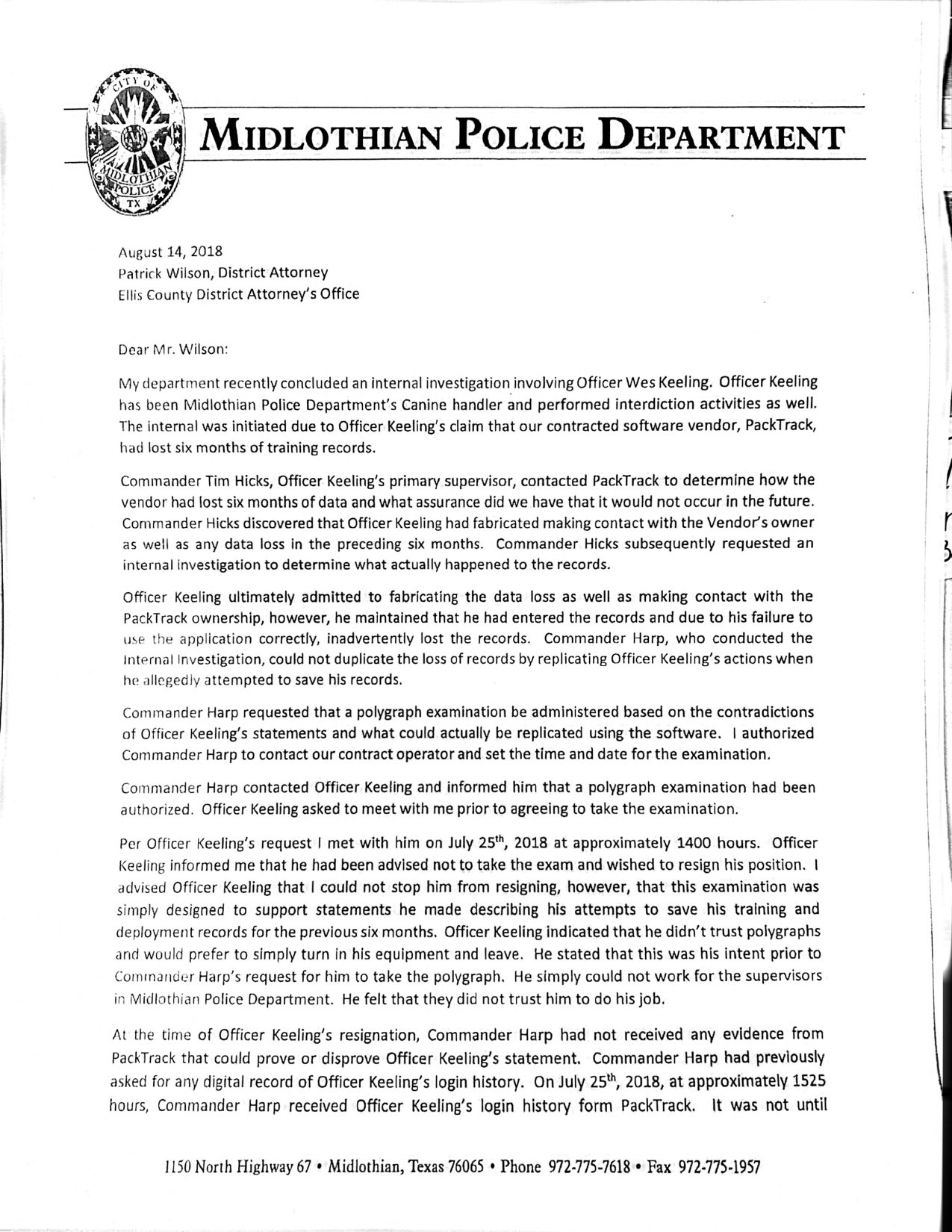
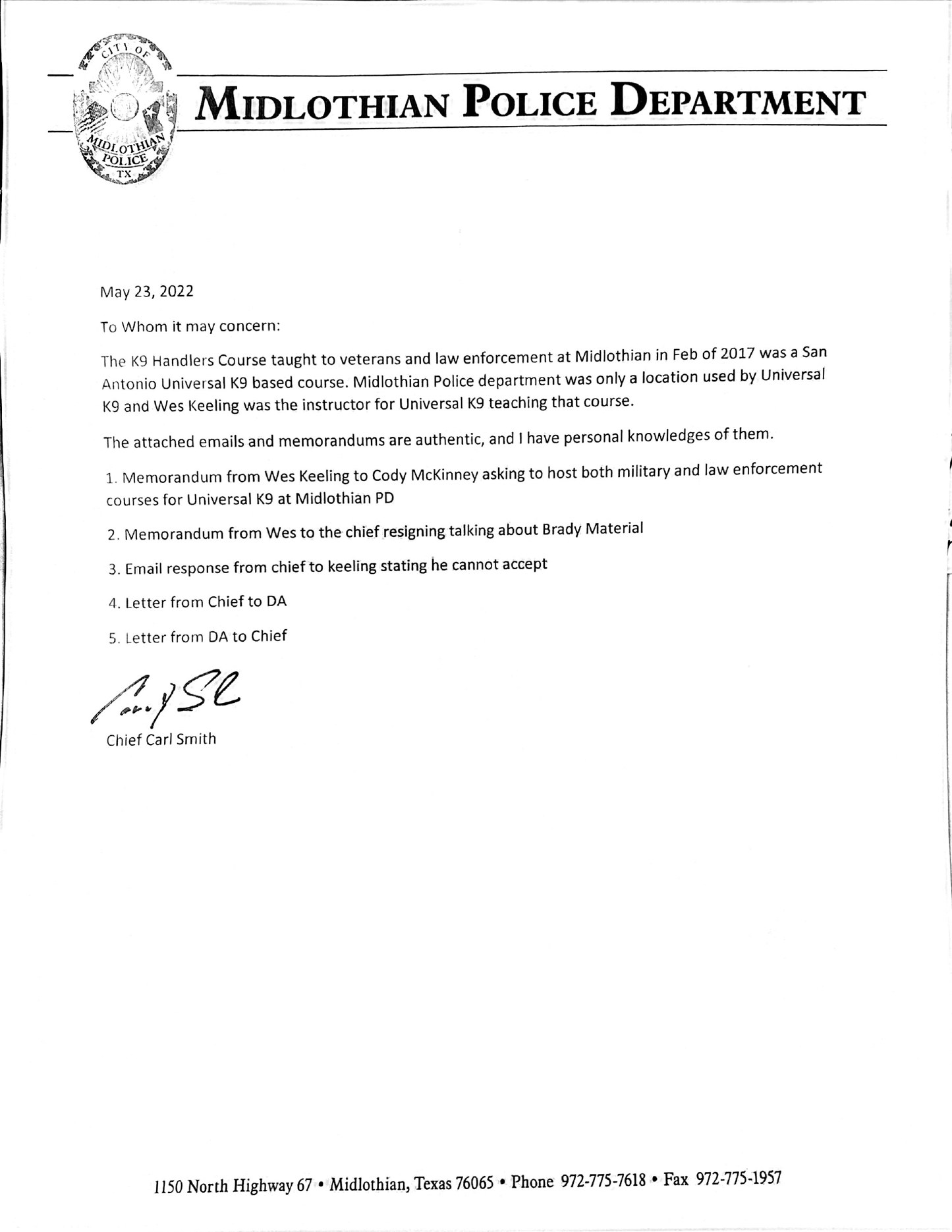
In a signed May 23, 2022 statement, Chief Smith identified five attached emails, memoranda, and letters as authentic and said he had personal knowledge of them. That statement expressly lists the resignation and correspondence, but does not expressly list the separate 14-page internal investigation report. The documents’ existence before trial does not by itself establish when federal prosecutors or Croft’s defense obtained them.
View the complete Keeling credibility document images
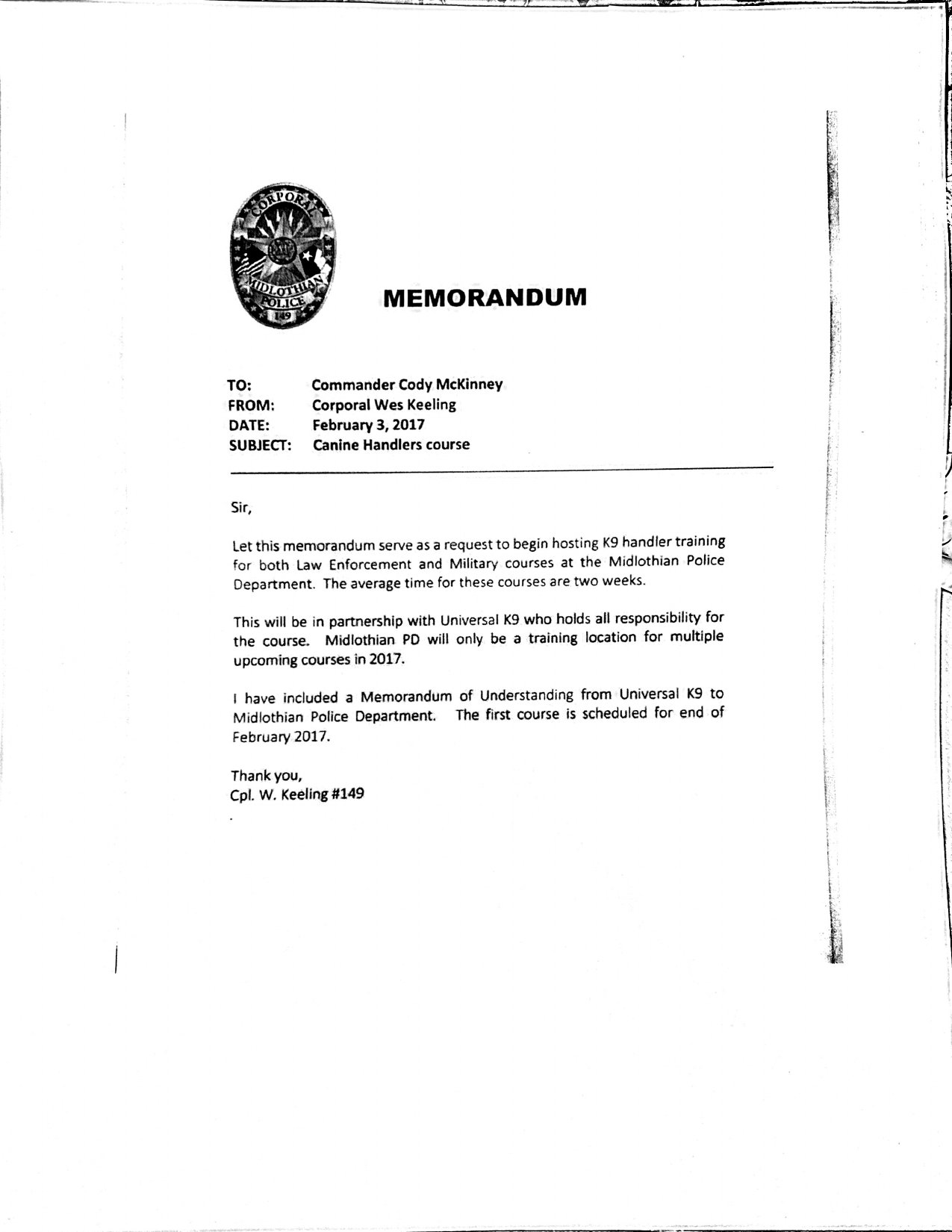
Chief Smith’s signed statement and its attachments: authentication statement; 2017 course memorandum; resignation memorandum; email exchange; chief’s letter, page 1; chief’s letter, page 2; DA’s reply.
Separate internal investigation report, pages 1–14: page 1; page 2; page 3; page 4; page 5; page 6; page 7; page 8; page 9; page 10; page 11; page 12; page 13; page 14.
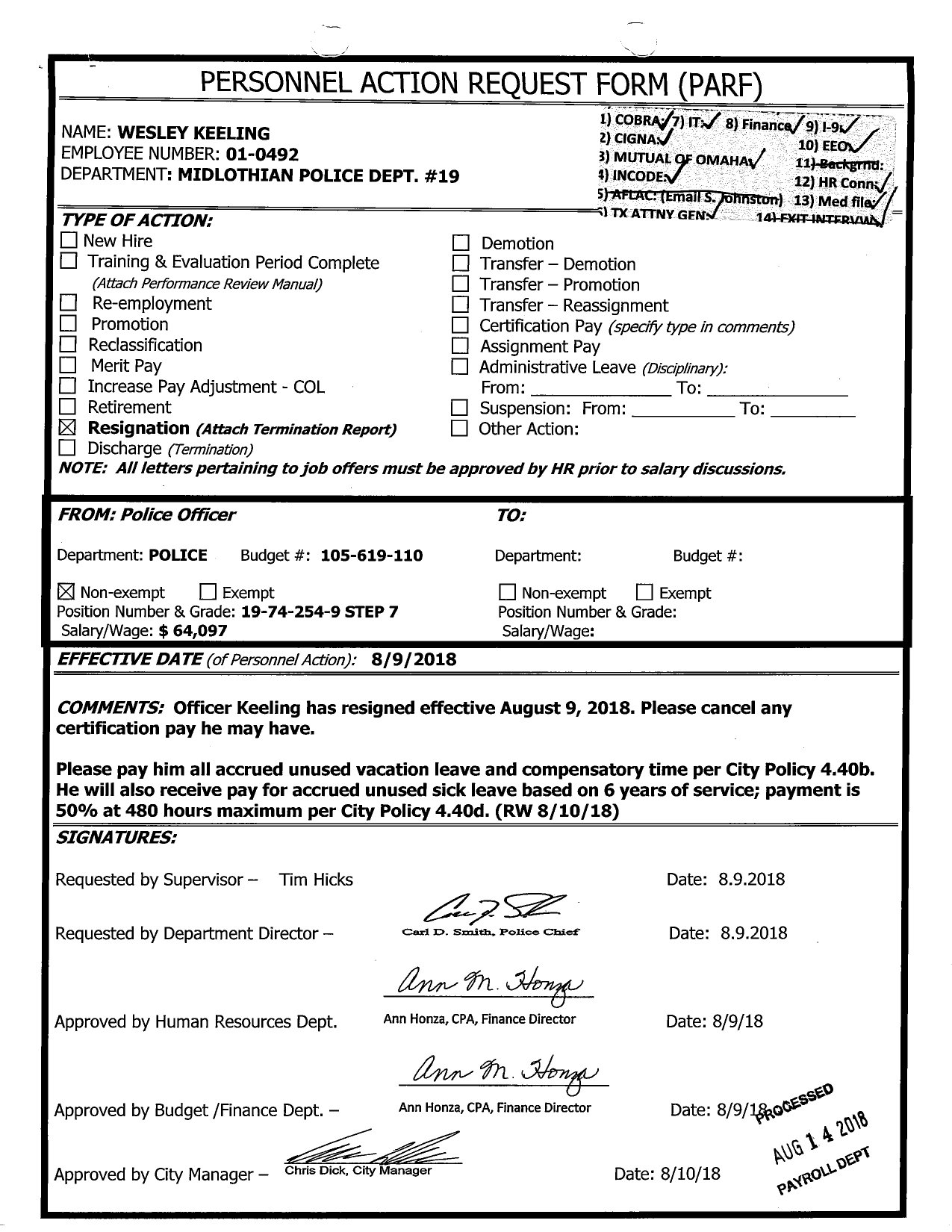
Additional personnel correspondence: personnel action form; August 9 email. These supplementary images are not among the five items expressly listed in Smith’s May 2022 statement.
That credibility history does not alter the words Keeling spoke under oath about Remmie. The transcript pages let readers examine his testimony directly rather than accept anyone else’s characterization.
Steven Benitez
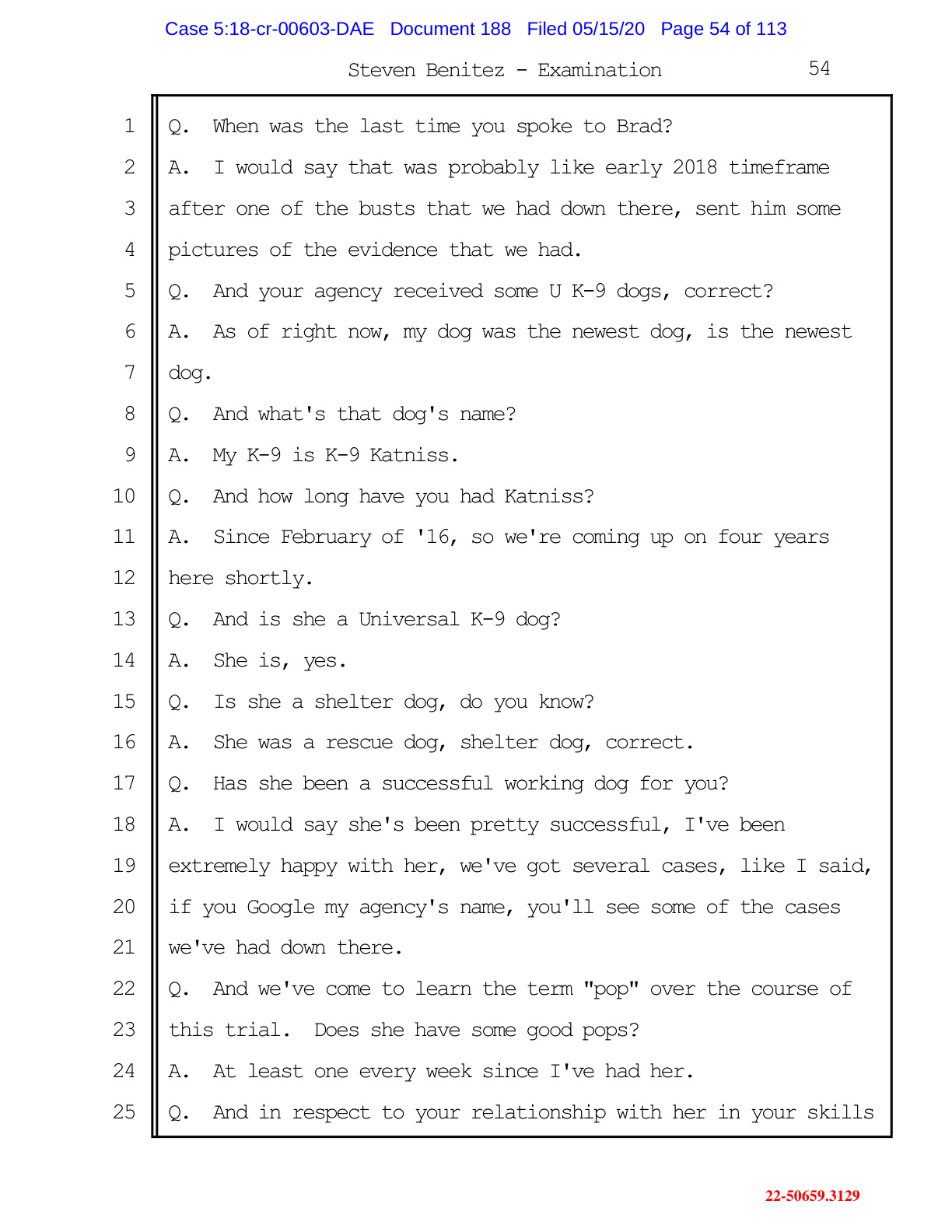
Defense witness · Harlingen Police Department K9 handler and narcotics investigator. Click his name to view the original trial transcript page about Katniss.
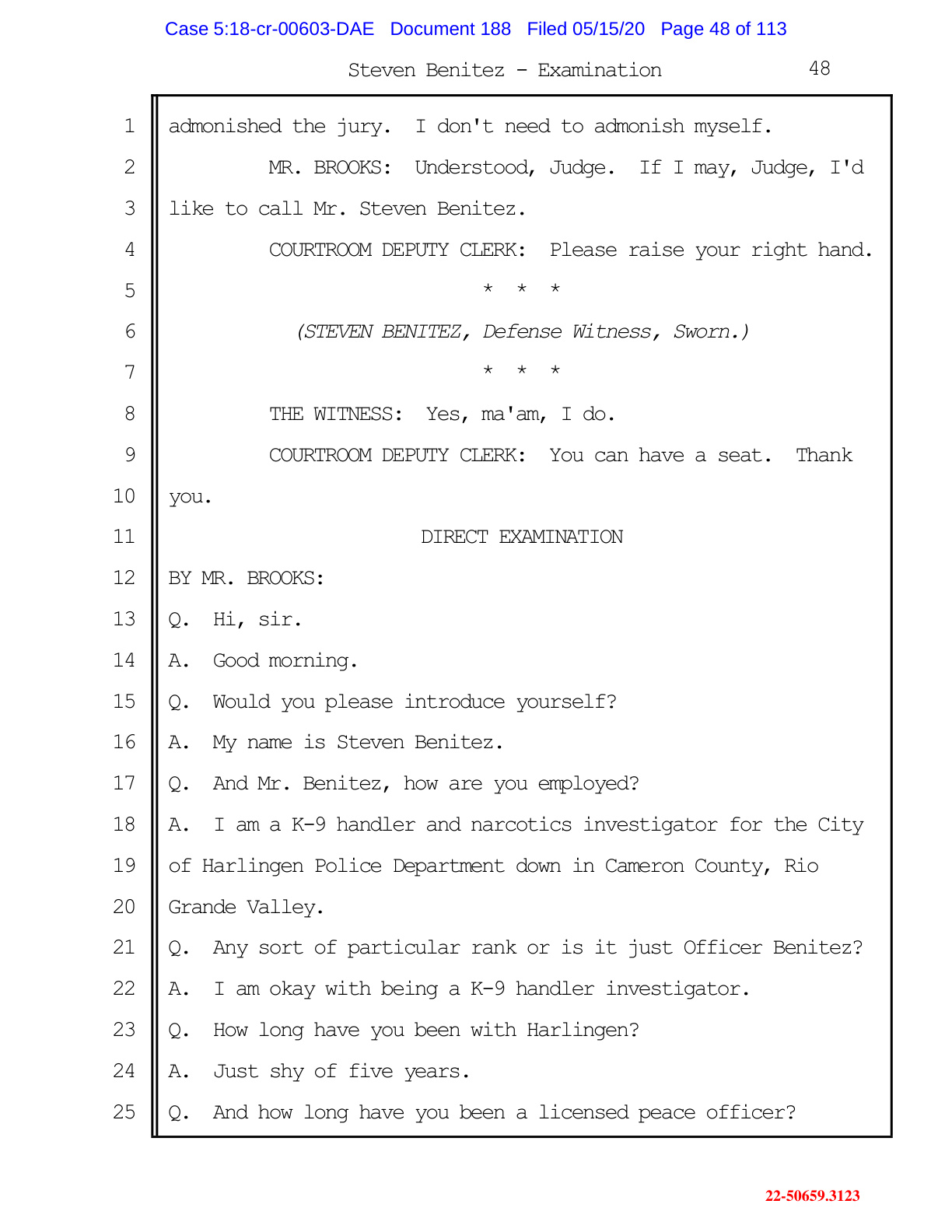
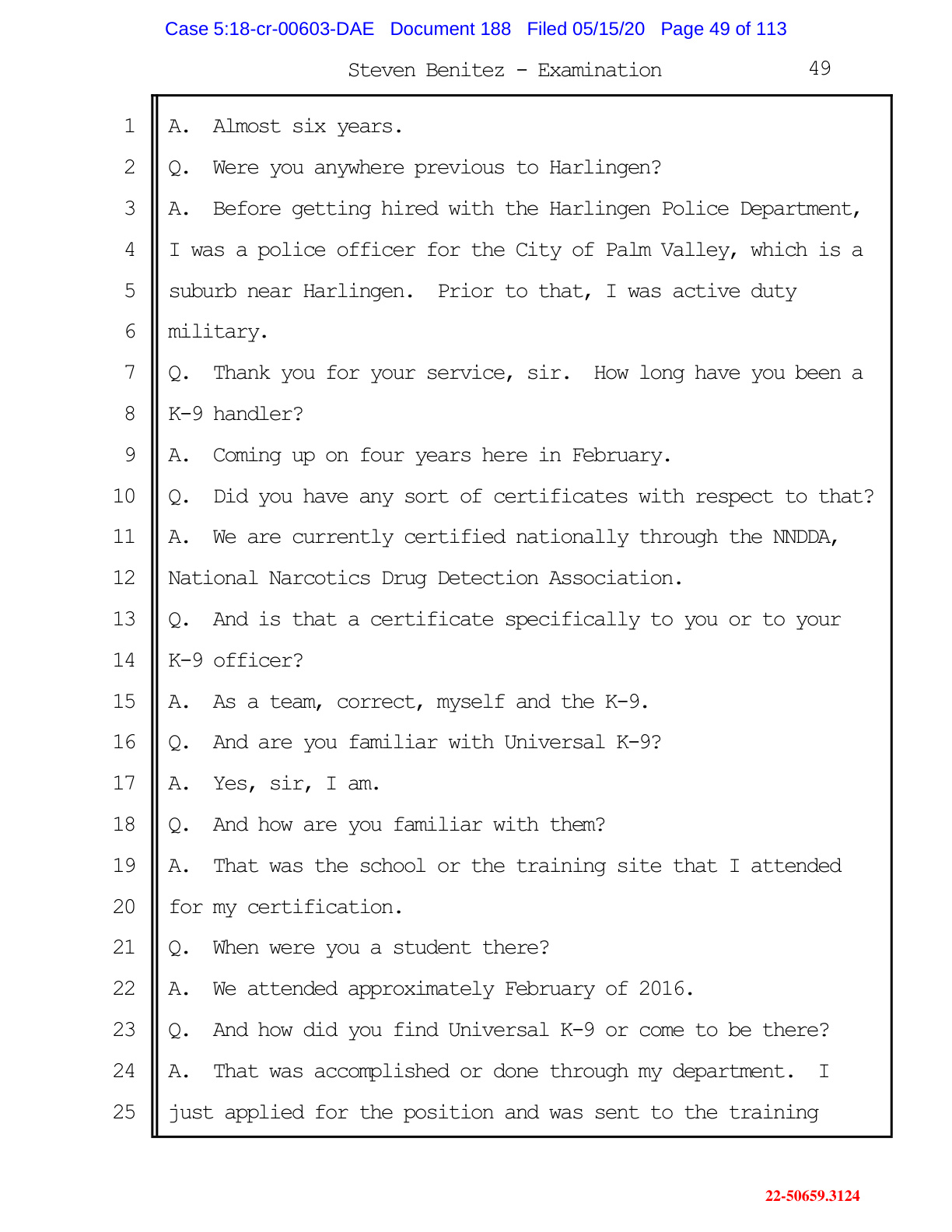
Officer Steven Benitez testified that his department sent him to Universal K9 in approximately February 2016. He was a K9 handler and narcotics investigator and testified that he and his K9 were nationally certified through the National Narcotic Detector Dog Association.
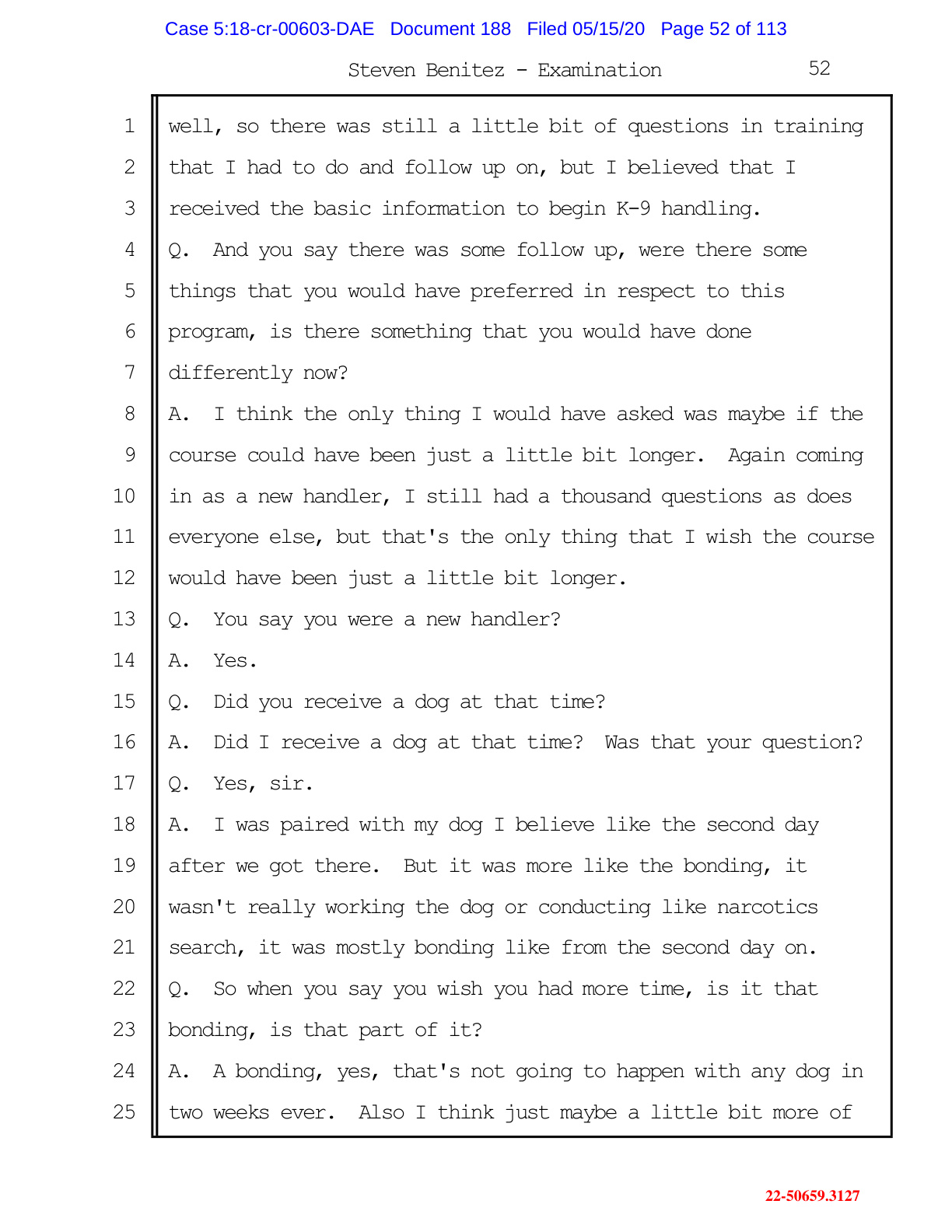
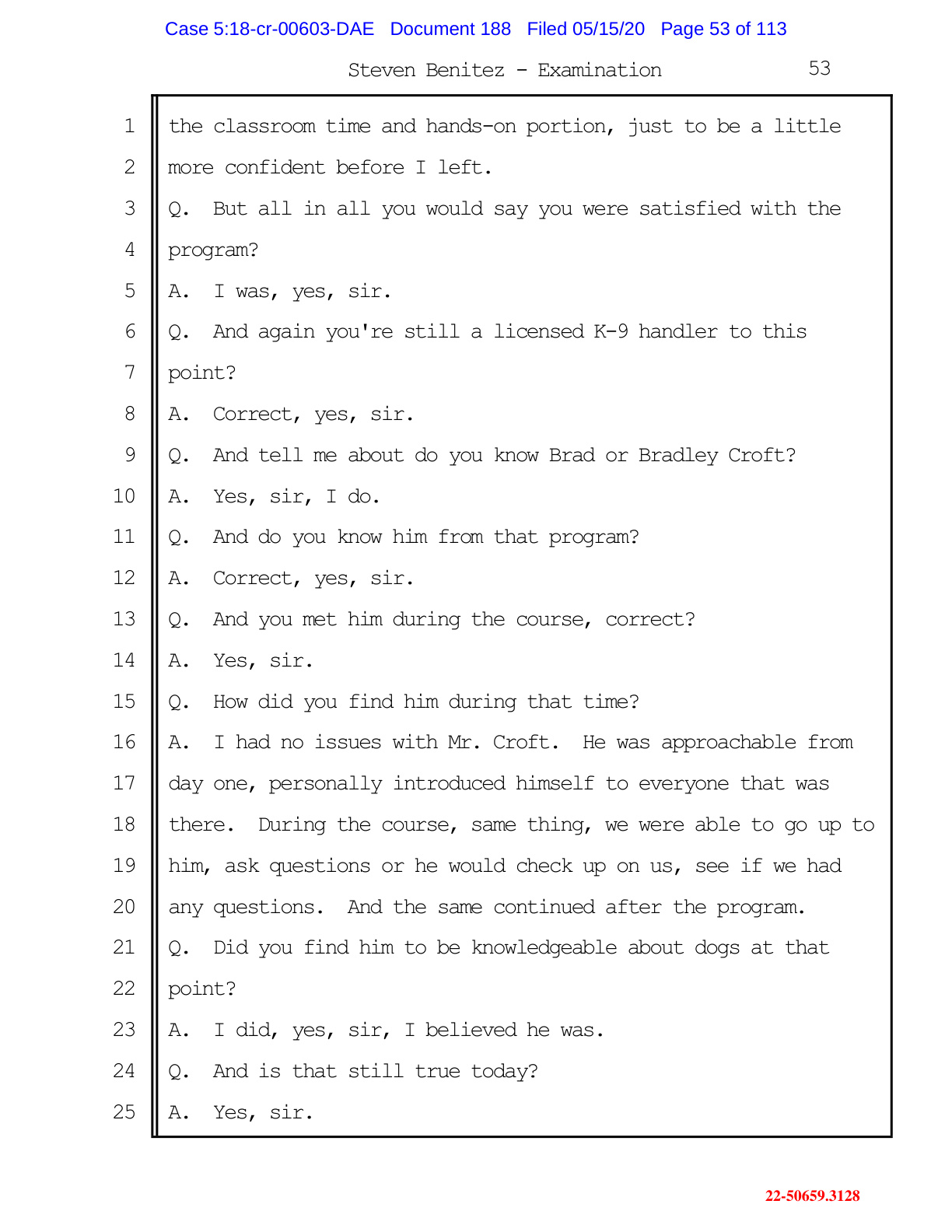
His account was not completely uncritical. Benitez said that as a new handler he would have preferred a somewhat longer course and more classroom and hands-on time. But asked whether, all things considered, he was satisfied with the program, he answered: “I was, yes, sir.” He testified that Croft was approachable, available to students, and knowledgeable about dogs.
Benitez received a rescue dog named Katniss and had worked with her for nearly four years at the time of trial. Asked whether she was a successful working police dog, he said: “I would say she’s been pretty successful, I’ve been extremely happy with her.” He described multiple cases and testified that she produced at least one successful detection “pop” per week. Read page 54.
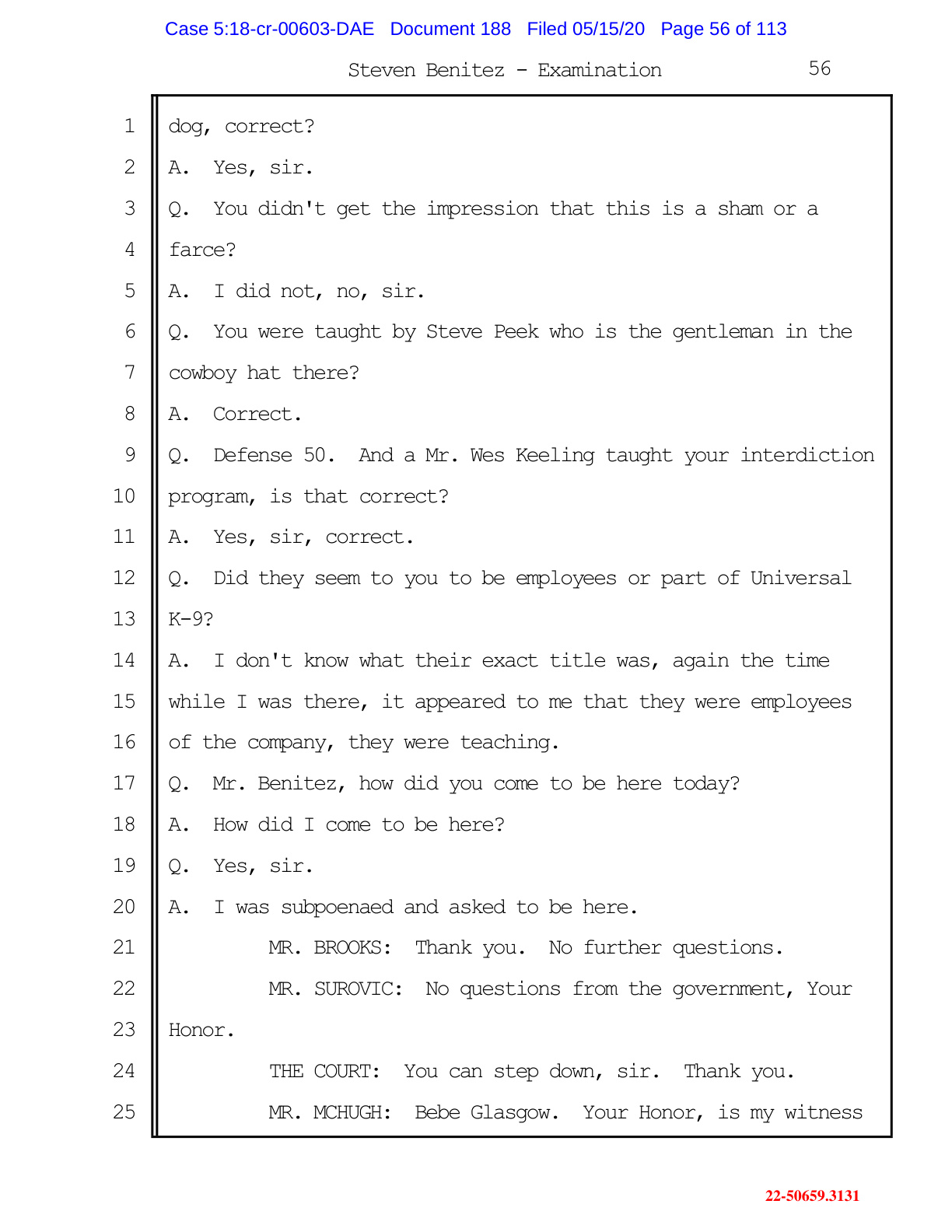
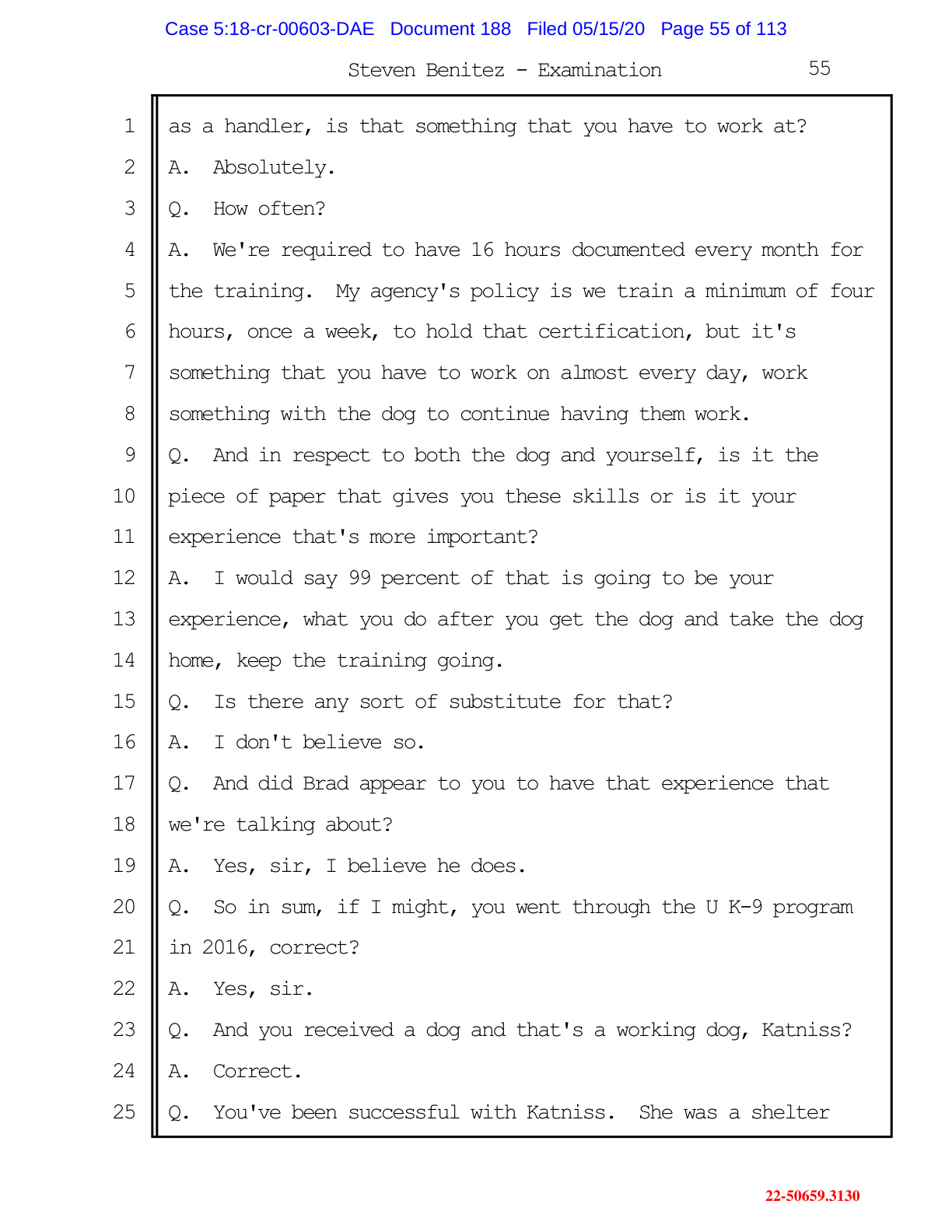
Benitez explained that continued training and experience after receiving a dog matter greatly to a successful K9 team. Asked directly whether he considered the Universal K9 program a sham or a farce, he answered: “I did not, no, sir.” Read page 56.
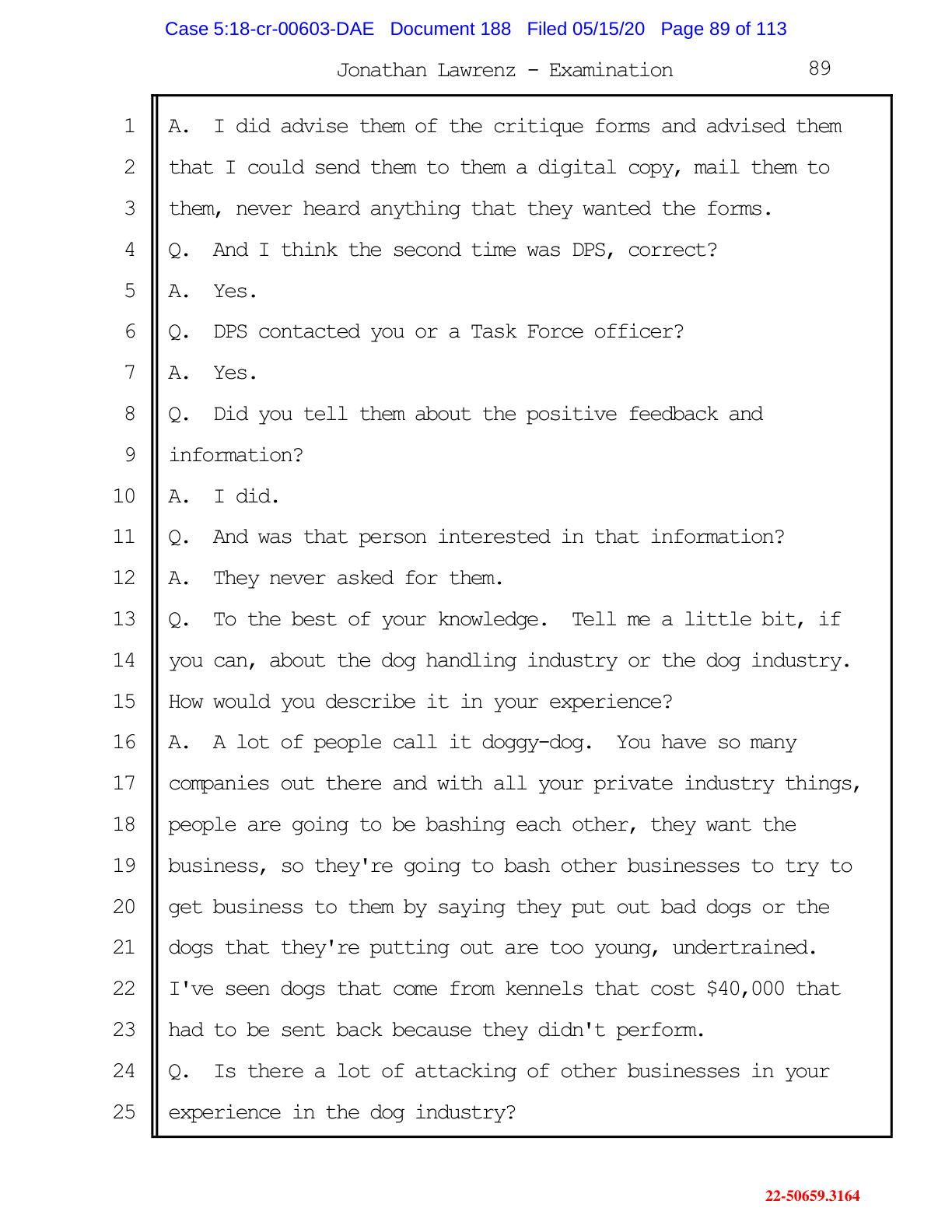
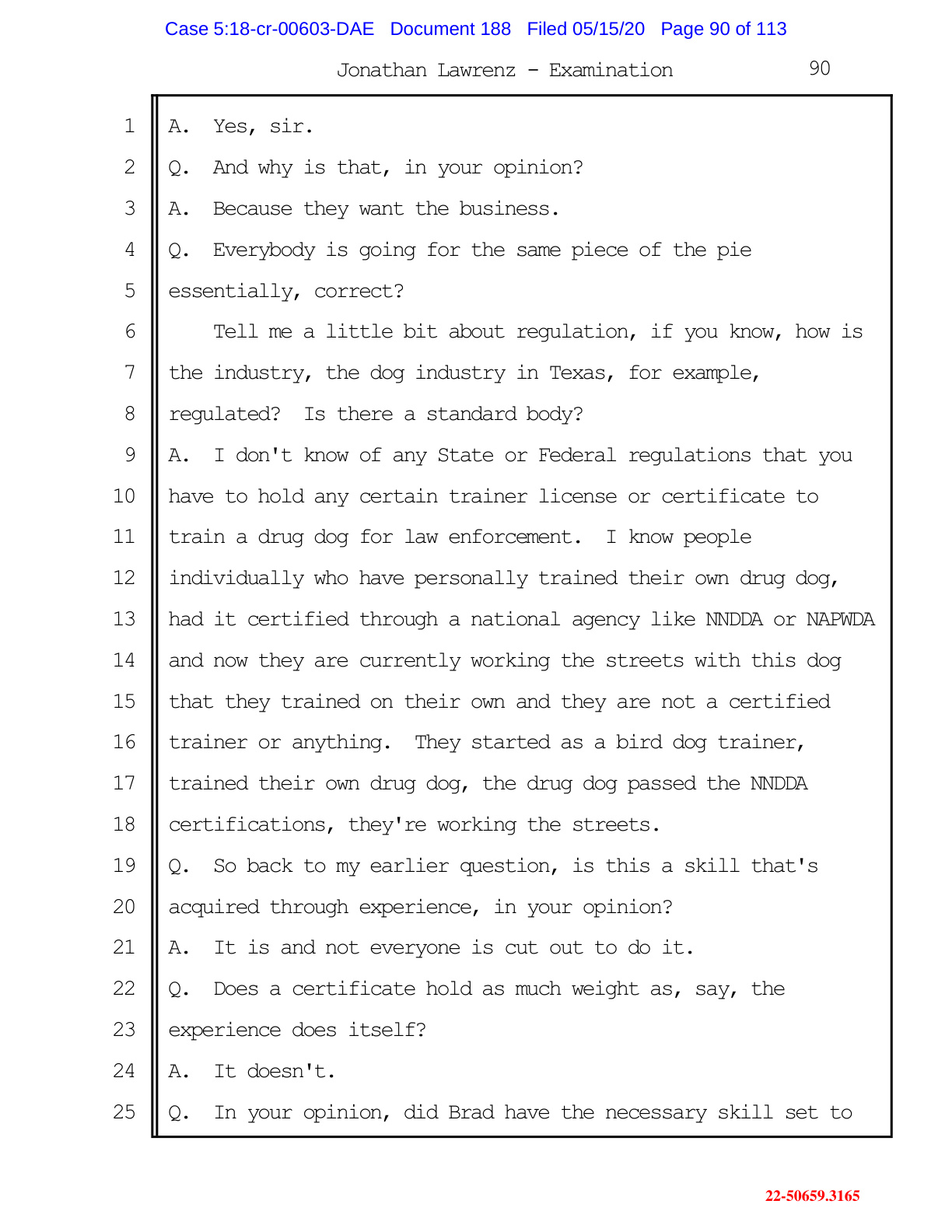
Jonathan Lawrenz
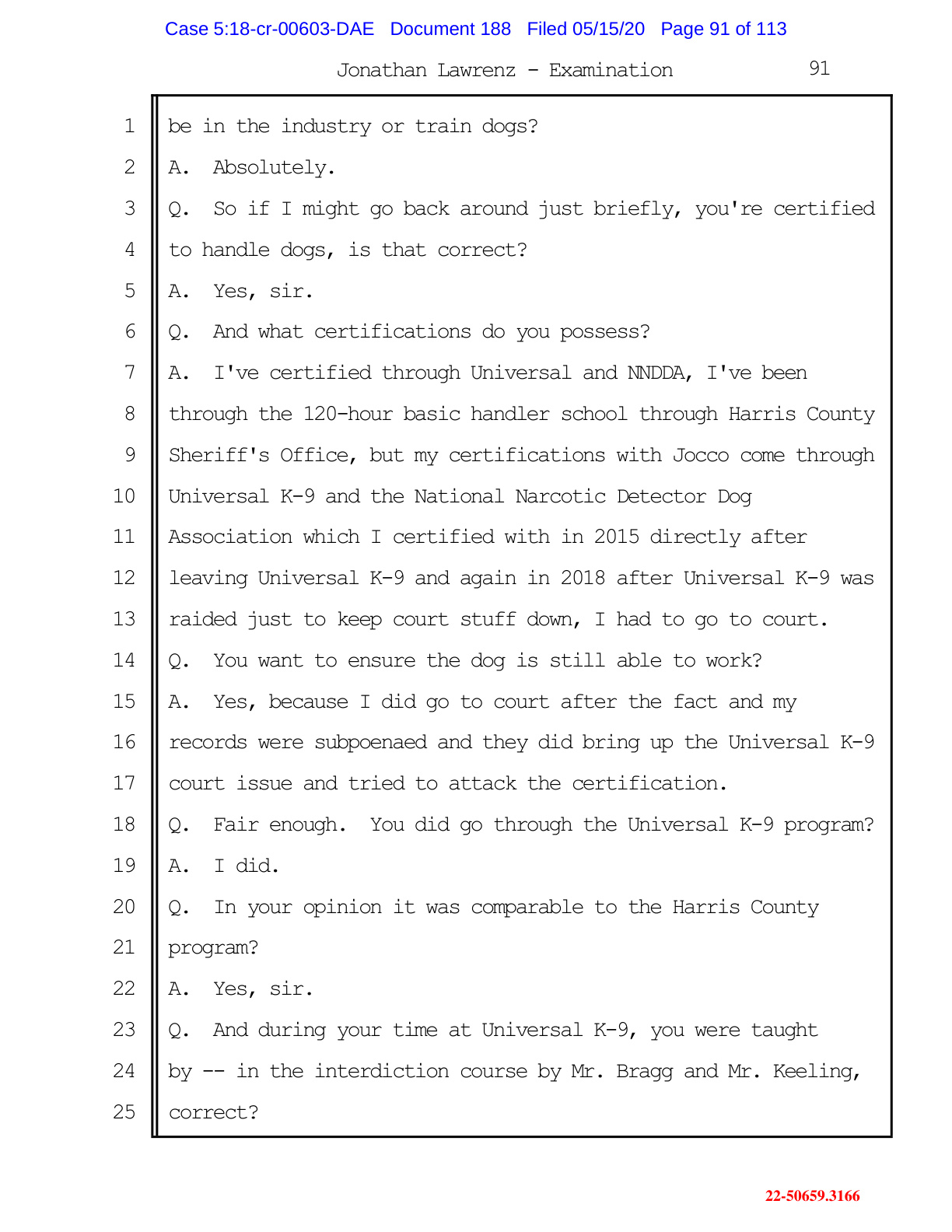
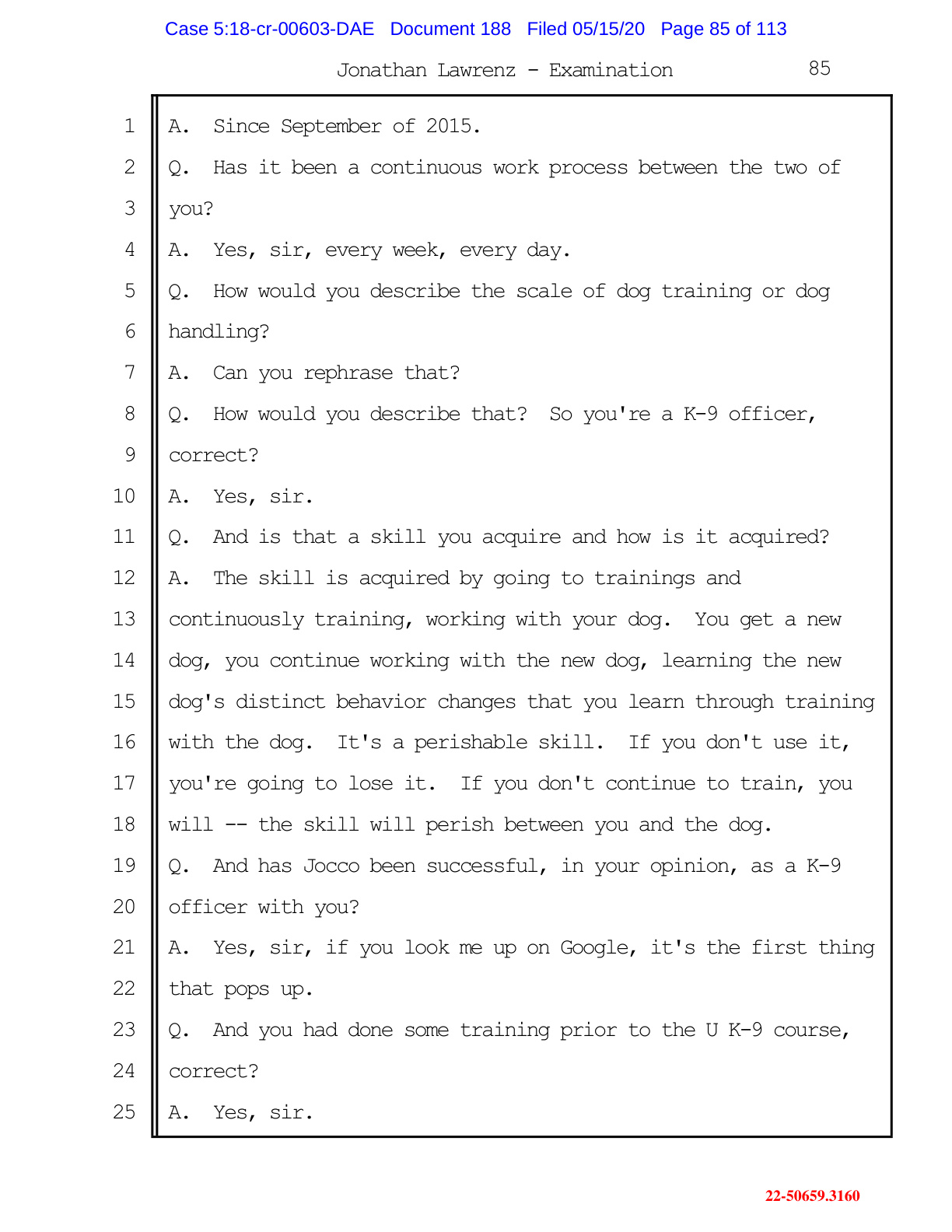
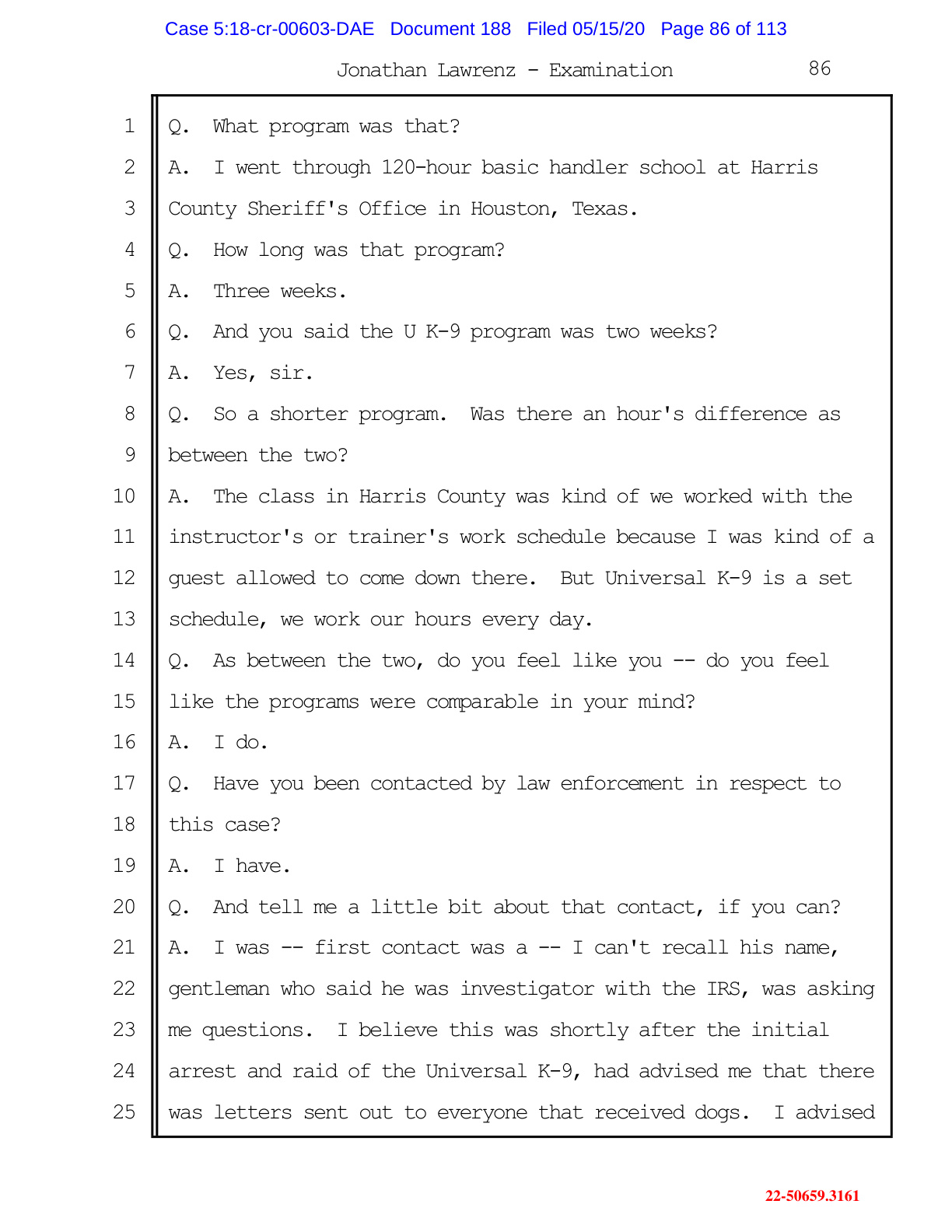
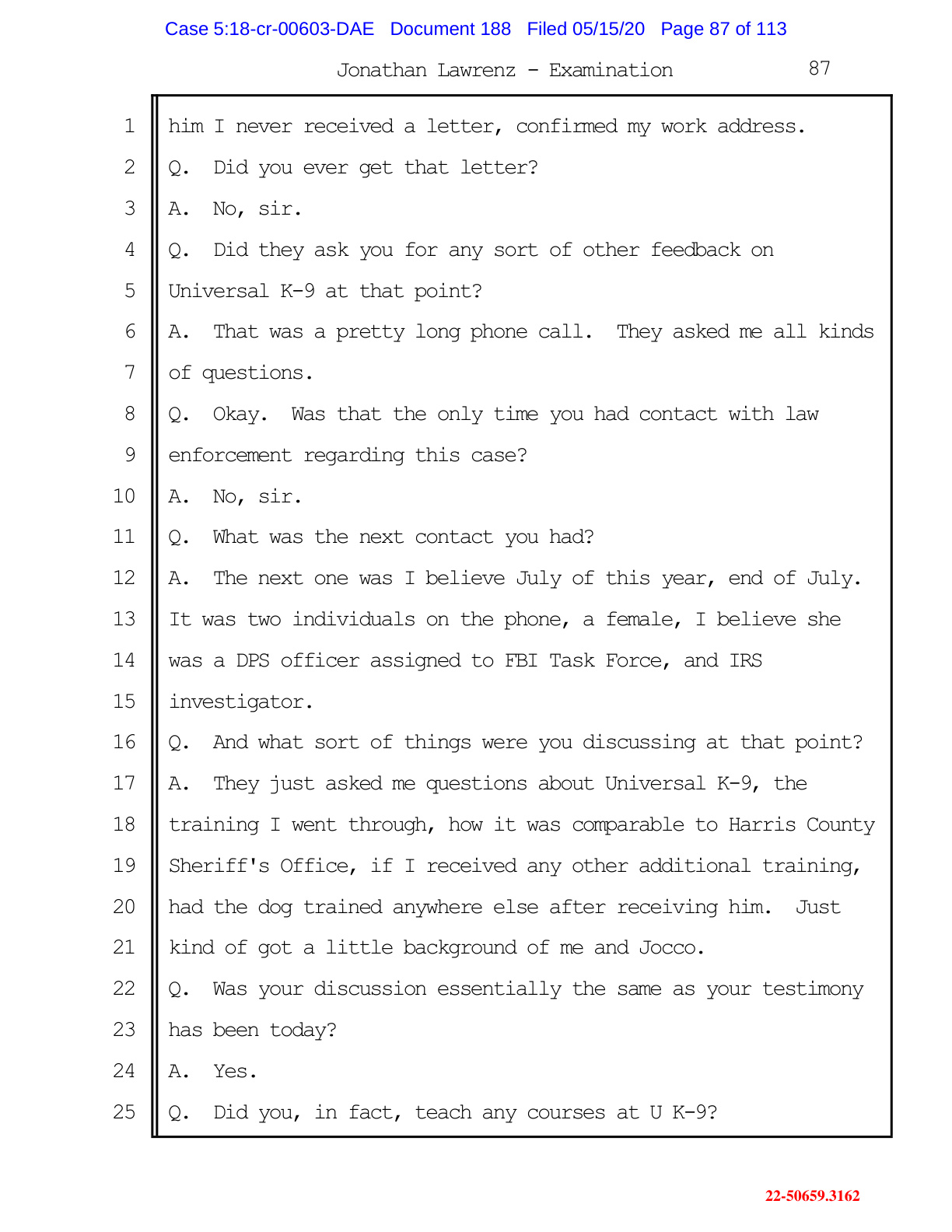
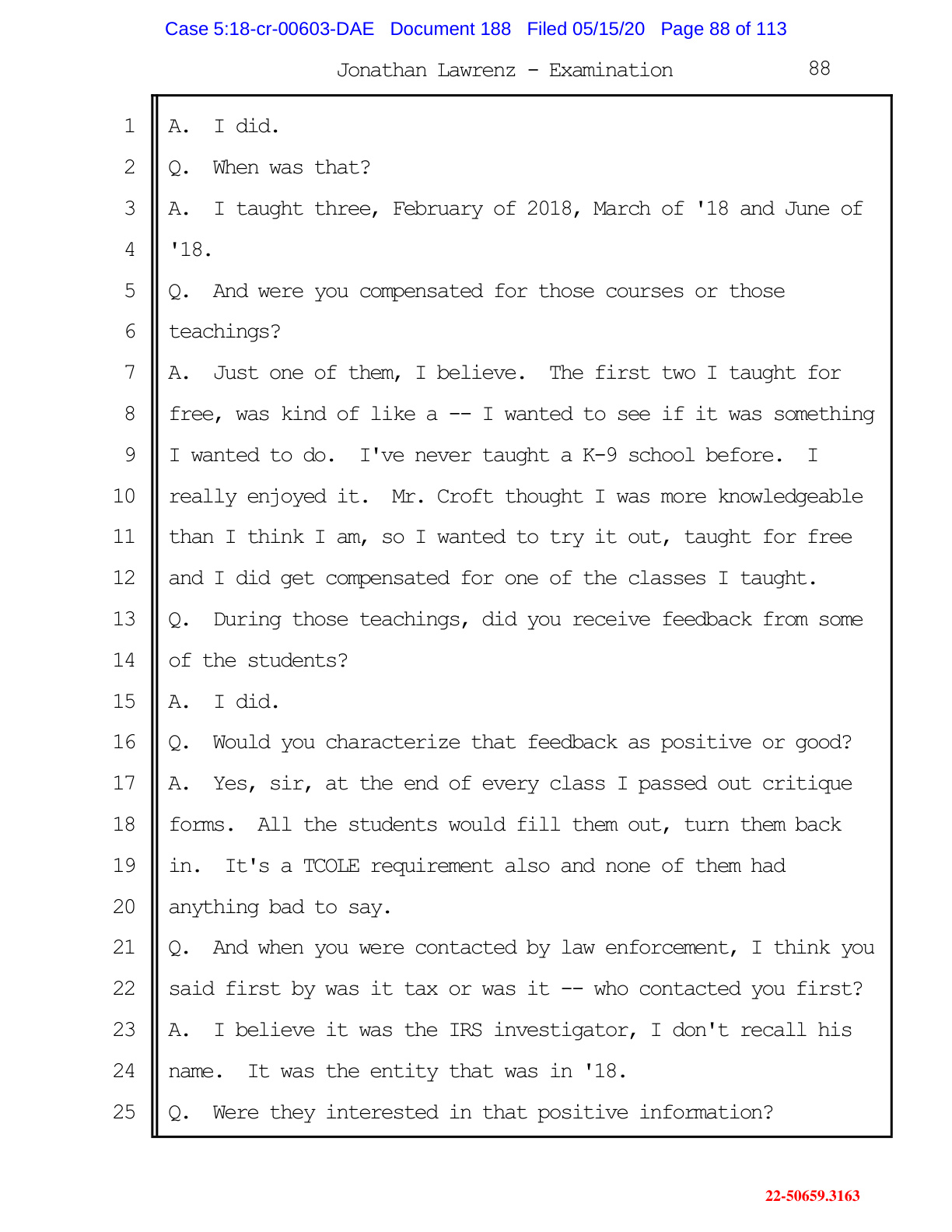
Defense witness · Madisonville Police Department officer and K9 handler. Click his name to view the original trial transcript page comparing the handler programs.
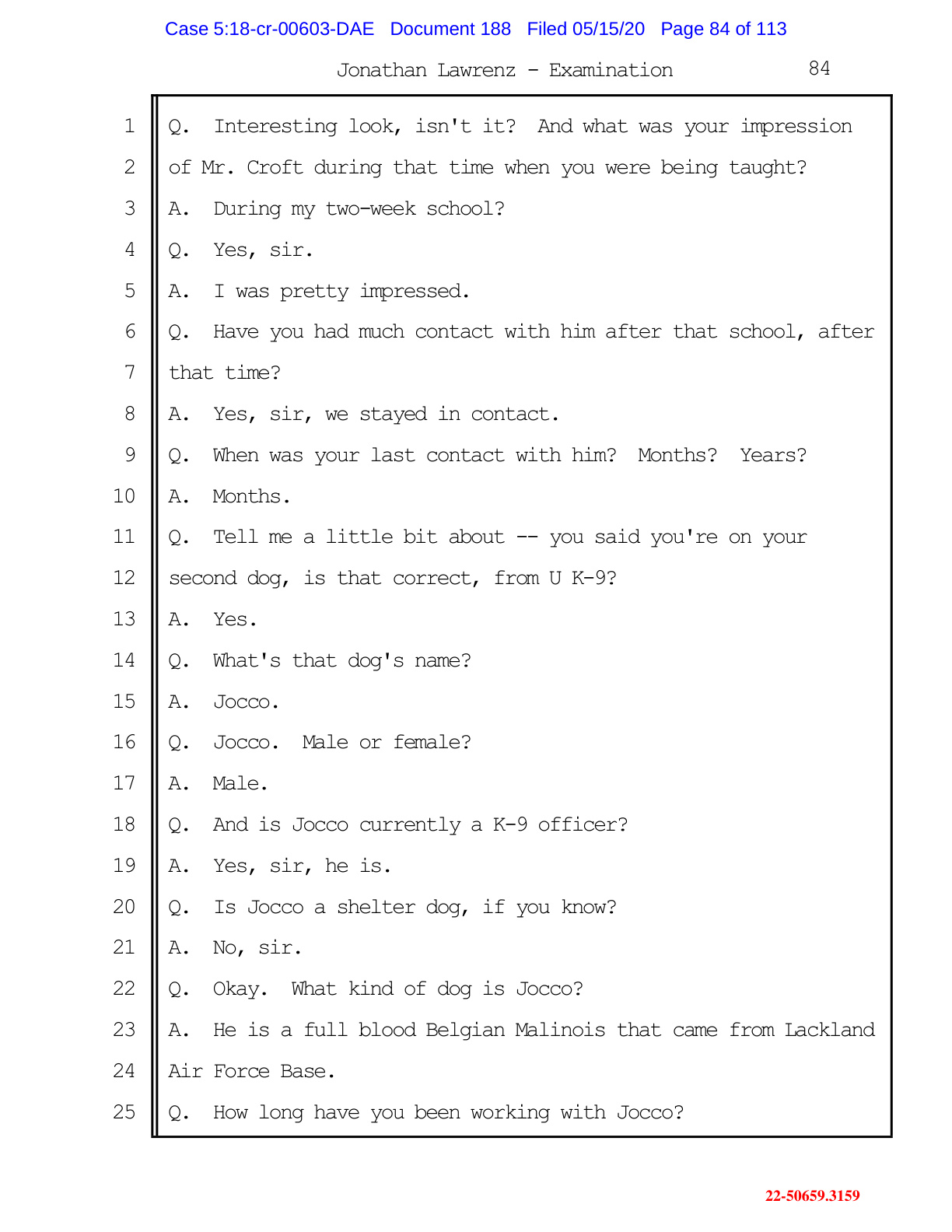
Officer Jonathan Lawrenz testified that he received his second police K9 from Universal K9 in September 2015 and completed a two-week dual-purpose handler course. His dog, Jocco, remained a working police K9. Lawrenz testified that Jocco had been successful in police service.
Lawrenz had attended another law-enforcement K9 program before Universal K9: a 120-hour basic handler school through the Harris County Sheriff’s Office. Asked whether Universal K9 was comparable to that program, he answered “Yes, sir.” Asked whether Croft had the skill set to work in the police-dog industry or train dogs, he answered “Absolutely.” He described certifications through Universal K9 and the National Narcotic Detector Dog Association, including later certification after the Universal K9 investigation. Read page 91.
Lawrenz testified that he later returned to teach courses at Universal K9 and that students completed critiques following those classes; he said none had anything bad to say in those evaluations.
The distinction matters
The federal prosecution addressed representations connected to government approval, GI Bill funding, financial transactions, and tax reporting. A separate factual question is whether Universal K9 actually trained police officers and supplied dogs capable of doing police work. On that question, the trial record contains testimony from officers who were there.
Government witnesses themselves described dogs that made narcotics and currency seizures, located suspects and missing children, facilitated arrests, passed later narcotics certification, and served police departments for years. Defense witnesses also described training, working K9s, later certifications, and police service.
Those accounts do not erase the federal conviction. They provide context about what the conviction did and did not establish concerning the actual police K9 work performed by Universal K9.
Why this record is being published
People considering a working relationship with Universal K9 or Bradley Croft should be able to read the underlying public record rather than infer everything from a headline, a search result, or the title of a criminal case. This page distinguishes the charges actually brought from assumptions about police-dog performance and provides sworn testimony from officers who received training and dogs.
The officer names above link to the cited pages of the federal trial transcript. The full set of JPEG pages associated with this article is linked below. Readers can see the questions and answers and evaluate the testimony for themselves.
Read the testimony. Review the record. Draw your own conclusion.
Transcript page archive
These are images of selected pages from the official trial transcripts, not complete transcripts. Pages are grouped by witness; consult the complete docket for surrounding testimony and exhibits.
Dustin Bragg — Document 185, Volume 3 (11 pages)
page 14, page 15, page 16, page 17, page 41, page 42, page 45, page 46, page 47, page 55, page 56
Chad Hillier — Document 186, Volume 4 (7 pages)
Wesley Keeling — Document 185, Volume 3 (8 pages)
page 109, page 110, page 111, page 120, page 121, page 156, page 157, page 158
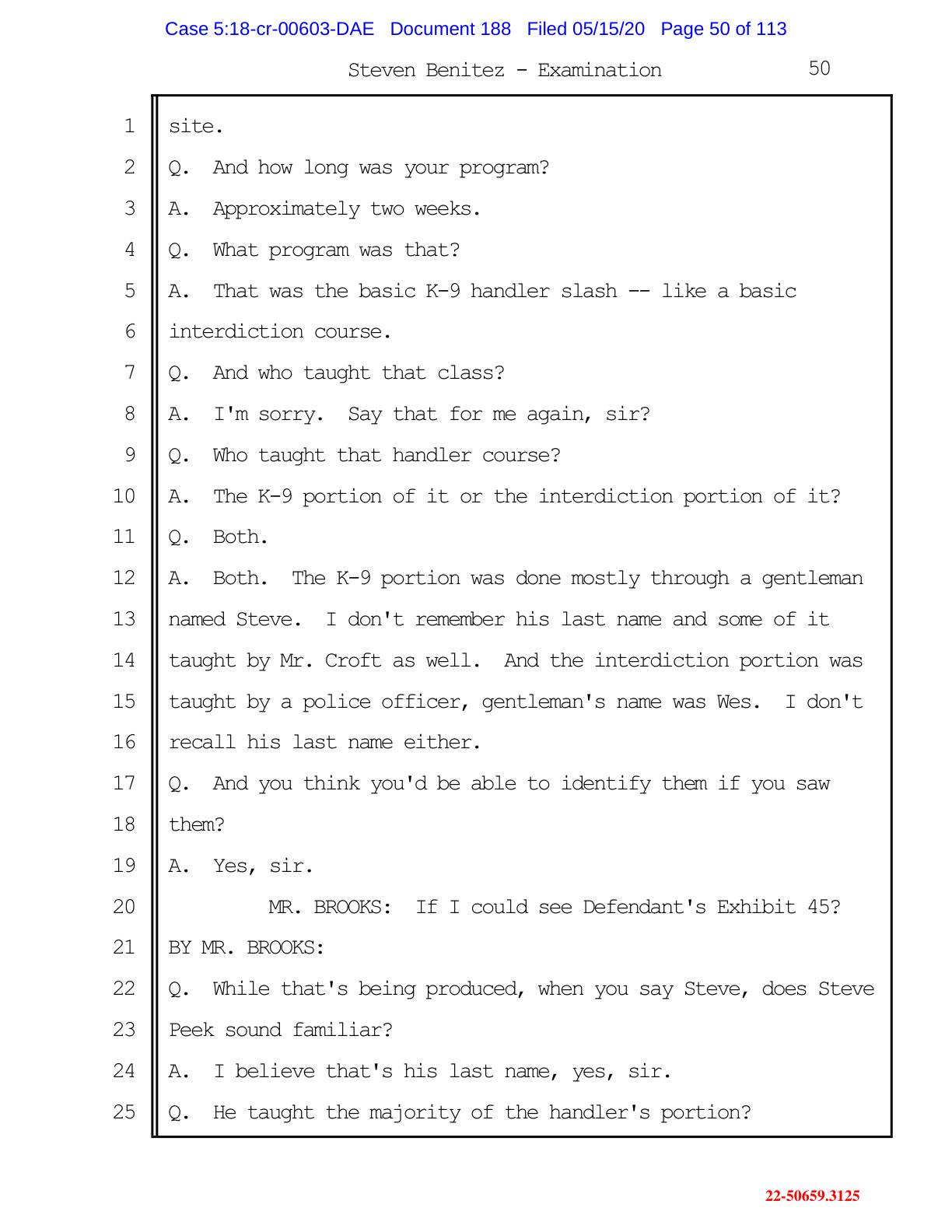
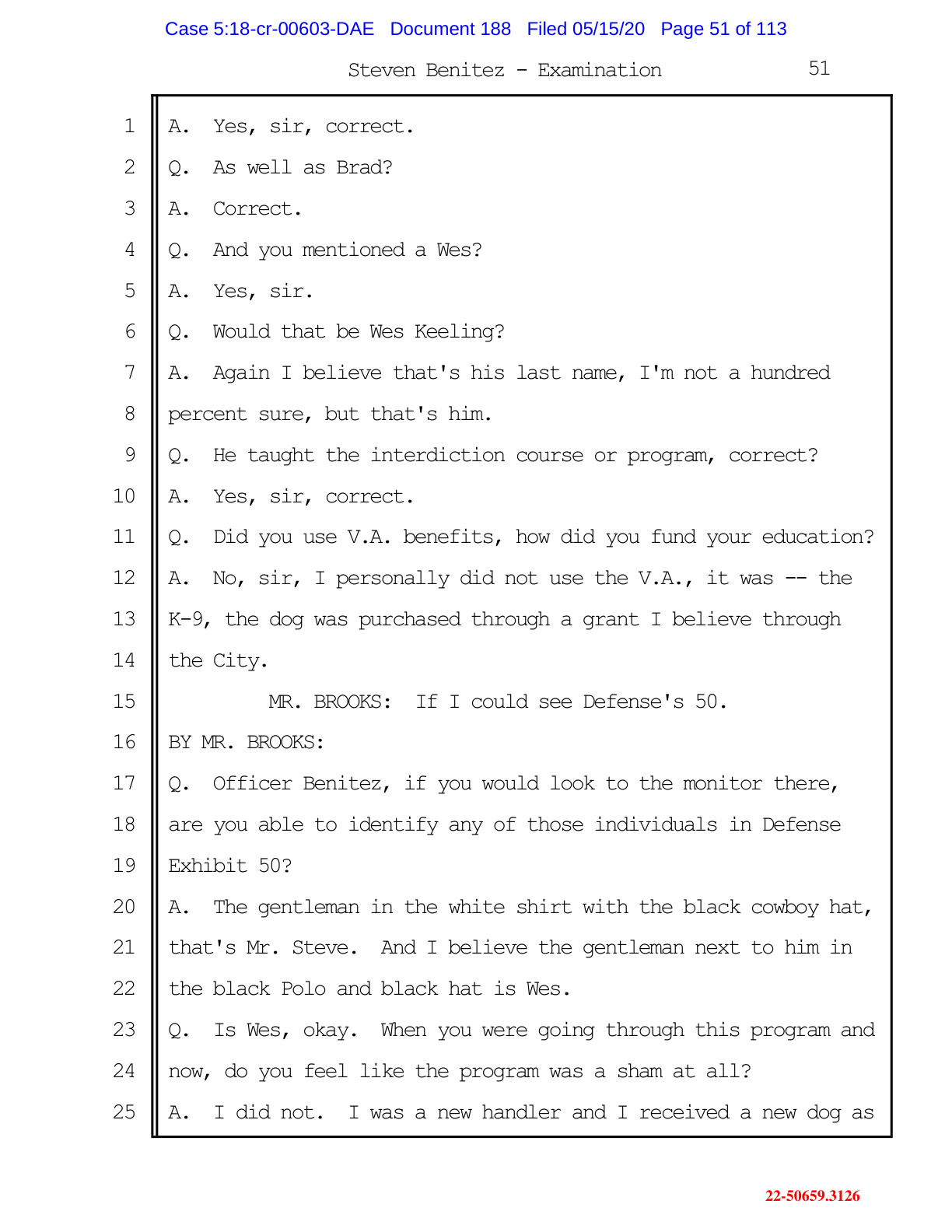
Steven Benitez — Document 188, Volume 6 (9 pages)
page 48, page 49, page 50, page 51, page 52, page 53, page 54, page 55, page 56
Jonathan Lawrenz — Document 188, Volume 6 (8 pages)
page 84, page 85, page 86, page 87, page 88, page 89, page 90, page 91
Source note
The records discussed on this page come from United States v. Bradley Lane Croft, No. SA-18-CR-603-DAE, United States District Court for the Western District of Texas, San Antonio Division. Sources include the Superseding Indictment at Docket Entry 39; the October 2019 bench-trial testimony later filed as Docket Entries 185, 186, and 188; and the Midlothian Police Department and Ellis County District Attorney credibility records discussed in later filings. The transcript JPEGs identify the docket entry and page on each image. Readers should consult the complete documents for full context.